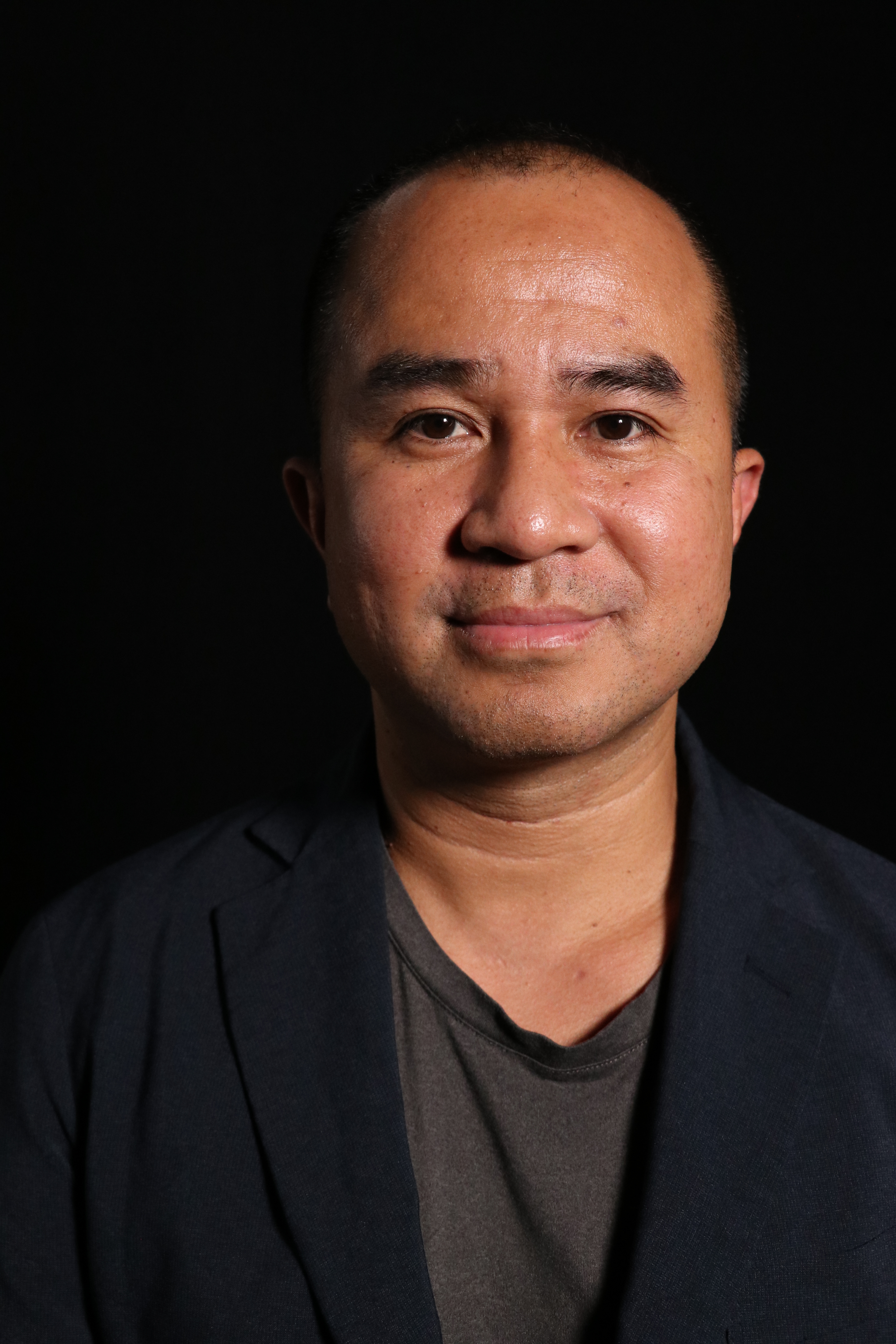
"In 2016, I got an invitation to come back to the Philippines. This time it was not so much volunteering, it was to work for the organisation. And I jumped on the chance. Because I love community work and part of the reason why I wanted to come back was because I missed Vietnam, too. At that point I already knew I was on the blacklist and because I couldn´t go back to Vietnam, I felt like working with young Vietnamese people would be my chance to get glimpses of Vietnam and to be as close to Vietnam as possible. So I jumped on the chance. I went to the Philippines to work as an office manager for the organisation, I taught English, I taught communication skills, held workshops on cultural differences, that was my speciality. I am not so skilled in social and political knowledge of Vietnam and it was very interesting to learn from the human rights defenders and social activists from Vietnam. For me, it has always been a learning journey. I moved from youth worker to office manager and later I considered myself social activist. The word activist itself can have a scary connotation these days. Or even human rights defender. Like you are defending something or practising activism in order to achieve something. But for me, it was organic, it was more like I consider social issues to be important, I consider helping other people important."
"So, I went back to the South. They gave the number, I contacted them and they asked me to come in. I went to this place... the department of... I forgot the name. They questioned me for like three days. I had to come in at 8 in the morning and they questioned me until night-time. I came the nest day and they questioned me again, it was three days of that. It was a scary time. I remember before coming in, I contacted the Australian Embassy, because I didn’t know, what was happening. I said - is it ok for you to come and support me, because I don´t know what this is about? The Australian Embassy said - of course, as a citizen, we support you. But it is really hard to be there, because this is a national security matter. They must have known what department was calling for me and what not. They wanted to make sure that I was safe and I would tell them where I am going and at what time, what time I would be released. And then I called them to say I am safe. They wanted to know my location, but other than that there was not much they could do while the questioning was happening. I came in, there were a few police officers, they were very friendly. They asked me a lot of questions regarding Trinh Hoi and other people at that time. And I was surprised, because I didn’t know why I was there. I remember asking them, what I was doing there. And they said - there is someone who saw you spreading propaganda leaflets up in the mountains. I didn´t remember doing any of that. I really was eating my way through Vietnam. Innocently I asked - clearly, I didn´t do that, do you have any photographic evidence, do you have any videos that would say otherwise? That´s not what I did! And I remember them saying something that would stick with me until now and I think in the future as well. They said - look, you are in Vietnam now. When we tell you that you have done something, it´s your job to prove you haven´t done it. We don´t have to prove anything to you."
"I would like always just volunteer and do charity work a lot. In 2007, that was a proud moment for myself, because whilst still at the university, I went back to the Philippines to volunteer for the same office that helped my family to resettle to Australia. It came full circle. And I was very proud of that. I left as a stateless kid and I am coming back as an Australian volunteer. I volunteered for a year as an office manager to help facilitate the last group of Vietnamese refugees in the Philippines to be resettled to Canada. We facilitated for the people to have health checks etc. It was a very special time for me, I did that for a year. I was very proud of myself and very happy to be able to do it. After that, I became more interested in other work as well, because that was just one aspect of myself - to be a refugee advocate and volunteer. I also went back to Vietnam, I did a lot of work with smaller groups and NGOs, to help the work in anti-trafficking, street children. I also did some anti-domestic-violence work. It was a special time. Being young, be able to travel back and do a lot of that."
"UNHCR for the longest time tried to persuade the people to go back to Vietnam and be processed there. There was this program called Repatriation. A lot of us, refugees, we called it forced repatriations. Refugees were everywhere - at that time we were in Malaysia, Indonesia, Thailand, Hongkong, the Philippines, not in Cambodia. There was a lot of camps there and they would just come and force us on the plane. The plane would take us back to Vietnam. My family, we didn´t want to go back. At that time, we were lucky to have some Philippino friends and we would escape the camp to be taken to the mountains and hide. Another escape. My parents would take my brother and I and wait. In the camp, we were barricaded by barbed wire. We couldn´t leave the camp. If we wanted to go to the market to buy extra food, we only had two hours. If mum wanted to buy extra meat, she had to get permission, go to the small gate and two hours later had to come back. And when the forced repatriations happened, we had to bribe the guards to let us out. And then our Philippino friend would take our family to the mountains to hide."
"When I got on the boat, it was once again an interesting experience, as well for my brother as for me. My brother was just one year younger than me. We all went below deck, there were 91 of us. Up there would be the fishermen. How does it work? You paid a lot of money, all the 91 people under deck paid a lot of money for these fishermen to get us out of the see custom area. We were bellow there for a while, because the boat had to go for several hours before we could get out to the international waters. It was quite scary being down there. We couldn´t utter a word. Personally, I was quite well-behaved kid, so I was fine. But I heard - it didn´t happen in my boat - I heard later on stories, when I was in the refugee camp, that there were many cases, where parents were trying to stop their infants from crying when they were below deck and then accidentally suffocated them. It is the price to pay. That´s why they say - freedom is never for free. U was quite lucky. When I say that, people lough. But I really felt lucky. We didn´t encounter any storm, we didn´t encounter any pirates. At that time, because there were millions of Vietnamese people trying to flee Vietnam using the same route, there were pirates, especially from Thailand, waiting. They would normally kill all the men, they would capture all women and held them as sexual slaves. Until now, there are many former refugees, resettled to other countries, still going back to Thailand looking for their loved ones."
Nguyen Vuong se narodil roku 1985 v jihovietnamském Saigonu, oficiálně Ho Či Minově městě. Když mu bylo necelých pět let, uprchl z rodinou ze země v podpalubí rybářského člunu. Sedmidenní plavbu všech 91 uprchlíků na lodi přežilo, skončili na Filipínách. Po krátkém pobytu v provizorním útočišti byli umístěni do uprchlického tábora na ostrově Palawan, statut politických uprchlíků ale nezískali. V táboře, v jehož blízkosti později vznikla legendární uprchlická osada Viet Ville, strávila Vuongova rodina několik let. V roce 1997 uprchli z tábora před hrozbou násilné relokace do Vietnamu, žili na předměstí Manily. S pomocí právníka Trinh Hoie po letech získali legální pobyt v Austrálii, brzy poté i občanství. Ještě během vysoké školy se ale Vuong na Filipíny vrátil, tentokrát jako dobrovolník. Pomáhal s usazováním uprchlých Vietnamců ve třetích zemích, angažoval se ale i v rozvoji nevládních organizací. Sociální problematice se věnoval i při návštěvách Vietnamu, odkud byl v roce 2011 po zadržení a třídenním výslechu vyhoštěn. V roce 2016 opět působil na Filipínách jako školitel, dnes se věnuje hlavně tématu psychického zdraví, které je u lidskoprávních aktivistů podceňovanou oblastí.