Antonín Podzimek

* 1949

  • "We had a petition to hand in to the National Assembly (on 21 August 1968). We couldn't do that, but we didn't give it to Medvedev. My dad did a fantastic job there. The bridges over the Vltava were guarded and closed. The trams didn't run. If a car was coming, they'd stop it at the beginning of the bridge and send it back. There was no connection between Prague's left bank and right bank for some time, for a few hours. So my dad says (with fifty people in the office, coming and going): 'They need a clearance, a 'propusk', one with a star stamp on it. Otherwise they're not gonna get anywhere.' He was right. I knew how to type on a Russian typewriter; they got one at the Czechoslovak diesel engine plant. I typed 'udostoverenie' (credentials) saying that working class visitors were going. A secretary brought a paper box full of stamps. My dad looked through them and found one with not only a star but also a hammer and sickle on it and the inscription 'Wilhelm Pieck Engineering Works' - which was the name of the plant in the 1950s. It also said 'Holiday Panel', but they taped that up, and it was perfect. We showed that to the guard on Palacký Bridge. I sat in the front, the Russian-speaking guy, to discuss things, and the driver was part of the workers' delegation, of course. We arrived and there was a lieutenant or what: 'Stop!' So we stopped, I rolled down the window and handed him the note. He looked at it, he didn't read it - he didn't even read it! He handed it back to me, saluted, whistled his fingers at the guy at the other end of the bridge, which is quite long, and off we went. They never checked us at the other end of the bridge. That one stamp was enough for them: 'They're our own.'"

  • "We lived better than the locals, I'm sure. I went shopping with my dad once, just the two of us. It was a bakery store with bread, rolls and pretzels, and there was an old lady with ten kopeykas (pennies). She wanted one piece of a poppy seed bun which cost one rouble. The assistant explained this was impossible - she couldn't just break it off. She spoke to her kindly, didn't shout. I was staring. Dad came and put one rouble down and bought her the bun. She didn't want it, saying she wasn't a beggar, but, of course, she took it eventually."

  • "I also remember - and this was long ago under Khrushchev - that disabled war veterans disappeared from Moscow one day. They were gone. By then, I got to know - well, not hundreds, but many of them. I saw them wandering around the park, armless... I didn't even realize initially they weren't there anymore. They were just gone - disappeared. They took them all away somewhere - to Sverdlovsk or what - because they didn't look good. You know, foreigners come to visit and encounter these cripples... I learned that years later but I noticed they were gone. There used to be a lot of them. I remember this veteran with like six medals on his chest and no legs, riding past our house on this board that had ball bearings instead of wheels. It rattled going over the cobblestone sidewalk. He had an attendant, a disabled vet too. I think he didn't have an arm, and he would pull and push the board with the other one; they were a team. And I saw him (maybe) eighty times."

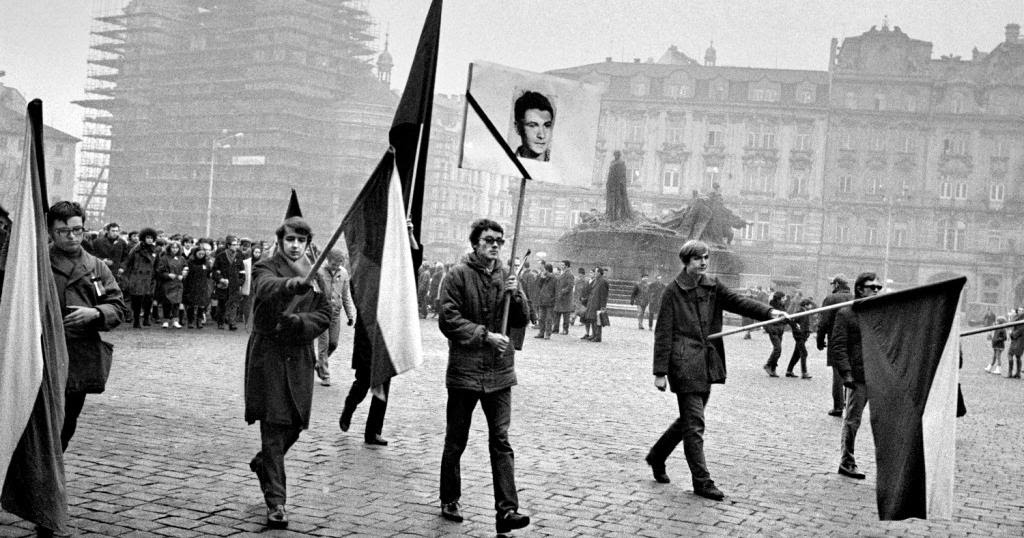
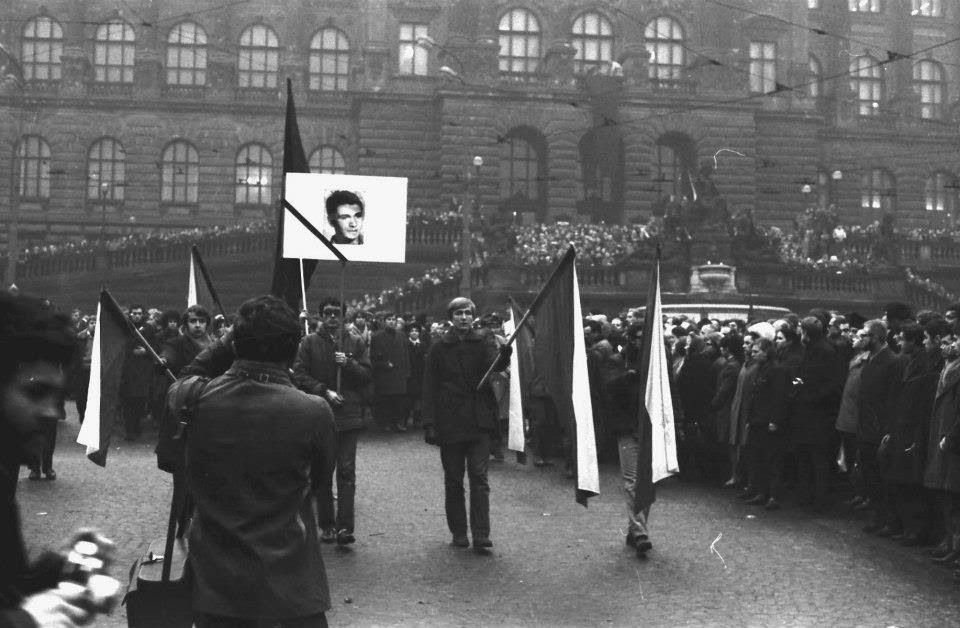
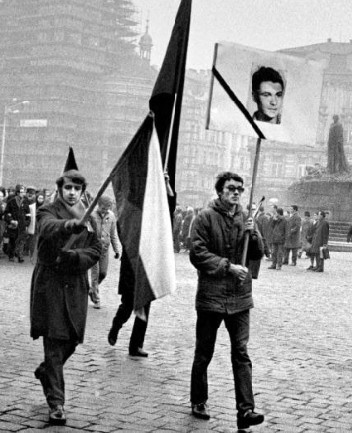
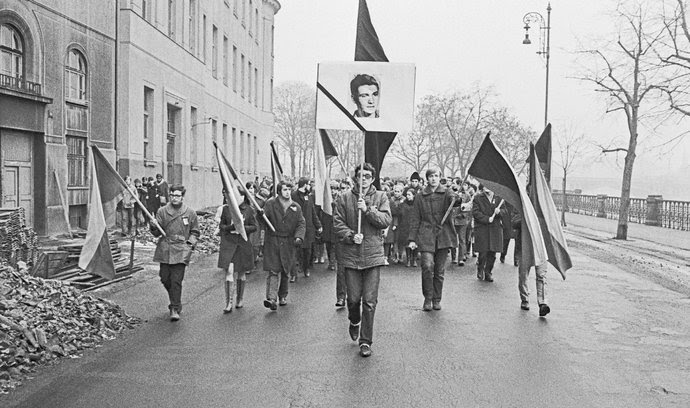
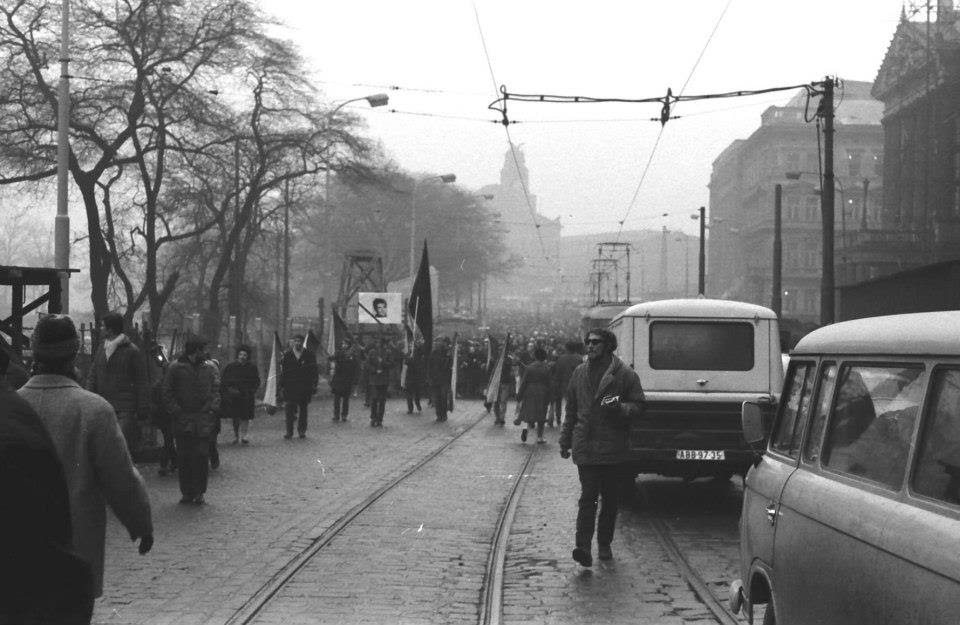
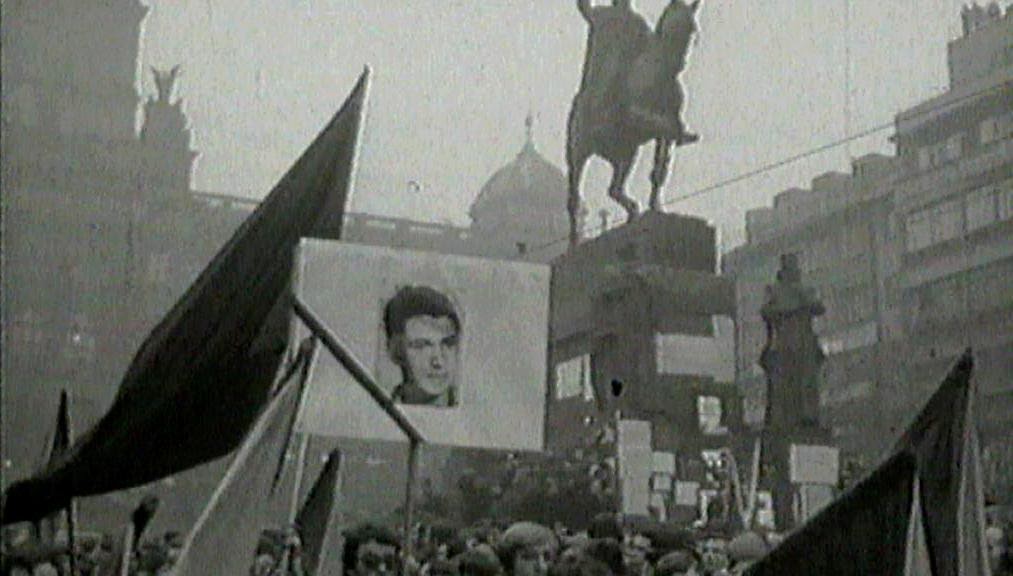
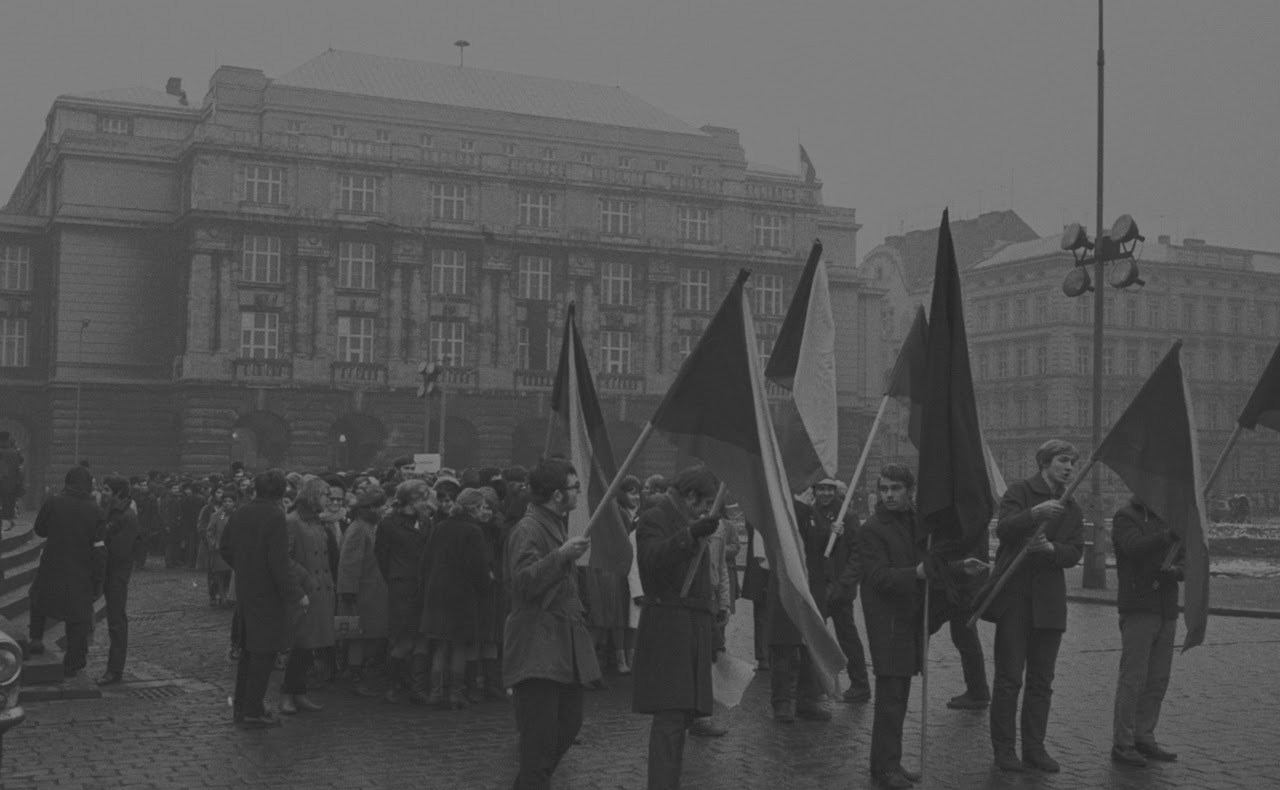
  • "Of course, the entire faculty attended including professors and Charles University officials who we looked up to... There was a huge gathering where the organisation of the funeral and the procession through Prague were arranged... We spoke there and said we disagreed with the suggestion that it should be a more or less intimate, family memorial service, with no flags or any formality... I said that Jan Palach did not do it for his family, but for all of us, for this country, and so our faculty would definitely go there with flags... Yes, the place and the date to meet were set, but no other organisational details were discussed... The response in Prague was huge... tens of thousands, hundreds of thousands of people... I walked at the head of the procession carrying our national flag... My colleague Jirka Janouškovec walked in front of me, carrying a portrait of Jan Palach with a mourning ribbon stuck diagonally... and the parade went through Prague to the Faculty of Arts building, watched by hundreds of thousands of people on the sidewalks and in the streets."

  • "My first contact with this repressive branch of power was a year later, on 21 August 1969, when I was arrested along with my friend Jirka Slavik for wearing a tricolour on the jacket lapel. Such a harmless thing, but we were detained, brought in and held in Čkalovova street station for about three hours. I dare not say in custody. And then we were scolded."

  • "I had a part-time job at the Smíchov Škoda plant - Czechoslovak Diesel Engine Works from 1 August (1968). My father got me the job; he always wanted me to live technology, and I was a milling machine operator. Every morning, dad and I would go catch a tram. He went to the office and I went to the factory. We lived in Bubeneč in today's Eliášova Street on the corner with Československé armády. So, sometime before three o'clock in the morning, I got a call from my friend, my football teammate, then a student of the law faculty, Karel Hořák: 'Tonda, get up, we are being occupied by Russians...' and by then I had already heard that one truck after another was driving under our windows... I ran to the window and saw armoured personnel carriers in the streets, open trucks full of soldiers, but I didn't see any tanks. There were 12-15 soldiers sitting in each of them with machine guns. I ran to wake my father up and he - I can see it like it was today - opened one eye and said: 'There have been so many of such announcements since 1948!' So I ran back to the phone and called Karel. He lived in somewhere past the Vokovice tram depot, and they had been driving under his window a bit earlier than mine. I called him back: 'Do you know what's going on?' He said: 'Turn on the radio!' I turned on the radio over the wire, there was sad music playing, and the announcer kept repeating after a few moments: 'Alert your friends and acquaintances, don't leave the receivers, as we'll be broadcasting an important message in a little while!' By then, my dad had also arrived, looked out the window, and together we heard the declaration of the Presidium of the Central Committee of the Communist Party of Czechoslovakia: 'This has happened without the knowledge of the authorities' and so on... including a violation of international law... We got dressed and went to work, around five o'clock or quarter past five. We got to the area of today's Hradčanská station. There was no metro, of course, and there were two underpasses under the Prague-Kladno railway line, and there was a lone Soviet soldier standing at one of the underpasses with a submachine gun in his hand. I went up to him, I was crying, and I said to him, 'Why have you come? Why have you come?' He must have been 20-21 years old, an Asian - a Yakut, Kyrgyz or Chuvash - and he didn't understand Russian! But you could see that he was sympathetic to me - a young guy came up crying, something must have happened to him... Dad grabbed me, we left the soldier and went on, and there were already people gathering and we found out the trams weren't running. So we marched on foot through Klárov and Malá Strana to Smíchov, arriving sometime before seven o'clock. There was a surreal picture of people holding back the local works unit of the People's Militia who were standing there readying to go defend the Czechoslovak Radio building. People were convincing them to stay - 'Gon't go there, don't be crazy!' In the meantime, however, you could constantly hear the noise of airplanes, as more and more planes were landing in Ruzyně from 11 o'clock the previous day."

  • Celé nahrávky
  • 1

    Praha , 18.12.2020

    (audio)
    délka: 01:28:57
    nahrávka pořízena v rámci projektu The Stories of Our Neigbours
  • 2

    Borotín, 21.10.2025

    (audio)
    délka: 03:07:36
    nahrávka pořízena v rámci projektu Stories of 20th Century
Celé nahrávky jsou k dispozici pouze pro přihlášené uživatele.

People and ideals

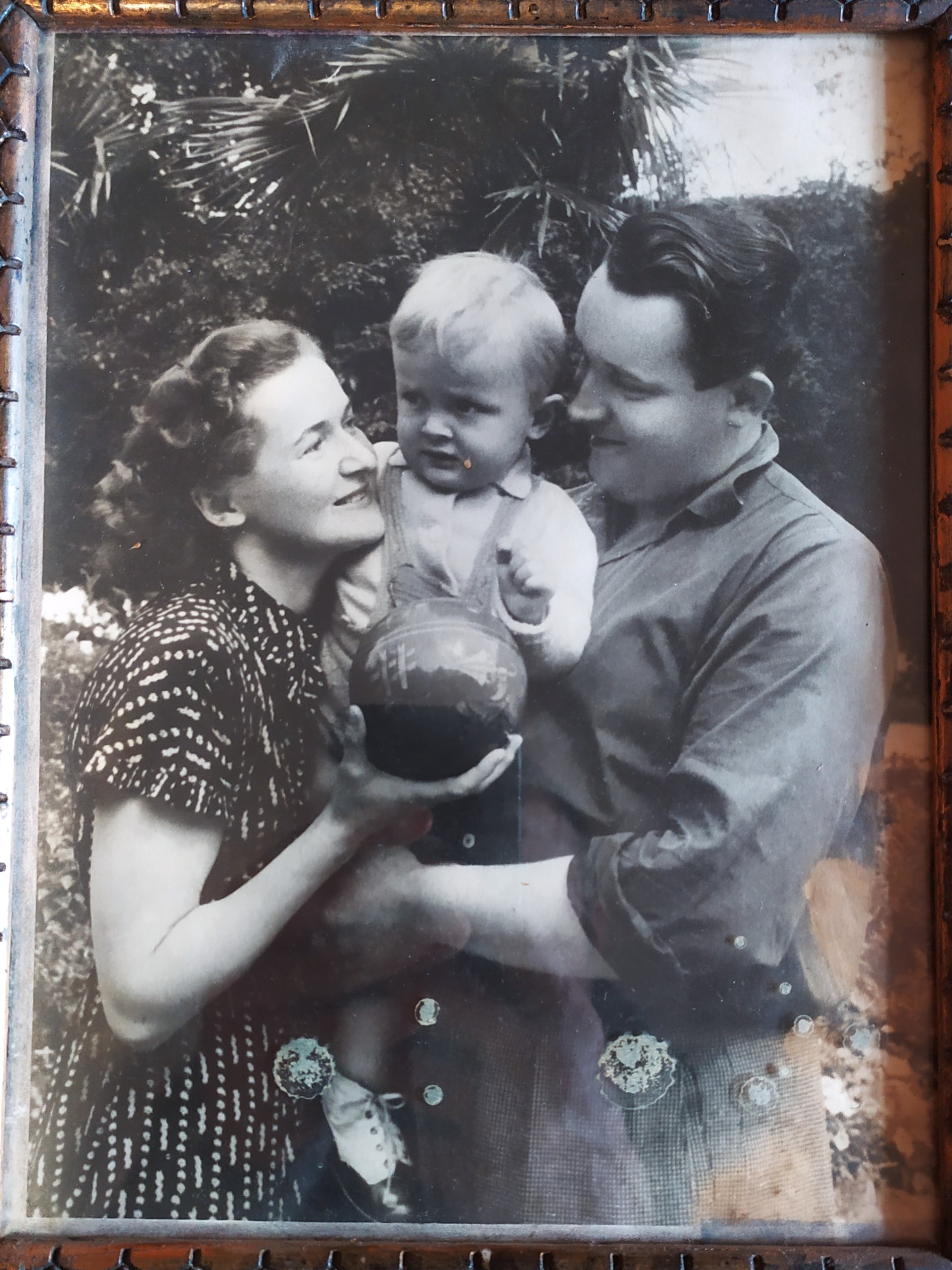
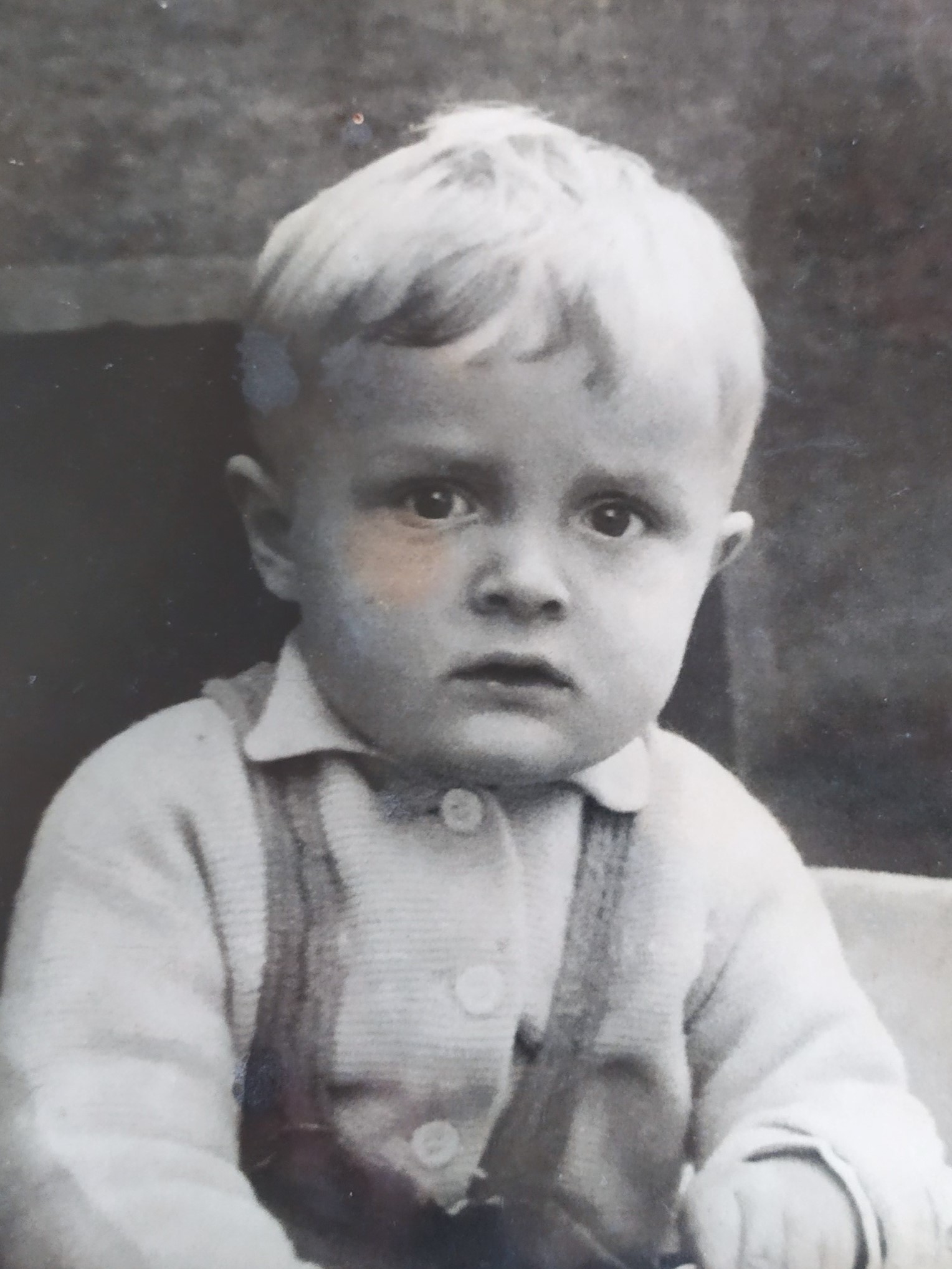
Antonín Podzimek in his childhood
zdroj: Witness's archive

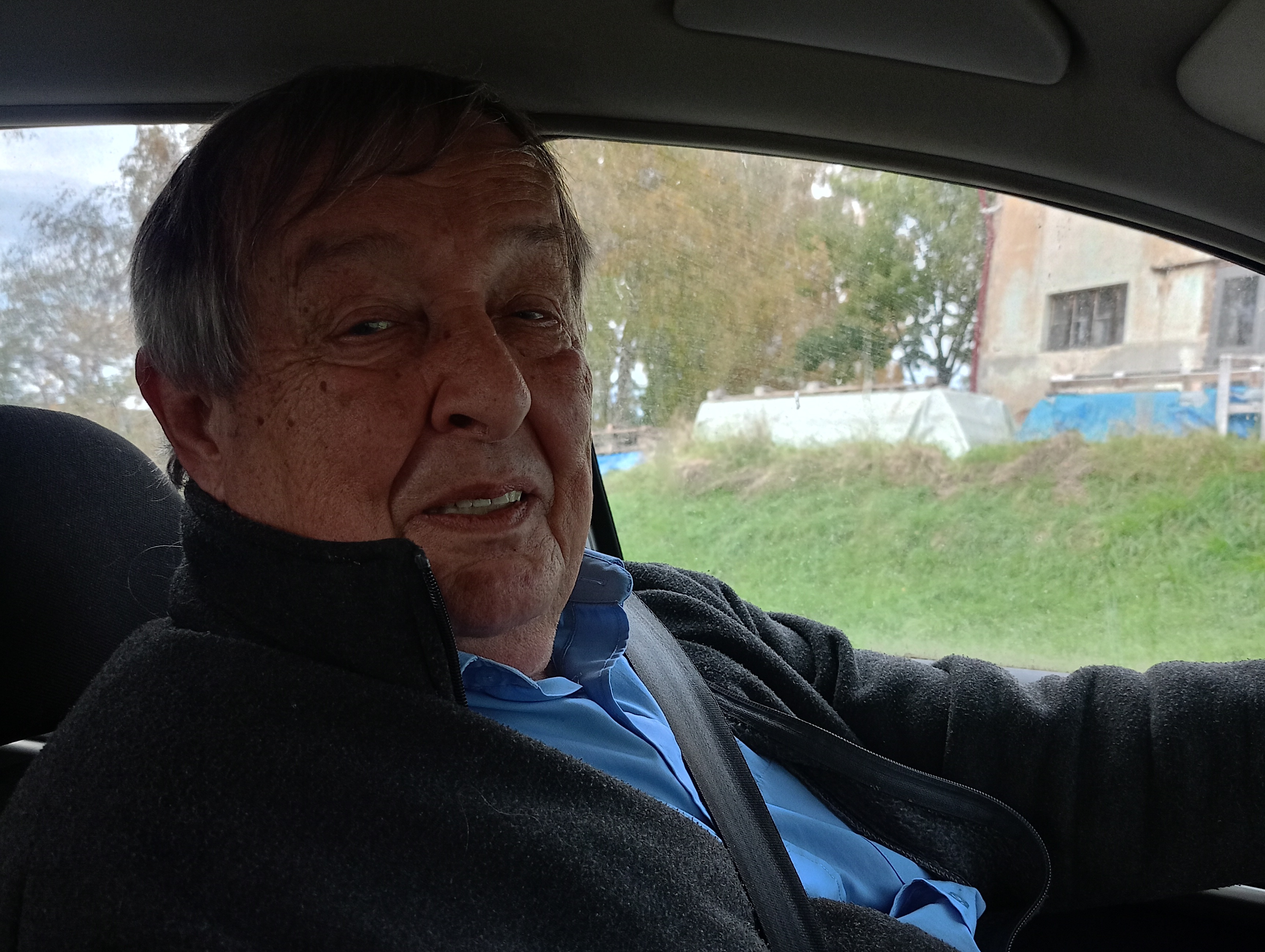
Antonín Podzimek was born to Antonín Podzimek and Bohuslava Podzimková on 14 March 1949. Shortly after his birth, the family moved from Karlovy Vary to Prague where his father worked as a head official of the main economic administration at the Ministry of National Defence, and in 1952 he was appointed Deputy Minister for General Engineering. In 1957-1959, the family lived in Moscow where his father worked as the head of the Czechoslovak commercial representation. Antonín Podzimek attended the local Soviet school and recalls the emphasis placed on handwriting and gymnastics in the ruined schoolyard. After returning to Prague, he finished primary school, completed high school and enrolled at the Faculty of Arts of Charles University, majoring in Czech and history. It was 1967 and the faculty vibrated with the political thaw of the Prague Spring. He took part in marches supporting the revival process, and after the August invasion he was worried about the country‘s top officials kidnapped to Moscow. In January 1969, a few days after the death of Jan Palach, he carried the Czechoslovak flag at the head of the funeral procession. On the first anniversary of the occupation, he was arrested because of the tricolour he had pinned on his coat. On the recommendation of his school, he quit school so as not to be dismissed. He completed his military service in 1969-1971, then worked as a labourer in the construction of the Prague metro. He completed a technical high school of construction, then worked at Výstavba kamenouhelných dolů (Construction of Coal Mines). In 1980 he moved from Prague to Borotín near Tábor, but he did not live politics there. After the 1989 revolution, he established an antiquarian bookshop and made his living bookselling. In the 1990s, he served as mayor of Sedlec-Prčice, and since 2000 as a Central Bohemian Region MP. In 2025, he lived in Borotín with his family, focusing on genealogy and literature.