Viktor Kopačka

* 1955

  • "For example, when I was in Hůrka and I saw that ten kilometres away there is Lake Laka and beyond the border is the Velký Javor... At that time we thought we would never go there. There was no way to get to Germany in a normal way to do any hiking, it was impossible. So I said, 'We'll never see that.' And I guess what bothered me the most... This was a simple filter to deny a person almost anything. That he's got some kind of a problem, that his father was locked up and he can't do this. And I couldn't go to college. And in the 1980s, I felt like that's what would happen to my kids. Cause it's awfully easy to always get something on someone... His grandfather was locked up for political reasons so he can't actually do it. That was quite frightening to me then, that it could go on like that. Fortunately, that's all changed."

  • "At that time, one did a postgraduate degree, then one got a CSc. degree in one's name, which is like a PhD or something like that today. So this degree after the name and it was actually some kind of doctoral studies at that time. The former head of the breeding station said I should do that. But the problem was that I wasn't in the Communist Party and that would have been possible. Maybe if I'd done the VUML. That was the Evening University of Marxism-Leninism, that was for some workers, where they taught them the politics, maybe they would have taken me on. So I said, 'All right, I'll apply to VUML.' And at that time I had a friend who, when I was studying at that university in Budejovice, I gave him various notes. In those days you couldn't copy it like today, in those days you had to either write it down or somebody somewhere borrowed the notes so that you could study it. He was the director of the political school in Klatovy. Today, of course, there are no political schools. And I was at the entrance examination in Sušice for the VUML, and they said, 'Please, if you don't receive the letter by the end of August that you've been accepted, it's some kind of mistake.' And I didn't get anything by the end of August. So I said to this friend, 'Hey, I didn't get anything, so should I go or should I not go? I don't know.' And he says, 'It'll come to you.' And then I got the call that I wasn't accepted because of too many applicants. So I thought, I've taken this action where I actually, I'll say, didn't like it. And yet I ended up not being accepted when they took basically everybody. They were still persuading them to go. So that was also kind of an experience that related to my father being locked up."

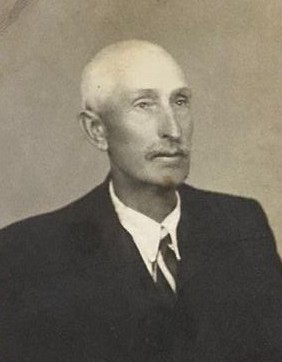
  • "There was very little that could be written from that prison, because they would check it, and if he wrote something they wouldn't approve, they simply wouldn't allow it to be sent. So here's a letter, for example, there's a prison institute written there. He actually wrote in there, basically I'm not going to read it, that there was a lot of work, but that he would rather work at home, how they were at home and so on. And so he was trying to work a lot, I guess, because he was sending money home for them to have money. It even says here that he bought some watches for the girls and such, that he was trying to make as much money as he could. He actually had to pay for his stay in prison with what he made there. That was deducted and then he could send some money home to his family if he earned more. So he was sending money home to his family. But it was certainly very hard in Jáchymov, and as a result of - of course it's hard to put it like that, if that's what it was, my father died at 72 of cancer. So it could have been also a consequence of the fact that he worked in the uranium mines."

  • Celé nahrávky
  • 1

    Velhartice, 02.05.2025

    (audio)
    délka: 57:42
    nahrávka pořízena v rámci projektu The Stories of Our Neigbours
Celé nahrávky jsou k dispozici pouze pro přihlášené uživatele.

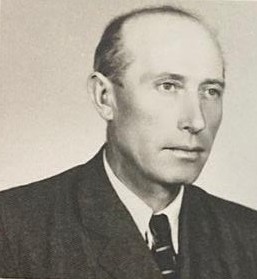
A people smuggler slept over at our house and my father ended up in jail

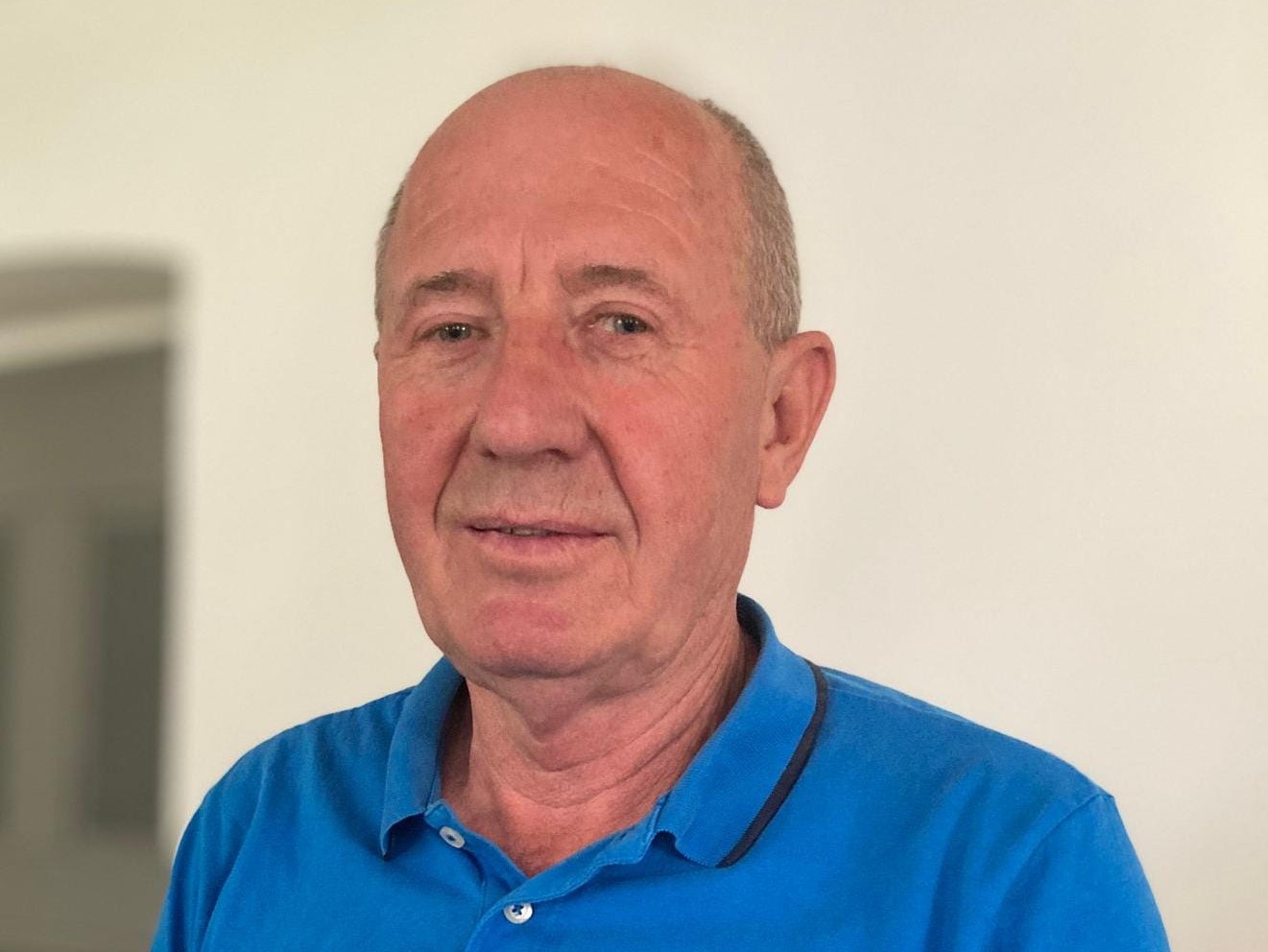
Viktor Kopačka was born on 26 March 1955 in Horní Staňkov near Velhartice. His father was imprisoned for helping people smugglers and served his twelve-year sentence in the uranium mines in Jáchymov. He was pardoned in 1954. He attended kindergarten and primary school in Hory Matky Boží and later in Velhartice. He received his secondary education at the Secondary School of Agriculture in Klatovy. In 1974-1979 he studied at the University of Agriculture in České Budějovice, where he got thanks to the intercession of a friend. After college, he did a one-year military service in the operational platoon in Dobrá Voda. Due to political unreliability, he was not allowed to be in a combat unit. At the beginning of the 1980s he joined the potato breeding station in Velhartice. Although he never joined the Communist Party of Czechoslovakia (KSČ), in 1984 he became the head breeder, which he was until 1995. From 1995 until 2021 he served as a director. He retired in 2022. A year later he ran for the Velhartice municipal council and was accused of collaboration with the State Security (StB). At that time he discovered that he was listed as a confidant in its register. The designation „confidant“ did not imply cooperation; people did not need to know that they were listed in the register. In 2025 he lived in Velhartice.