"The bullying depended on which guard was on duty. If it was a decent warder, you knew, you knew that you could sleep, that the warder wouldn't wake you up and bang on the door and ask you to squat and so on, but if he was a scoundrel, then of course you had to take into account that you would have a bit of a busier night, but that wasn't always the case. Basically, you could say that if one avoided or tried to avoid any moments that would draw attention to oneself, then on the whole, when the person in question wasn't interacting with him at the time, he didn't say to himself, I feel like beating someone up now or anything like that... But ending up in a penal cell was no problem, and other kind of bullying, that they kept throwing out well made blankets and so on, that's not worth mentioning. That's just petty stuff."
"I myself experienced an air raid on Brno and that was not the best experience either. That was in 1944 and I went to buy work boots. The sirens started and next to the building where the regional prosecutor's office was, then the Gestapo, was the chamber of commerce. There were shelters in the basement. I went to the shelter there. There we waited in the crowded cellar, quietly, sometimes there was hysterical shouting, otherwise absolute silence. Then one heard a dark rumbling from afar, then it came closer, nearer, and there were explosions. In the cellar, dust fell from the walls and ceiling. And now it all started trembling, and one stood wondering: Now its our turn. But by then we'd be all gone. You went out to the street, there was no house at the head of the street. It was such an experience to get a taste of what Dresden looked like in a small way. I'll tell you, it's not worth it, the feeling. I can't say I felt scared. It's more like a surrender."
"And then we lived in that atmosphere where the Germans suddenly felt superior in Brno, more or less superhuman, of course not all of them all the time, they weren't exactly our neighbours and so on, but some of them were really quite intolerant, they were like the Henlein people and the hard core. I was on the tram and there was a conductor, and he was announcing, Freihetplatz - Freedom Square - and a German jumped off the bench and said, 'Was erlauben Sie sich?' (How dare you?). And the German next to him took him and said... because the Germans renamed it the Adolf Hitler Platz, but because they knew that it wouldn't disappear, that the name of Freedom Square wouldn't disappear from the general consciousness, they changed it again the next day and turned it into Freedom Square, and Adolf Hitler Platz became the present Moravian Square. And so here I saw how vicious they were, so angry at the Czechs, what kind of resentment, hatred, anger there was in some people, how they would like to destroy, and I thought, 'That doesn't look good.'"
"If I were to describe to you October 28, 1937, a year before Munich, in Uzhhorod. That was a great thing, you can't imagine. I've never seen that before. Municipal schools, lanterns, lantern parades, artillery infantry regiment, buglers, boy scouts - Czech, Catholic, Ukrainian, Russian, Maccabi, that is, Jewish, Romanian. Everyone from the wider area came together, all the citizens, for that evening. And the parade, when it went, it was something monumental, massive. I can't forget it. And it expressed that relationship of the citizens to the state, which was very positive."
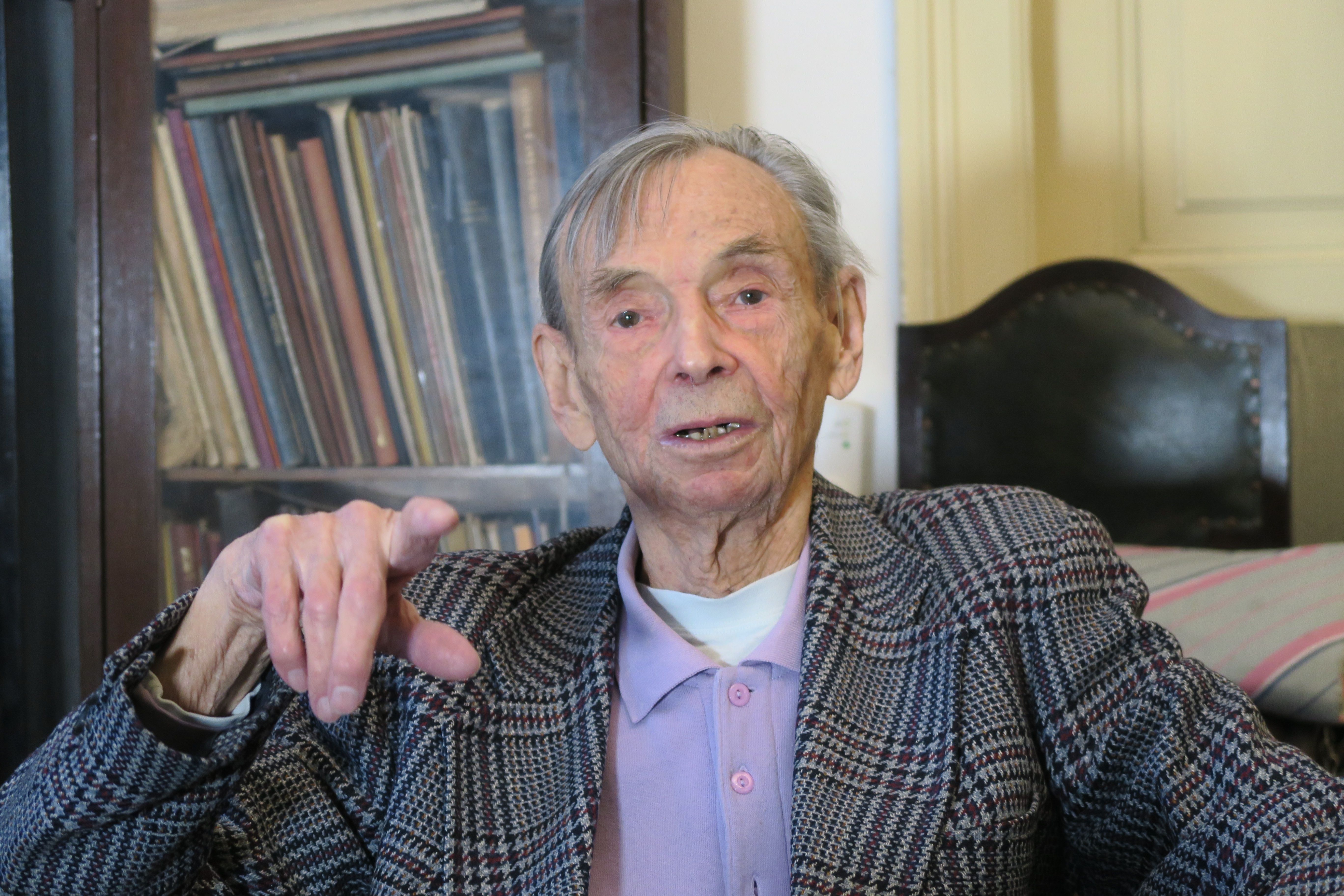
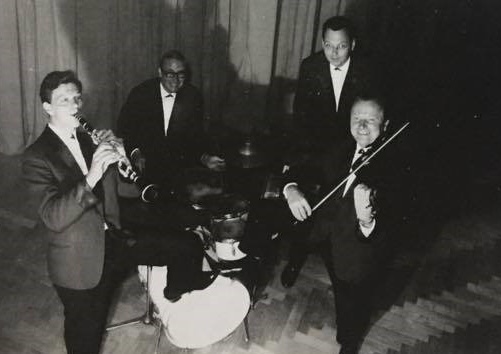
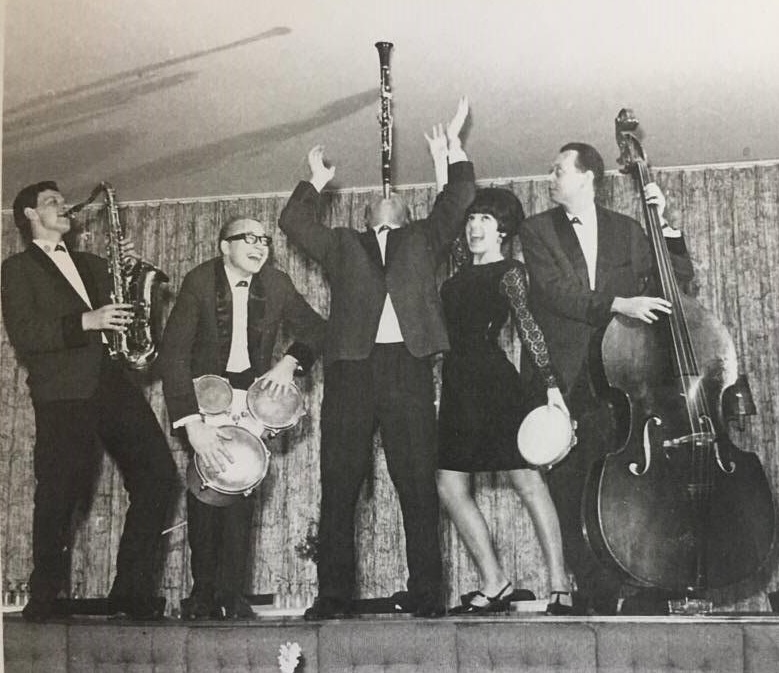
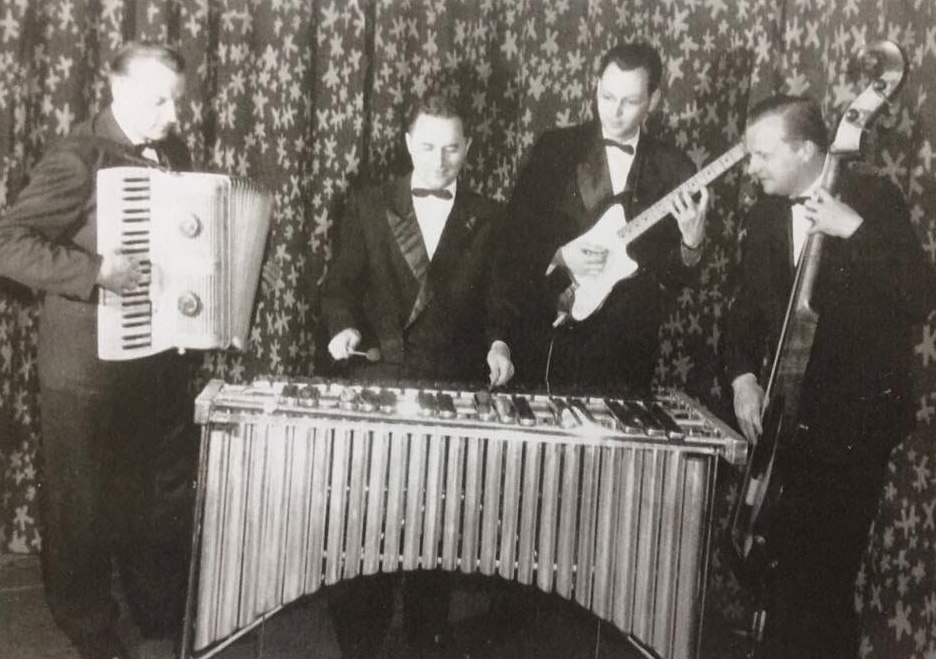
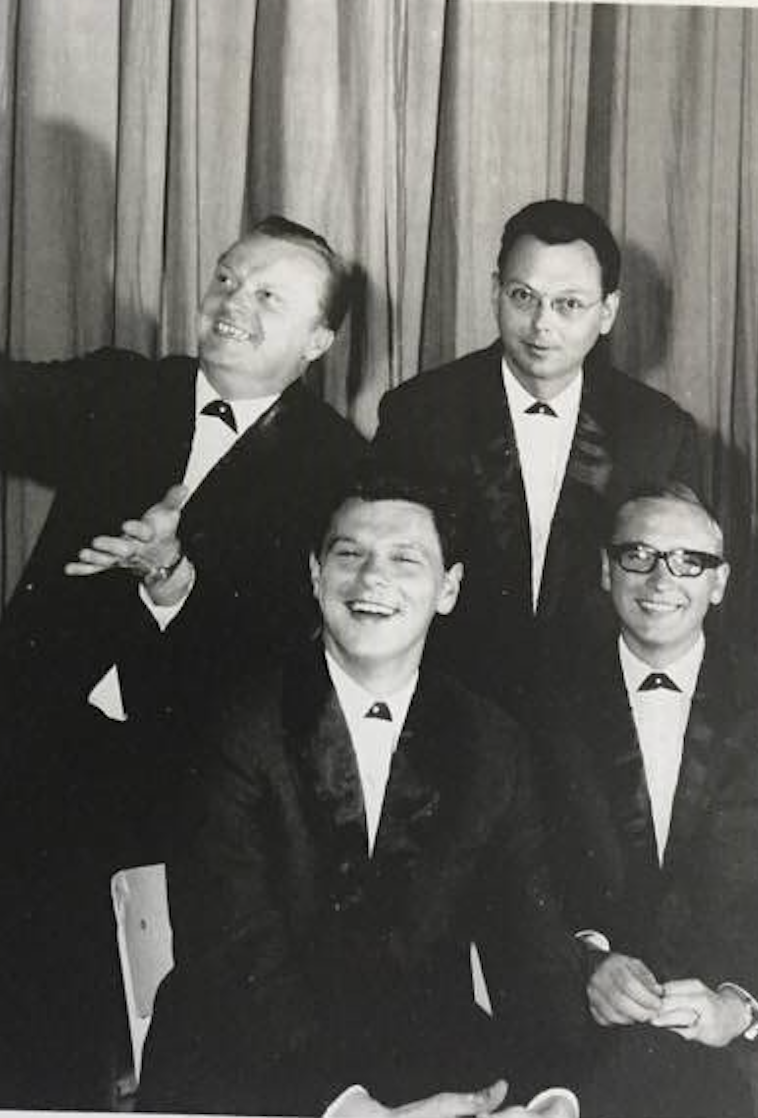
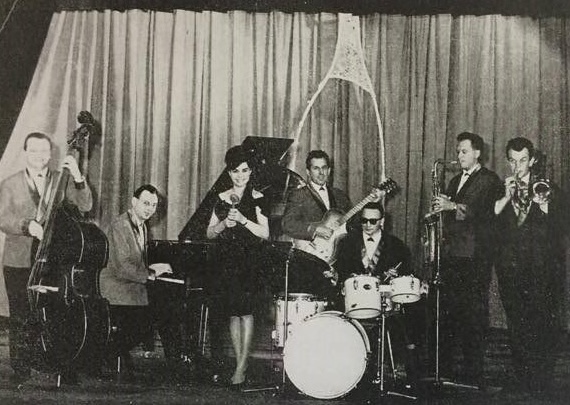
Miroslav Ilek was born on August 23, 1923 in Chust, Subcarpathia. His father was a lawyer, a district governor, later a councillor of the political administration in Uzhhorod. His mother took care of the household and taught German and French during the war. After the occupation of Subcarpathian Rus by the Hungarians, his Czech family moved to Brno, where Miroslav continued his studies at the grammar school. He graduated in 1941 and began studying at the music conservatory. During the total deployment he was assigned to Eduard Hašek‘s large estate from 1943, where he worked as a foreman and as a tractor driver. He witnessed a Gestapo raid related to the fact that members of the Resistance were hiding on the farm. After the war, he enrolled in medical school. He was involved in the organisation of student life, at the same time earning extra money as a Czechoslovak radio announcer. Immediately after February 1948, he was expelled from his studies and from the radio because of his „anti-people“ attitudes. He had to look for a job for a long time, eventually finding one of a worker in the Brno foundries. At that time, Jaroslav Caha, the leader of an illegal group linked to Western intelligence services, approached him. In addition to collecting economic information, the members of the group were to undergo training in the West. The first of them, Miloslav Richter, actually completed the radio-telegraph training in Regensburg, Germany, and returned. The second was supposed to be Miroslav Ilek, but the State Security already knew about this activity. He was arrested on 19 April 1949 in his parents‘ apartment. The six-month interrogations, accompanied by beatings, took place in the State Security villa in Pisárky and in Příční Street. The public trial took place in the autumn of 1949. Among others, the poet Zdeněk Rotrekl was convicted in the trial. Miroslav Ilek was sentenced to sixteen years‘ imprisonment for treason and conspiracy against the Republic. He served his sentence in Bory, Ilava and Leopoldov prisons. He worked in feather scouring, in the rope production, in cleaning vegetables, and in Ilava and Leopoldov as an assistant dentist. In prison, he met General Jan Syrový and convicted communists such as Gustáv Husák, Ladislav Novomeský and Artur London. Thanks to his parents‘ constant interventions, his sentence was reclassified and reduced to nine years in 1956. As he had already completed two-thirds of his sentence, he was released on parole the following day. For four months he could not find employment even as a labourer. Eventually, he was surprisingly hired by a Brno music agency and made a living as a pianist in bars, wine bars, and later in the Rozmarýn variety theatre. The state security tried several times in vain to get him to cooperate. From the beginning of 1968 to 1970 he toured Scandinavia as a pianist with an orchestra. In the 1970s he managed to finish his medical studies. He became a doctor at a hospital in Bohunice, where he worked until his retirement in 1993. From the 1990s he was a member of the Confederation of Political Prisoners. Miroslav Ilek received an award as a participant in the anti-communist resistance. He died on 16 September 2017. Recordings of interviews of family members with Miroslav Ilka were provided to Memory of Nations by Hynek Cígler. Thank you!