Josefina Ganzarain Gómez

* 1938

  • "Well, it's very simple. Before, we had freedom for everything. If we wanted to go out for a walk, go out at night, come back at any time without having to do anything strange. But we had absolute freedom, and from then on I felt watched. There came a time, as I told you. I even got used to being watched because I wasn't doing anything against the revolution. I limited myself to being pregnant at that time. My daughter was born, but the most important thing was Vicente in La Cabaña. I wrote him a telegram every day, whether it arrived or not. And I have another anecdote. I had to dictate it over the phone. I remember a woman named María Luisa who, from the first telegram I dictated to her over the phone, always gave me words of encouragement and support. So I would call the telephone company, well, the place where telegrams were sent, and I would always ask for María Luisa, and María Luisa became my friend over the telephone. And who would have thought that on the day my daughter Anabel was born, that lady found out I was at the clinic without me knowing her, I had never seen her before. She showed up at the clinic with a sweater she had knitted for my daughter as a gift, and that's where I met her. And that was a gift for me and a tremendous show of love and support, because before, before the revolution, in the environment I lived in, where I grew up, we had it pretty easy. But now, at that time, I had to achieve things through love, through dedication, through support, but I felt part of everything, I felt satisfied.

  • "Well, at first Vicente was in La Cabaña, in Galera 8, and I visited him every Friday... No, not every Friday, every 15 days. But Vicente found out that if he voluntarily swept the dining room with other prisoners, he would have access to or the option of having another visit, which meant that every Friday I would take my little boat at Muelle de Luz, get off at Casablanca, climb up that hillside next to Havana Bay, and arrive where Vicente was and see him every Friday. All this time he was in La Cabaña, they hadn't charged him, they charged him, a lawyer promised me that, for me, well, that's the bad memory of that time, he told me they weren't going to charge him, they charged him. The time came, “don't worry, they're not going to put him on trial,” and on November 3, 1961, the lawyer told me, “I'm the one who's going to defend your husband at the trial.” And on November 10, when I was already almost ready to give birth, because I gave birth shortly after, Vicente arrived at the place where the trial was being held and saw that there was no lawyer. He didn't show up to defend Vicente. So Vicente signaled to me and said, as if to say, “Don't worry, I know how to defend myself,” and he defended himself. He defended himself alone, without a defense attorney, and a few days later, on November 3, and then on November 8, which was our second wedding anniversary, he was sentenced. At the trial, the prosecutor asked for 15 years, and on November 8, they reduced it to three years. So he remained in La Cabaña, but on November 18, 1961, they transferred him to the mountains, as they said, to Isla de Pinos. Then things changed. La Cabaña no longer existed for me in my daily life, but I had to think about how I could visit Vicente in Isla de Pinos. And on November 18, I found out that he had been transferred. I called the Ministry of the Interior, which I think was the one I was supposed to call, because I gave birth on December 13, and I called them to ask them a favor, to see if they could give me a special visit so that Vicente could meet the baby, and they said no. They told me to wait for my official visit. And the official visit was on April 28, 1962. So Vicente met Anabel when she was four months old."

  • "Daily life was difficult, but we always found a way. We never went without a meal, unlike before, because before we had everything we wanted. We had to limit ourselves to the ration book, but that wasn't as important to me as having the Committee for the Defense of the Revolution in front of my house, watching me day and night. So, at first, I had a really hard time with that. But then I said, I have no choice but to say, here I am, I have to get on with my life, and even though they're watching me all day, sometimes I just have to ignore them. In any case, my relationships with other family members and friends deteriorated, many of them also knowing that Vicente was in prison, so they stopped coming to our house for fear that if they visited too often, I don't know, but the family, which was the most important thing for us, was there for us, supporting us, and for me that was very important, very important. I have many good memories of that time, despite everything.

  • "Yes, yes, but they had also made an inventory for Vicente, imagine that, a duplicate inventory to see if I had sold anything in the meantime, because there was also the peculiarity that if you had removed anything, you had to replace it. One anecdote that really caught my attention: the day before leaving Cuba, I had to go with my telephone to the telephone company to hand it in. Then they did another inventory to see if I had everything in order. Everything was in order, so the day before I left Cuba, I had to go to the airport with my luggage for the security check that they did on all of us who were traveling the next day, but that luggage was not coming back with me; they kept it there until the next day. Another thing: when Vicente started working, I was there when Vicente arrived in Spain. The first thing he did was to draw up a power of attorney so that if I was able to leave and my departure was approved, I would have his power of attorney to take the girls out of Cuba as well. So this was to be able to take Anabel, Cecilia, and a possible third child who might be born, because María Eugenia had not yet been born. What happened? María Eugenia was born, and that power of attorney was useless to me because the possible third child had to have a name. So Vicente had to draw up another power of attorney for me, covering Anabel (Ana Isabel), Cecilia, and María Eugenia. And that possible third child was born and is called María Eugenia. When I checked in my luggage at the airport and they said, “Here you are,” and they read it, then okay, well, that was on the 30th, that was all. On the 31st, the flight was leaving at around 11:00 a.m. or 12:00 noon. So I had to be at the airport with the three girls at around 3:00 a.m. The moment arrived when we thought it was time. They didn't send me on Iberia, they sent me on Cubana de Aviación, because the Iberia flight was 8 hours and the Cubana de Aviación flight was 17 hours. and when we were about to leave what they called the fishbowl because it was all glass, a militiaman or a soldier came, I don't remember exactly: ‘Those I name on this side and those I don't name on the other side’. Then they named me, Anabel, and Cecilia, and I said that Marigé wasn't entitled to a seat because she was 14 months old. I had to pay for Marigé, I think an eighth of the ticket price or something like that, but Anabel and Cecilia were left behind because there was a government delegation going to Prague, Czechoslovakia, via Spain, and they needed free seats. But they did it on a whim, on a free whim. Anabel was about to turn 7 and Cecilia was about to turn 3. They left her behind because they had to give seats to the Cuban delegation. So I got very nervous there. I never, throughout this whole process, lost my peace because I was sure of what I wanted to do in my life. And since I had support and many things for which I must thank God, above all, I did say: no, if my daughters don't travel, I'm not traveling either. Then a man from Iberia who was there, who was a friend of ours, said to me: ‘Calm down, calm down, there may be a possible solution’. I said I'm staying, I'll give up another seat on the delegation, but I'm not leaving my daughters behind. In the end, a couple I knew who were also going to travel on the flight with me were left behind, so there were seats for Anabel and Cecilia. Eighteen hours of flying, I don't know, I don't know how many there were. And so I arrived in Madrid, and the first thing I said to my husband, with Marigé in my arms, was, “Here's your daughter.” And well, he met her, because he didn't know her.
  • Celé nahrávky
  • 1

    Madrid, 19.07.2025

    (audio)
    délka: 35:43
    nahrávka pořízena v rámci projektu Memoria de la Nación Cubana / Memory of the Cuban Nation
Celé nahrávky jsou k dispozici pouze pro přihlášené uživatele.

My husband Vicente, who has since passed away, is surely in heaven saying, “Mission accomplished.”

Josefina Ganzarain Gómez, 2025
zdroj: archiv pamětníka

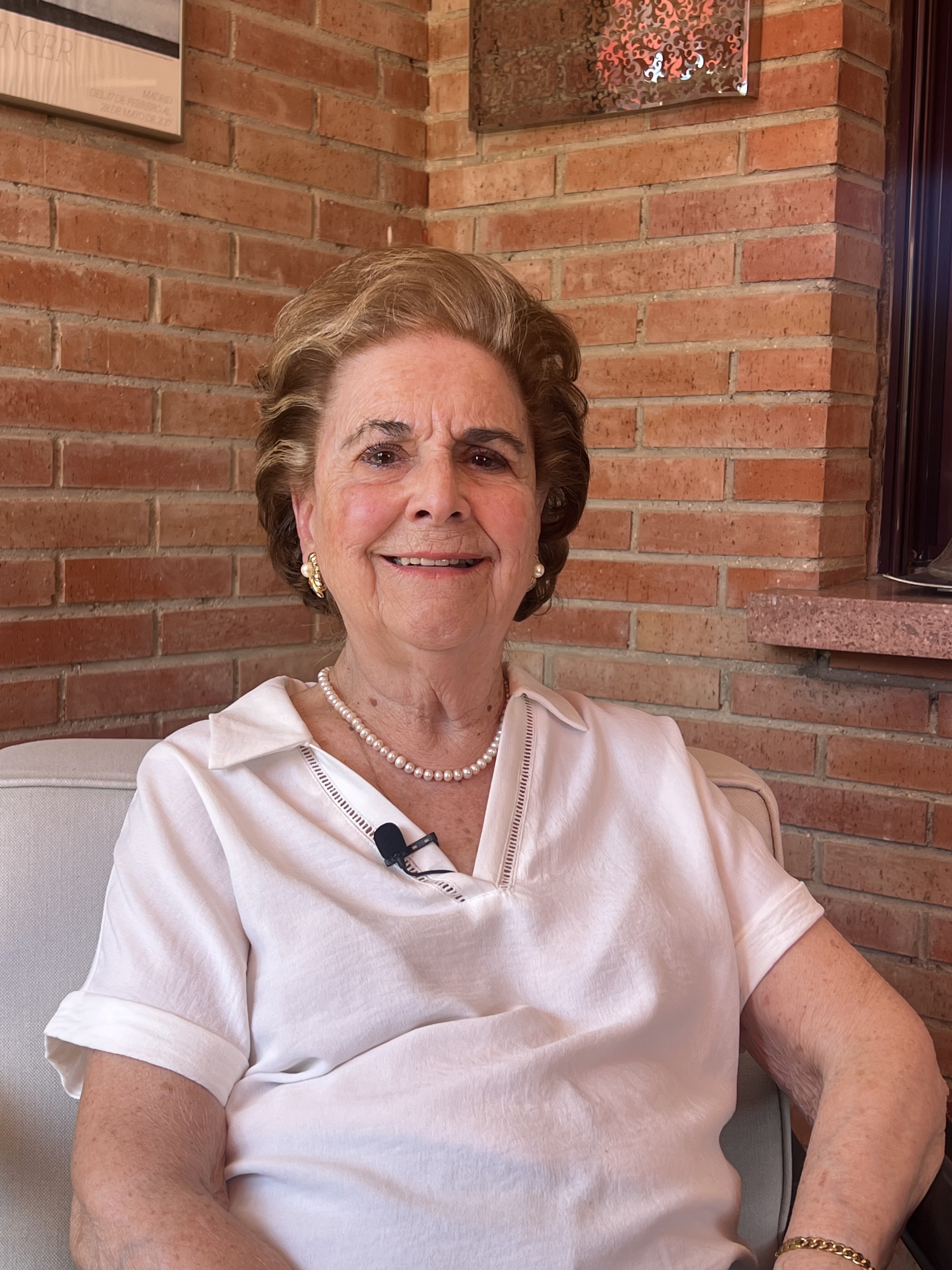
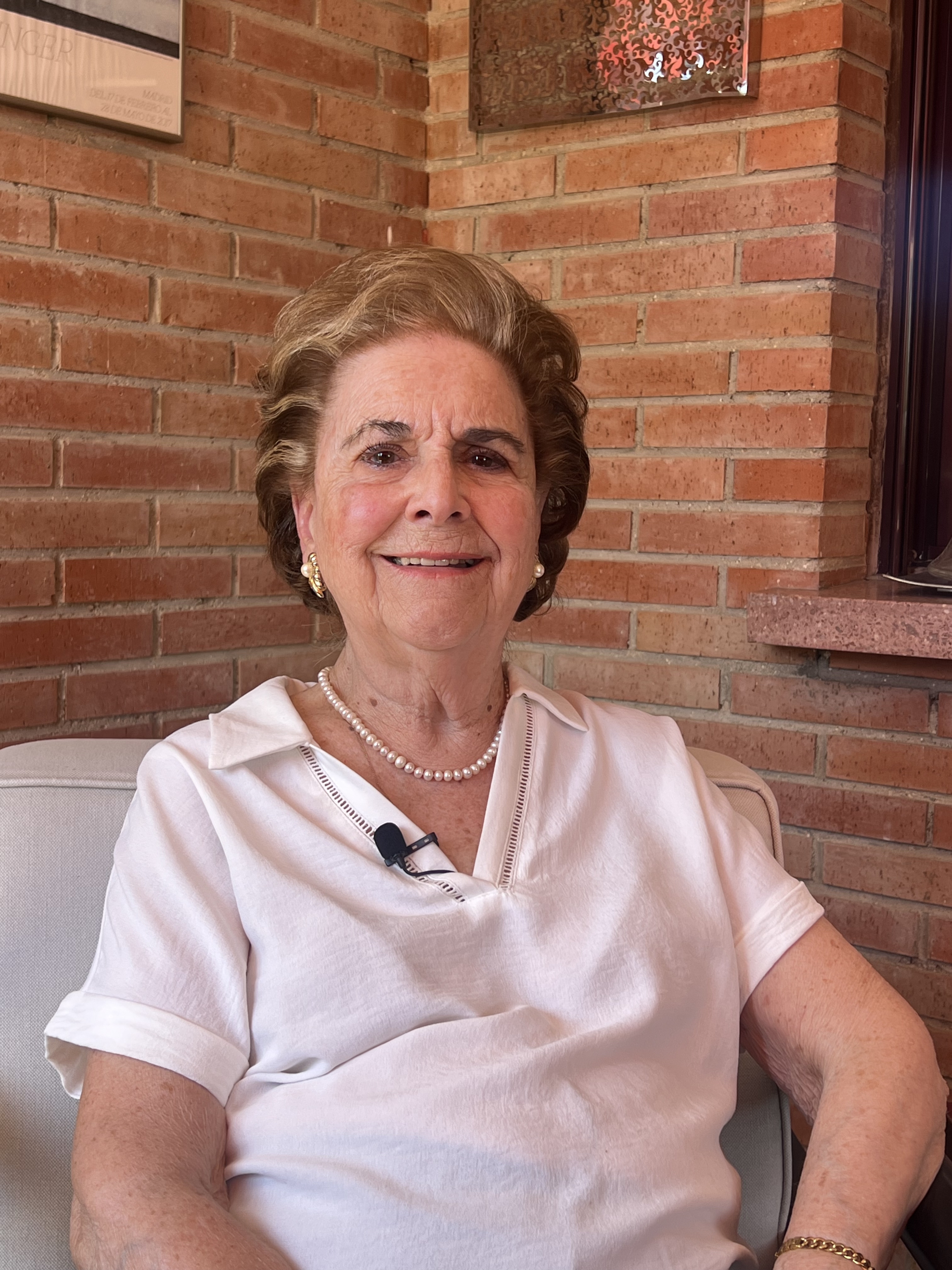
Josefina Ganzarain Gómez, daughter of Spanish immigrants Marcelino Ganzarain and Macrina Gómez, was born on June 17, 1938, in Havana, Cuba. She grew up in a deeply Christian home, where the values of solidarity and helping others shaped her life from an early age. She enjoyed a happy and hopeful youth. In November 1959, shortly after the triumph of the Cuban Revolution, she married Vicente Gutiérrez. Despite warnings from friends about the political direction Cuba was taking during their honeymoon, the couple returned to the country because of the strong family ties that still bound them to the island. During the early years of the Castro regime, coinciding with the Bay of Pigs invasion, Vicente was imprisoned as a political prisoner and sentenced to three years in prison, during which time his first daughter was born. In 1966, under pressure from the regime to join the Communist Party, Vicente was forced into exile in Spain, leaving Josefina and their three daughters behind. Nineteen months later, in 1968, they were reunited in Barcelona. She has lived in Spain ever since, where she and her husband raised a family of five children. At 87, she still has a deep desire to return to a free Cuba and dreams of witnessing that historic moment. Her husband, Vicente, died in 2020, without ever having returned to the island. The interview with Josefina Ganzarain was conducted as part of the subproject Memories of Our Cuban Neighbors.