"I know that Vietnam is still a poor country. But to me, that poverty exists for many reasons. The first reason is that people don’t have the right to speak up. Now, people can speak but when they do, no one listens. A Vietnam worth living in is one where people have the right to contribute their opinions, and where those opinions are respected. When I got involved in programs to help build civil society, that was the goal. I said, “Now we have 100 million Vietnamese people. We have one Vietnamese government. But if that government is run by just a handful of people, ten or so, ruling over a hundred million—that’s wrong.” A Vietnam worth living in is one where every citizen understands their role and their responsibility, and where they are allowed to voice their concerns to the government. And a Vietnam worth living in is when the government, after hearing those concerns, feels a duty to act on behalf of the people. That, to me, is a Vietnam worth living in. And I believe this: the Vietnamese government often says that capitalism or democracy isn’t perfect. That's something I agree 100%. But if someone says that democracy and capitalism are worse than this so-called “market socialist-oriented system,” I don’t believe that. I don’t believe it at all. I think that if Vietnamese people were given a real chance, they would do far better. They could achieve much more. And they could help the country far more than they are allowed to now. So I hope that one day, people will be able to express their concerns freely, because that is their responsibility, and the government will see it as its duty to respond to those expectations. That, to me, is a Vietnam worth living in."
"In the beginning, the work we did was really difficult. Working for Radio Free Asia was very hard, because just getting in touch with people in Vietnam was already difficult. And the information people would give us wasn’t always verified or accurate. Still, little by little, things started to get better. We were lucky, even luckier when we decided to send our people deeper into Asia, into Southeast Asia. We set up offices in Cambodia, in Thailand, and so on. And from there, we began to build connections. My team started reaching out first to Vietnamese dissidents. Back then, for example, people like Mr. Trần Độ. Through them, we were able to get some information. Later on, it spread more widely, there were more activists, more voices. For example, pastors, monks, and many others, most of them wanted to speak up through RFA. Because they knew that was the place where their voices could be heard. They also wanted to provide news to RFA, because they understood that it was a channel that needed information. They knew the difference between VOA and RFA. VOA is the official voice of the U.S. government, while RFA is not. So we had more flexibility. And later on, getting news from Vietnam became much easier. Now it’s actually very easy. But back then, when we started, twenty or thirty years ago, it was completely different, extremely hard. Still, the encouraging thing was that people in Vietnam began to recognize the name “Radio Free Asia.” They understood that this was a place where they could share information. That was something we were truly happy about. But I also have to say this: there were people who got arrested just for listening to RFA. There were people interviewed by RFA who were later arrested. There were even people who simply contacted RFA and were arrested. Sometimes when I think about that, it really pains me. And to say that I feel a sense of regret, that wouldn’t be wrong either."
"In 1972, that was what people called the “Inflaming Summer,” because fighting was happening everywhere. Everywhere. In 1968, during the Tet Offensive, I saw the atmosphere of war in Saigon for the first time. But later, I went north to visit my father; he was stationed in Huế. At that time, the Citadel of Quảng Trị had been taken by North Vietnam, and South Vietnam was fighting back to reclaim it, and so on. I saw scenes that, to this day, still haunt me: the sight of civilians fleeing from Quảng Trị to Huế. They were running, running from Quảng Trị to Huế. And there’s something that, I think, no one has really spoken about. So allow me to tell it, because I witnessed it with my own eyes. People were fleeing along Highway 1, walking, running on foot, from Quảng Trị down to Huế. Some carried yokes across their shoulders, with a child hanging from one end and clothes or belongings on the other. And imagine, the Northern forces were shelling behind them as they ran. The number of people who died along that road is something I can never, ever forget. Later, some of my senior journalist colleagues named that stretch of road “Đại lộ kinh hoàng”—“Highway of Horror”—because that was where people fled for their lives, the war’s victims, desperate to find shelter, to find safety. But they were shelled from behind, with artillery fire raining down, and countless people died there. That was, I think, the time when I truly saw death in its most horrifying form. No one could have imagined it. Later on, that stretch of road—from from the Citadel of Quảng Trị down to Huế—before 1975, we all called it the Highway of Horror."
"Earlier, I mentioned that the general secretary—I mean, the editor-in-chief of the newspaper—told me something. These days people call that position the “chief editor,” right? He told me that if I was going to study journalism like that, I’d have to move into writing. Education, health, society—those were all related areas. So when I started, it was the first time I ever got to attend press conferences. Sometimes I even got to ask questions directly to the Minister of Health, the Minister of Education, and so on. That was such a proud moment, because I was only 19 or 20 years old at the time. That was my first real sense of pride. And when I started writing articles, well, I’ll be honest, my editor-in-chief was quite strict. He told me, “We’re an opposition newspaper, so you can’t just write articles praising the government. You can’t do that.” I still remember that clearly. So I said, “But if I’m not allowed to write anything that praises the government, I don’t even know what to write!” Because when you attend press conferences, the ones speaking are all government officials; of course you end up saying positive things about them. So I wrote my articles following what they said. Then my editor-in-chief scolded me again, saying, “You write like a state-run newspaper, not like an opposition one!” But looking back, that was also a fun and memorable lesson for me."
"That year, I was in third grade, in Nha Trang there was a theater called Tân Tân that was showing the film The Old Man and the Sea. The whole school—the entire Nam Nha Trang Elementary School—all the students lined up in the morning to go and watch it. But honestly, it was only later, when I read the story, that I realized there was a philosophy in it. Back then, when you’re only seven or eight years old, you don’t understand any philosophy at all. So when I left the theater, when the movie ended and I walked out, the only thing I knew was that the fish was very, very big. And in the end, that fish was eaten—meaning there was only a huge skeleton left. That was all I knew. I didn’t understand the philosophy, the worldview that was contained in the story The Old Man and the Sea. I don’t know what Mr. Hemingway’s purpose was in writing that story. Really, I only remembered that there was an old man—the fisherman—who caught a big fish. That was all I remembered. When I arrived in Saigon in 1962, there were some remarkable events. In 1963, President Diệm was overthrown. To be honest, I didn’t even know who Diệm was at that time. So it didn’t seem important to me, but I just remembered that after the revolution, the streets were completely empty. Then later, when I was older and in high school, there was the Tết Mậu Thân (Tet Offensive) in 1968. At that time, all the students had to take part in relief programs that assisted those unfortunate people whose homes were burned, or who were killed or injured during the fighting of the 1968 Tet Offensive. And I think that was the very first step when I began to take part in social activities."
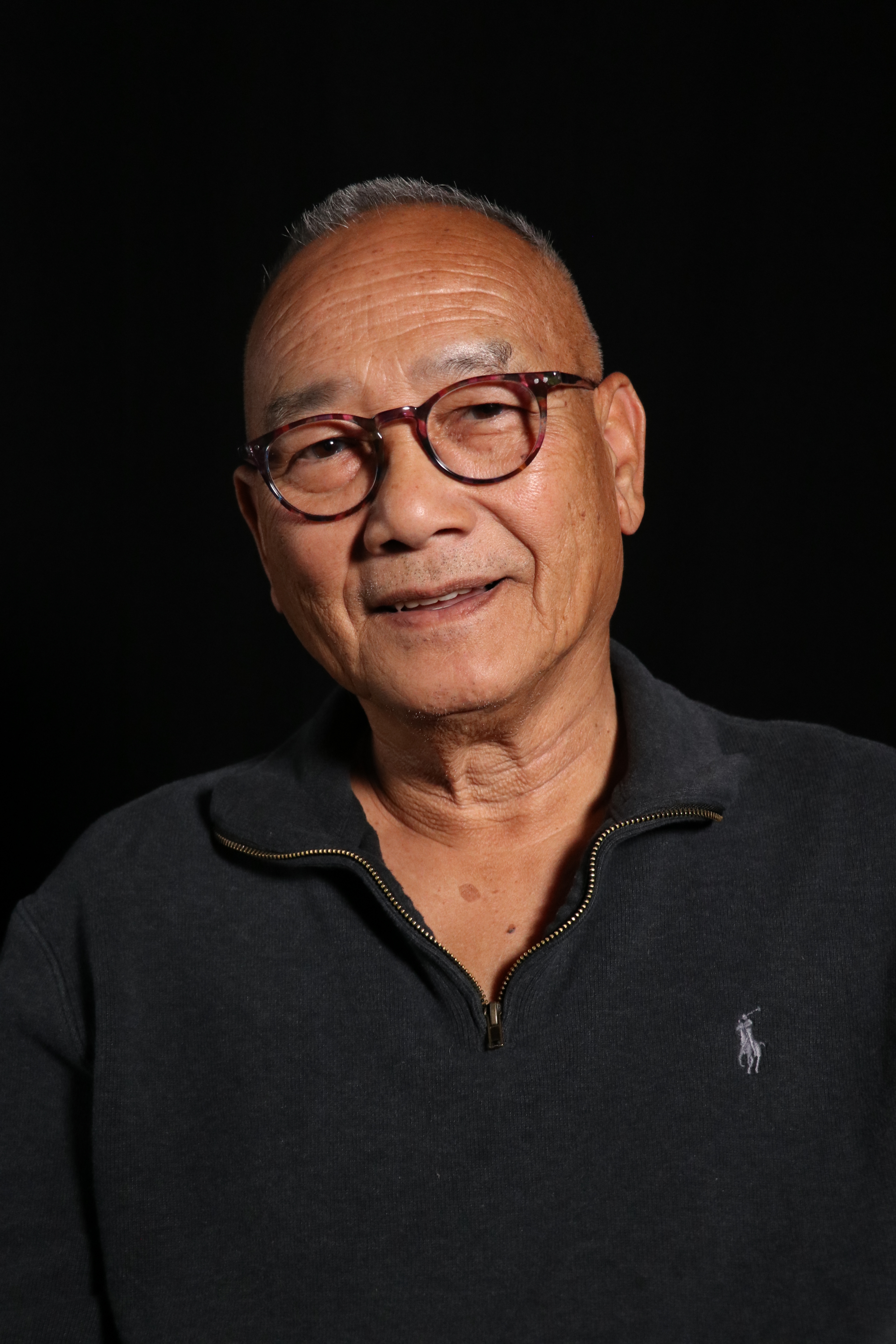
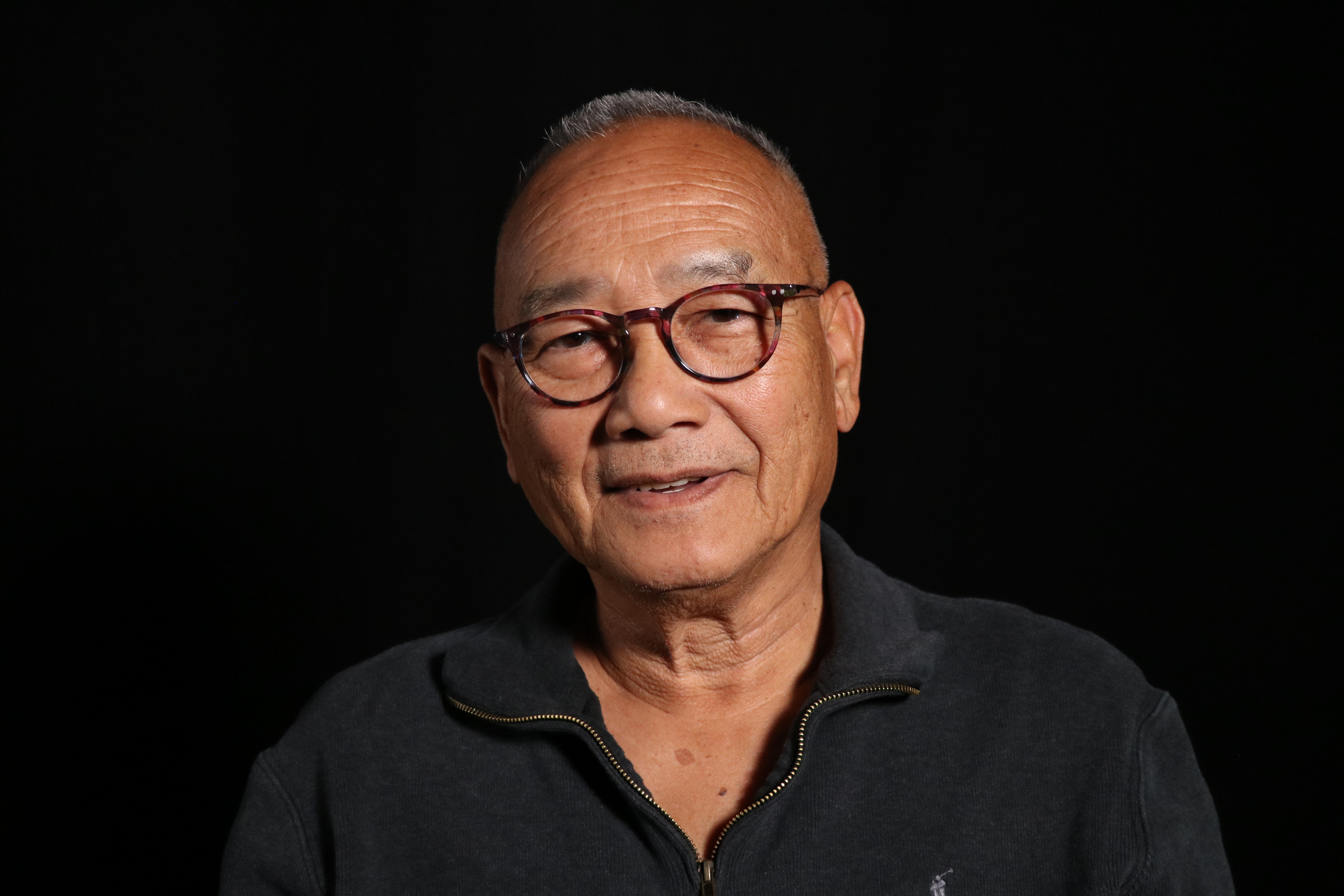
Nguyễn Văn Khanh sinh ngày 15 tháng 6 năm 1952 tại Hà Nội. Gia đình ông di cư vào Nam, trước tiên đến Nha Trang, rồi sau đó vào Sài Gòn để trốn khỏi chế độ cộng sản miền Bắc. Sau khi Sài Gòn thất thủ, họ đi vượt biên, sống qua các trại tị nạn ở Philippines, Guam rồi đến California. Gia đình ông được hai nhà thờ Công giáo tại Chicago bảo trợ. Ông bắt đầu học tiếng Anh, đi làm, và hòa nhập với cuộc sống Mỹ. Ông nhận học bổng học đại học George Mason tại Washington D.C. Khi mới đặt chân đến Hoa Kỳ, cộng đồng người Việt Nam tại đây vẫn còn thưa thớt. Ông đã tham gia vận động chính phủ Mỹ giúp đỡ người tị nạn Việt Nam, với kết quả là sự ra đời của Chương trình H.O.. Ông tiếp tục con đường báo chí dang dở khi còn ở Việt Nam, bắt đầu công tác tại VOA, và sau đó trở thành một trong những người sáng lập ban Việt ngữ của Đài Á châu Tự do. Với kinh nghiệm dày dặn trong việc làm báo và hoạt động xã hội, ông tin rằng thế hệ trẻ chính là nền móng giúp Việt Nam trở nên tự do và dân chủ trong tương lai.