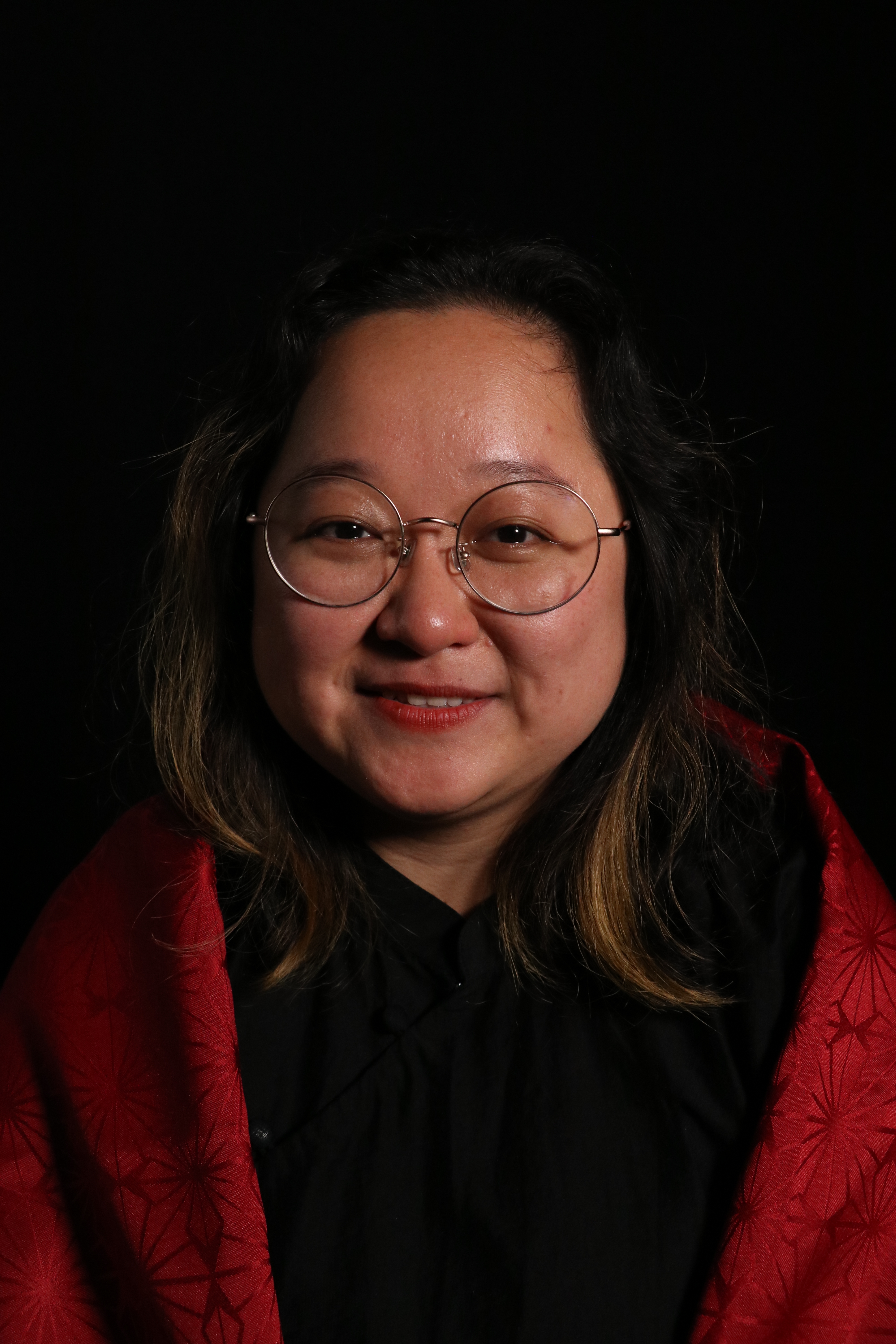
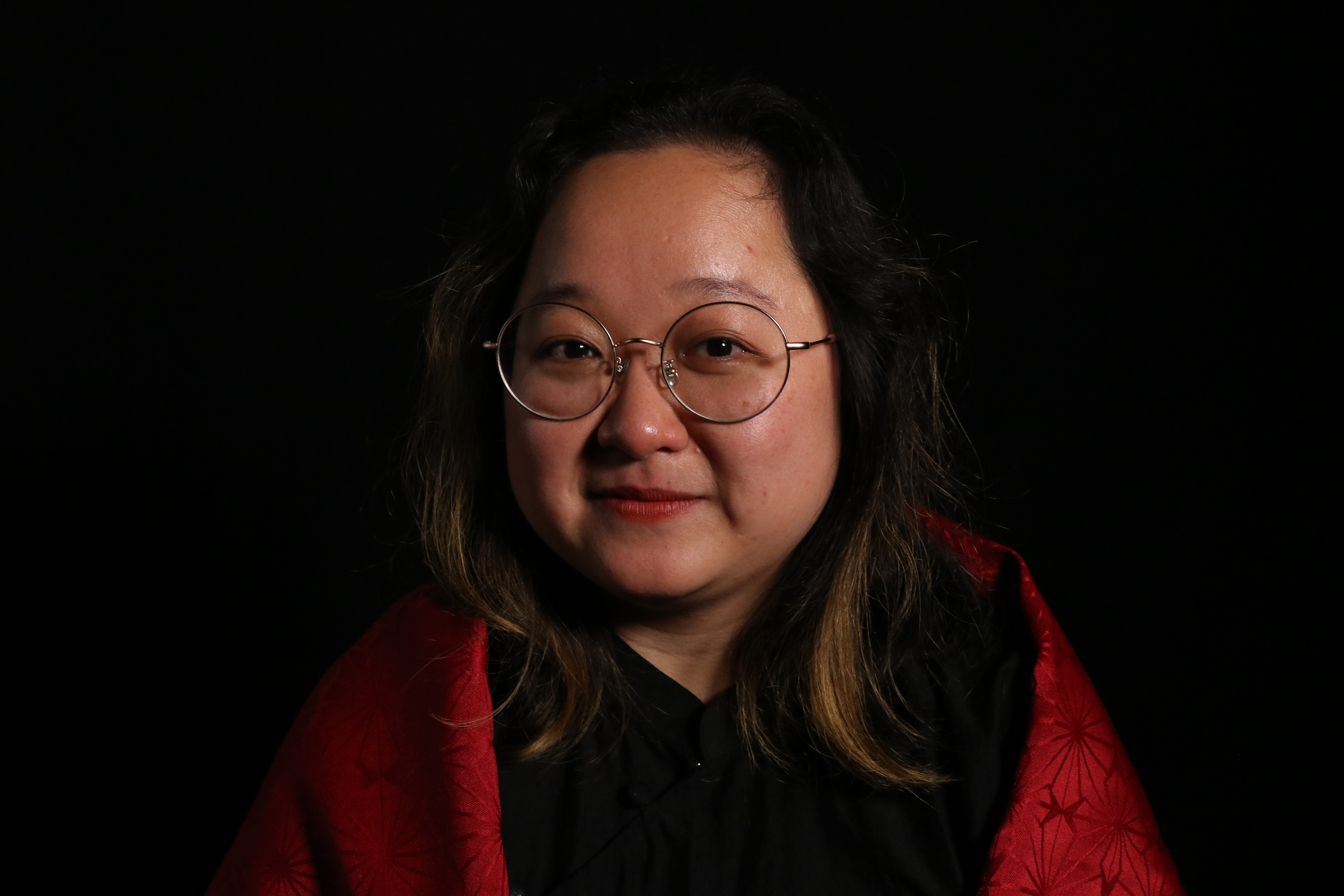
"A livable Vietnam for me is probably one where children and their grandparents can freely talk about those topics. To go to protests, for example. Grandmas doesn't have to worry that one day when her child goes out to protest, she is afraid that her child will be arrested or beaten. A livable Vietnam, I think, is like that. The voices of children in the family will also be heard instead of being suppressed, because an authoritarian society is not only authoritarian from the government system, it can have authoritarian thinking from the family, in school, in social relationships. I think a livable Vietnam will be one where those authoritarian elements are removed so that children can freely have their own voice. They are listened to, they are respected, they are chosen, in love, they are supported, they are supported by their family or the society around them so that they know that whatever the choice they make, they have enough information and authority to do it."
"I was already being followed before, so I guess I was on the blacklist of "anti-government, provocative components". So after launching Hoc de Hanh or School of Activism (SOA), on the People's Army newspapers, the People's Police newspaper, and other pages of hired trolls, they posted quite a lot of news about me. I don't know how they wrote and gave a lot of information that was not correct. But most importantly, they used a lot of hostile and hateful language and messages aimed at me to say that I am an anti-government, dissident dissatisfied with the regime and wish to make a cultural revolution. I do not possess that ability and I cannot do it. I am simply an individual who would like many other individuals to know their rights. It is that simple. It's like okay, I've had an experience of freedom and I think it is very natural that everyone should be able to discover and explore that freedom. It is not that people do not have freedom, it is not that people don't understand. When talking and studying in SOA classes, I realize that everyone knows this, everyone also acknowledges that, it is just that the environment does not allow it."
"After that, I remember there was a lady in the Women's Association of my ward. Because I used to be active in the youth union, everyone in the ward knew that I was a very affectionate member of the youth union. During that period, we hadn't talked to each other for a long time, but she suddenly texted to ask how I was. During the conversation, I realized that her biggest goal was to ask about my whereabouts. After changing the topics many times, she still asked about where I was. Then I realized that maybe someone asked her and she was forced to learn more about me. That was one of the small signs. I just guessed, I didn't know specifically. Until they came to my house, they actually talked to my family... They told my family directly that I was following this reactionary movement, doing this and that, opposing the government, and wanted to know where I was. My family only knew that I was going to school. That was the only story I could provide. So my family only said that I was going to school. My grandparents are old so they don’t have any technology to know about what I was doing. I tried to give out very limited information. First, it is for the safety of my family, and second is for myself. I remember that the last time I spoke to them, they said that I would not be allowed to leave or enter the country if I returned. In the terminology that activists use now, I would be banned from leaving or entering the country. That is also one of the methods that the police often use to pressure activists. They can put pressure, neutralize, and not allow people to leave Vietnam. When I received that information from my family, I was more certain that I could not return then."
"At that time, social networks had already been widespread. While many people posted different information, there was an article written about how to protest safely. At that time, I also read from Ms. Pham Doan Trang. I think at that time, many young people like me were confused about the situation. When I read Trang's status about how to protest safely, I thought that she was very inspirational. "I am here, I am companying you". I cried before I went to protest. A person whom I do not know, I only know her through her very touch words. I realized that out there, many others were having concerns similar to mine, I was not alone, I had a community out there who were ready to go protest together. I remember clearly that before the protest, I was very nervous. I called a friend of mine. I said, "Hey, I'm going to protest tomorrow, do you want to go with me?" My friend was also going to call me and invite me to go with her. The two of us slowly rode our motorbikes to the stationery store, we bought colors, cardboard and sat down. I still have the photo and I really wanted to bring it here. I also have a shirt. I drew a sign above my head with a fish and a banner saying “fish needs clean water, people need transparency”, which was a very strong slogan in the movement at that time. Later on, my photo accidentally went viral, and people shared it a lot. But, looking back, from the moment I nervously decided to call my friend, invited her to go draw the banner, to the next day, secretly driving, parking at the lakeside and joining the protestor group. That whole process was a huge step for me. It unlocked the rebelious side of me. Something I had always suppressed since my teenage years until the moment I decided to step out onto the street. When I joined the crowd, I think I will never forget the sky of Hanoi at that time. Because I am very short. Imagine you are walking in a crowd and you are lost in it. You have to hold up your sign, tilt your head up to shout, chant slogans. At that moment, you are so small but you are looking at the sky so… in Trang Tien, in Hanoi. If you are in Hanoi, you will know the feeling of walking on Trang Tien street, tilting your head up and shouting your voice, then…"
"I see very clearly that many social project staffs or non-governmental organizations will encounter many difficulties like that when working with the localities. Or they will be placed under supervision. You will need to be able to talk to the local government or the police to explain what this project is doing, where the foreign funding comes from, why it is being done here. For me, it does not make the work more convenient or more supported. Instead, it makes the project manager or the people involved wary and having to withdraw. In the end, the most disadvantaged is still the community, which is the party that needs to benefit from these projects."
"If it is not my project, I also know the projects of other organizations. I know that there are projects that need to apply for a license. For example, a project program has the duration of one year. But this project from the beginning of the year to the end of the year did not received a license. So they lost the opportunity to work. That is a very typical example. I don't have a clear understanding of the current situation. The NGO working environment may be more different now. But even before my time, there was already such a restrictions."
Đào Thị Ngọc Diệp sinh năm 1993 tại Hà Nội, lớn lên trong hộ gia đình diện nghèo giai đoạn đất nước chuyển mình sau thời kỳ bao cấp. Từ nhỏ, cô là học sinh năng nổ trong các hoạt động Đoàn Đội, nhưng cũng sớm đặt câu hỏi về những khuôn mẫu tập thể. Diệp nhận được bảo trợ từ tổ chức Plan International trong những năm đi học, từ đó nuôi dưỡng ước mơ được giúp đỡ cộng đồng như những người từng giúp mình. Năm 2011, cô theo học ngành Công tác xã hội và bắt đầu hành trình làm việc với cộng đồng. Từ năm 2014, Diệp làm thực tập với các tổ chức phi chính phủ, quan sát những khó khăn mà nhân viên xã hội phải đối mặt trong bối cảnh hạn chế về tự do dân sự. Năm 2016, cô tham gia biểu tình phản đối thảm họa môi trường Formosa, đánh dấu bước ngoặt mở khóa con người phản kháng trong cô để bước gần hơn tới việc hoạt động vì quyền con người. Sau đó, cô tiếp tục học tập và giao lưu với các phong trào trong khu vực Châu Á Thái Bình Dương, tham dự các diễn đàn nhân quyền quốc tế và theo học thạc sĩ nhân quyền tại Thái Lan năm 2018. Trong giai đoạn 2020-2021, Diệp sáng lập “Học để Hành – School of Activism (SOA)”, một không gian trực tuyến an toàn để người Việt Nam học hỏi về nhân quyền và xã hội dân sự. Dù không thể về Việt Nam, cô vẫn kiên định với lý tưởng của mình: lan tỏa hiểu biết về nhân quyền và nuôi dưỡng tự do trong mỗi con người Việt Nam.