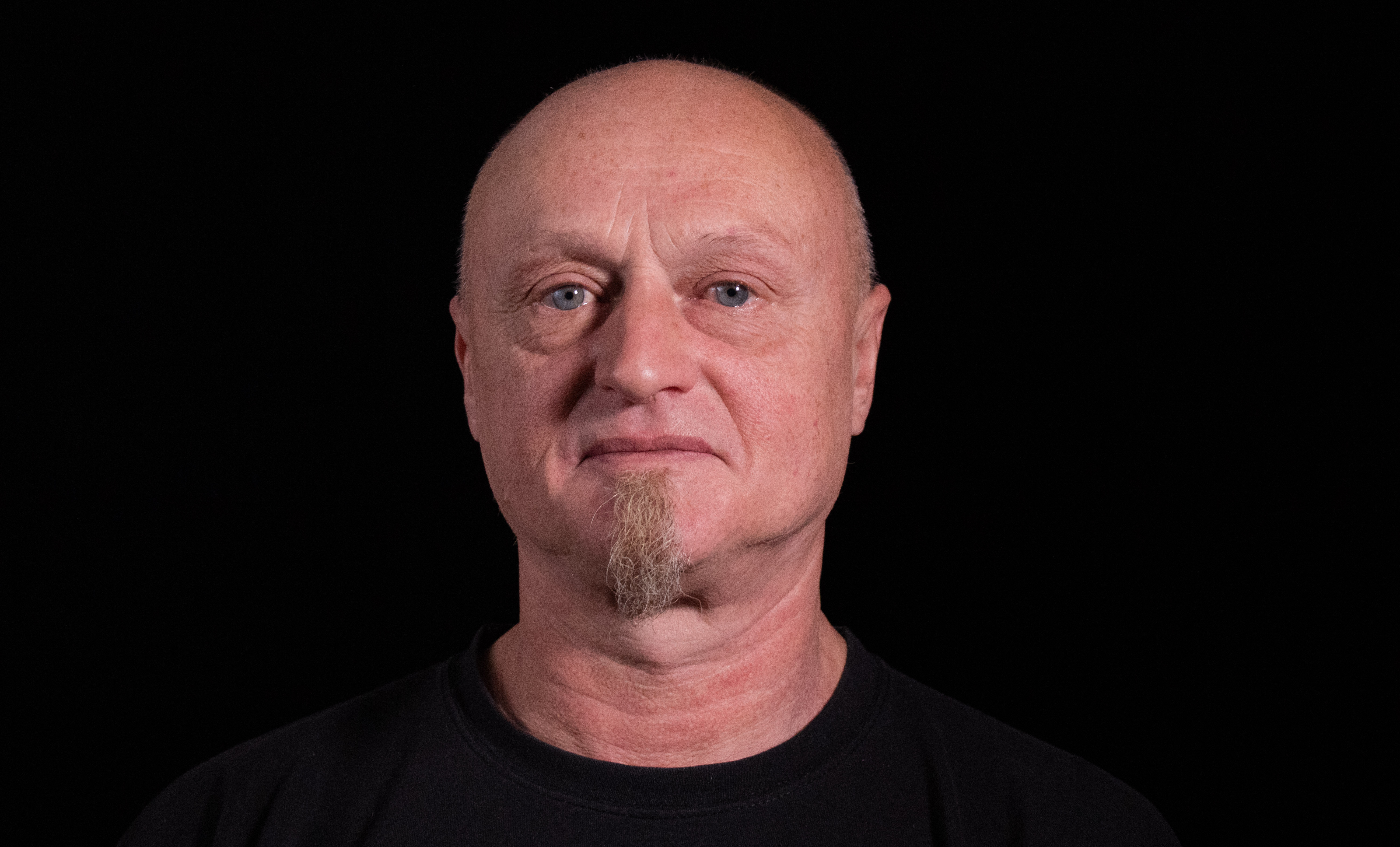
Jiří Zelenka

* 1959

  • "I was already working in a poultry farm, and a week later, a car came, and the manager called. There were actually interconnected phones from the office of each hall, so they told the women to find me and send me to the office. And there were two State Security officers there, and now they started to question me: 'Why, what about in Počerady?' And I said: 'Well, what about in Počerady, that's where we wanted to play, right. And then the police came and closed it down.' And they said, 'And how many of you were there?' They asked how many of us were there, even though they knew there were 150 of us. So I told them that, and when I didn't want to tell them something, I said I didn't remember because I was drunk. So they left, and the manager says to me, 'Are they coming after you?' And I say, 'Well, I don't know, I guess they are.' And he's like, 'Hey, next time they come, just soak yourself in the chicken sh*t and wipe it off in their car when they take you away.' That's what he told me himself. So yes."

  • "In Žatec, I had an apartment in a villa in the attic, which was arranged by my manager at work. There was no bell, and when someone came to see me, he rang the bell for the neighbours downstairs, they let him in and knocked on my door upstairs. And one time, he knocked on my door like that, and there was a State Security officer there. His name was Havelka, and he immediately stuck his foot in my door and rushed in. I had on my desk at the time... At that time, I wrote some of my things there, poems I called them. I even had an unfinished novel out. And he got right to it. We got into a fight, really, not a fist fight, but just kind of a little fight. And he was like, 'You're gonna be in trouble, we finally got you... That's assaulting a public servant.' But I really should have... He took the papers and ran out of my flat, running off with the papers. That's when I got scared. So I quickly took the typewriter and stuff like that out of the apartment, gave it away or hid it with somebody. But then I realised, because then I talked to Skalák or somebody, and he says, 'Don't worry about it at all, he broke in. He actually robbed you. He didn't have a warrant, nothing. Don't worry about anything at all,' and that's what happened."

  • "I used to go to the yard in sweatpants. There was an officer walking, I don't know what batch it was, and when I saw him, I took a rock and threw it at him in a way so I wouldn't hit him. Well, trouble right away, right, huge... And the doctor comes in and he says, 'He threw a rock, that's trouble, there's going to be a trial.' And the doctor says, 'Yeah, but it says here in the papers that he's been released from the mental hospital.' And he says, 'Oh, I see, he will go to the military mental hospital then.'" - "So you threw that on purpose? To confirm your insanity?" - "And so they took me to Brno, to the military mental hospital, and I was there for about a month or however long, and the doctor there already knew too, and he says, 'Either you come home and lose your car papers, or you keep your car papers and stay in the military. So what's your choice?' So that was an obvious choice, and they let me go." - "So you got a blue [booklet]?" - "I didn't get a blue because there was this thing... I had to get checked the next year, so I had another deferment. I went for a check again. In the meantime, I had appointments with Mrs Sosnová, a psychiatrist. She basically advised me, or she didn't even advise me, but she wrote what I wanted her to write there herself."

  • Celé nahrávky
  • 1

    Praha, 25.11.2019

    (audio)
    délka: 01:35:50
    nahrávka pořízena v rámci projektu Stories of the 20th Century TV
Celé nahrávky jsou k dispozici pouze pro přihlášené uživatele.

The underground in the north was a bit rougher compared to Prague
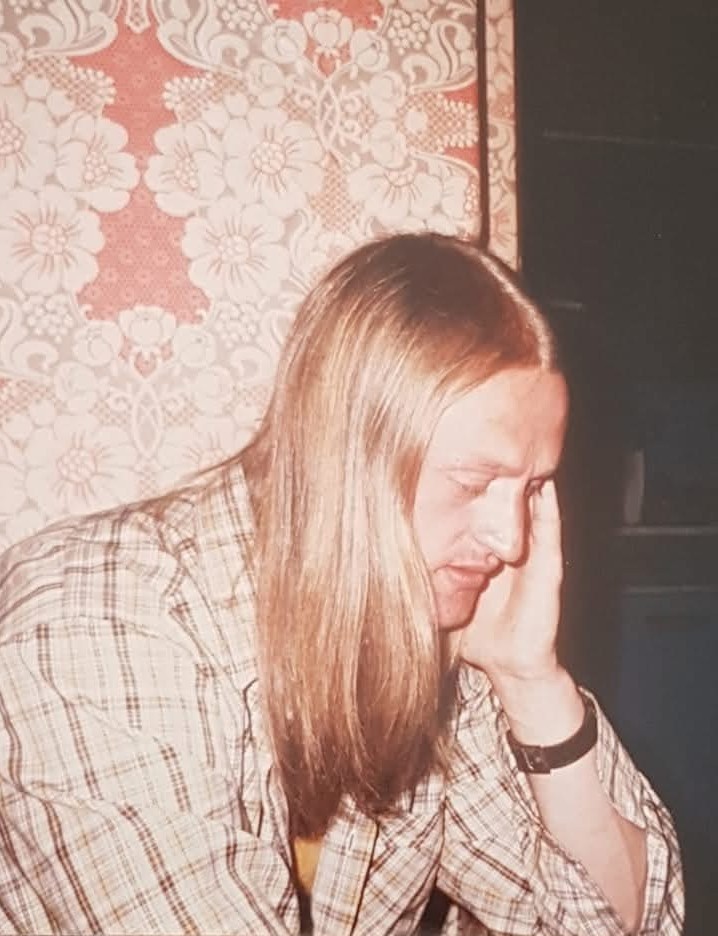
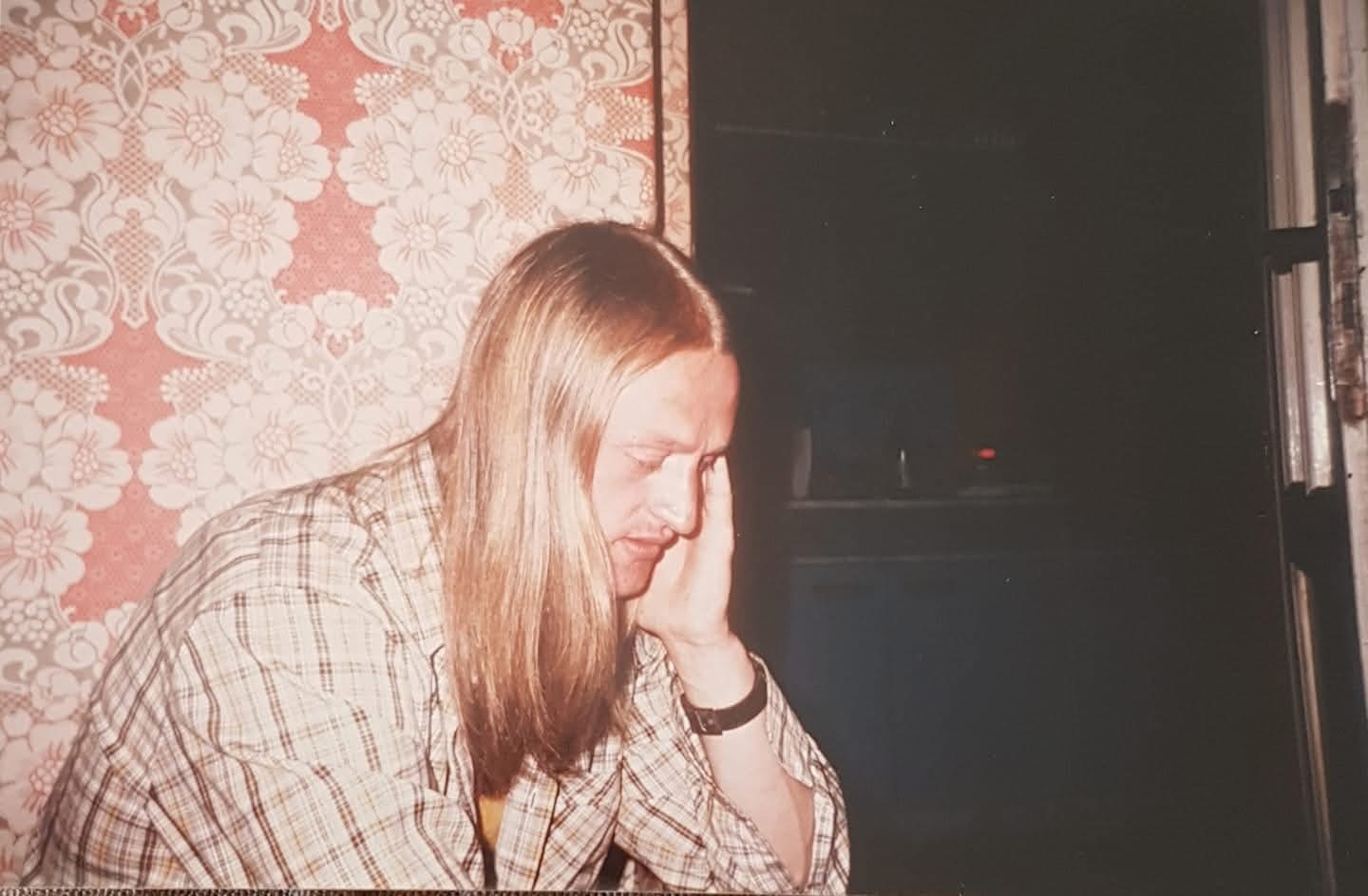
Jiří Zelenka in 1986, by Lük Haas
zdroj: Lük Haas archive

Jiří Zelenka was born on 5 November 1959 in Žatec. He spent his childhood in the small village of Stránky in northern Bohemia. From the age of fifteen, he became actively interested in music. First, he learned to play the guitar, then he started attending big beat concerts with his friends. Gradually, he started to get acquainted with people from the underground and became more interested in the so-called second culture. He evaded military service by faking mental problems and was placed in a psychiatric hospital for a while. After his release, he fully embarked on the activities of the Czech underground. With his friend Pavel Škarýd, he founded the underground group Orchestr Bissext (É Ucho Debil Accord Band), which began performing at unofficial events. During this time, he experienced several police raids, where the concerts were stopped after a while and the participants were arrested and taken away for questioning. In the mid-1980s, he moved to Prague, where he met other figures of the Czech underground and took an active part in its activities. He did not participate directly in the Velvet Revolution, and continued to make music after 1989. He was awarded Participant in the Resistance and Resistance against Communism. At the time of filming (2019), he lived with his wife in a secluded area near Žatec.