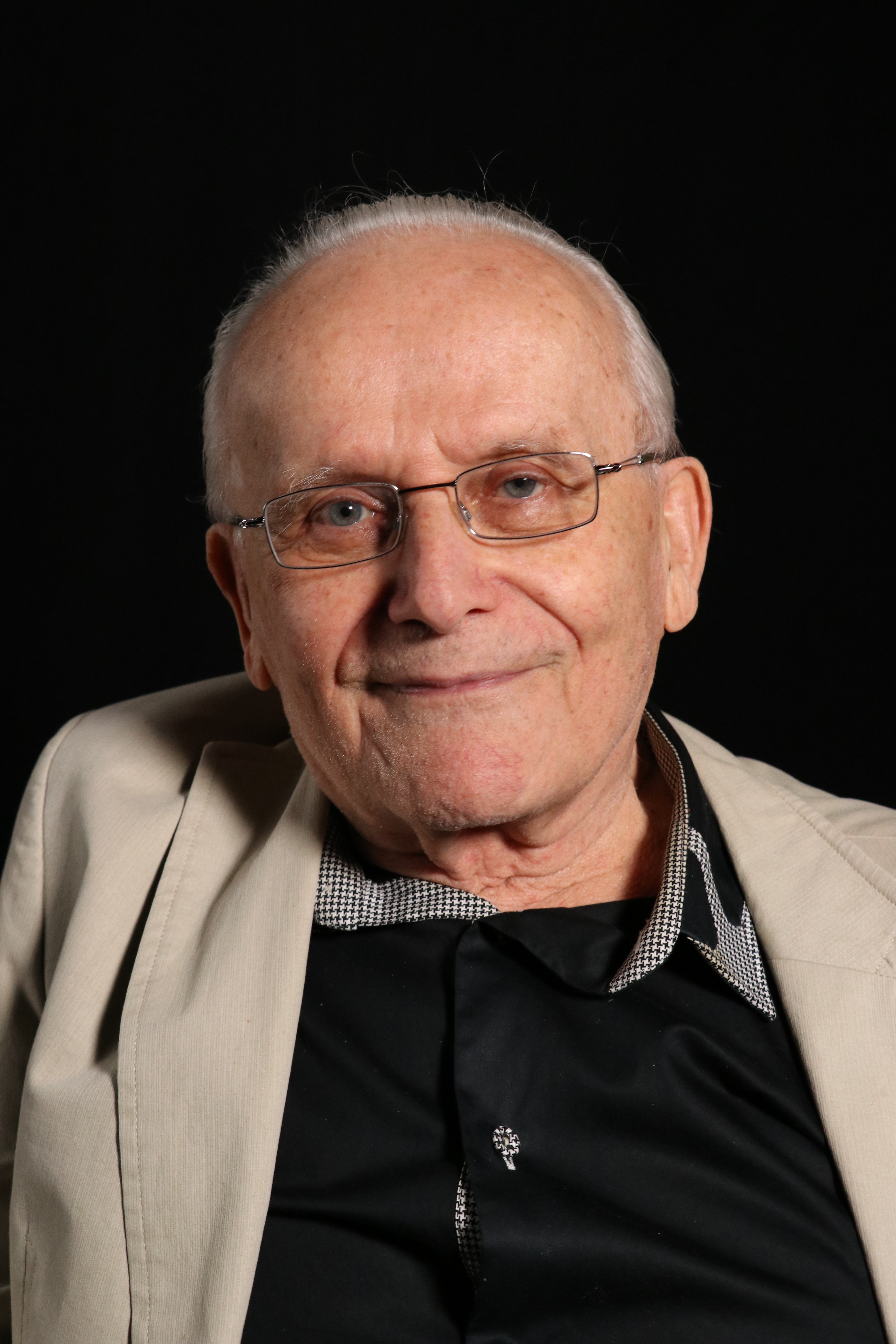
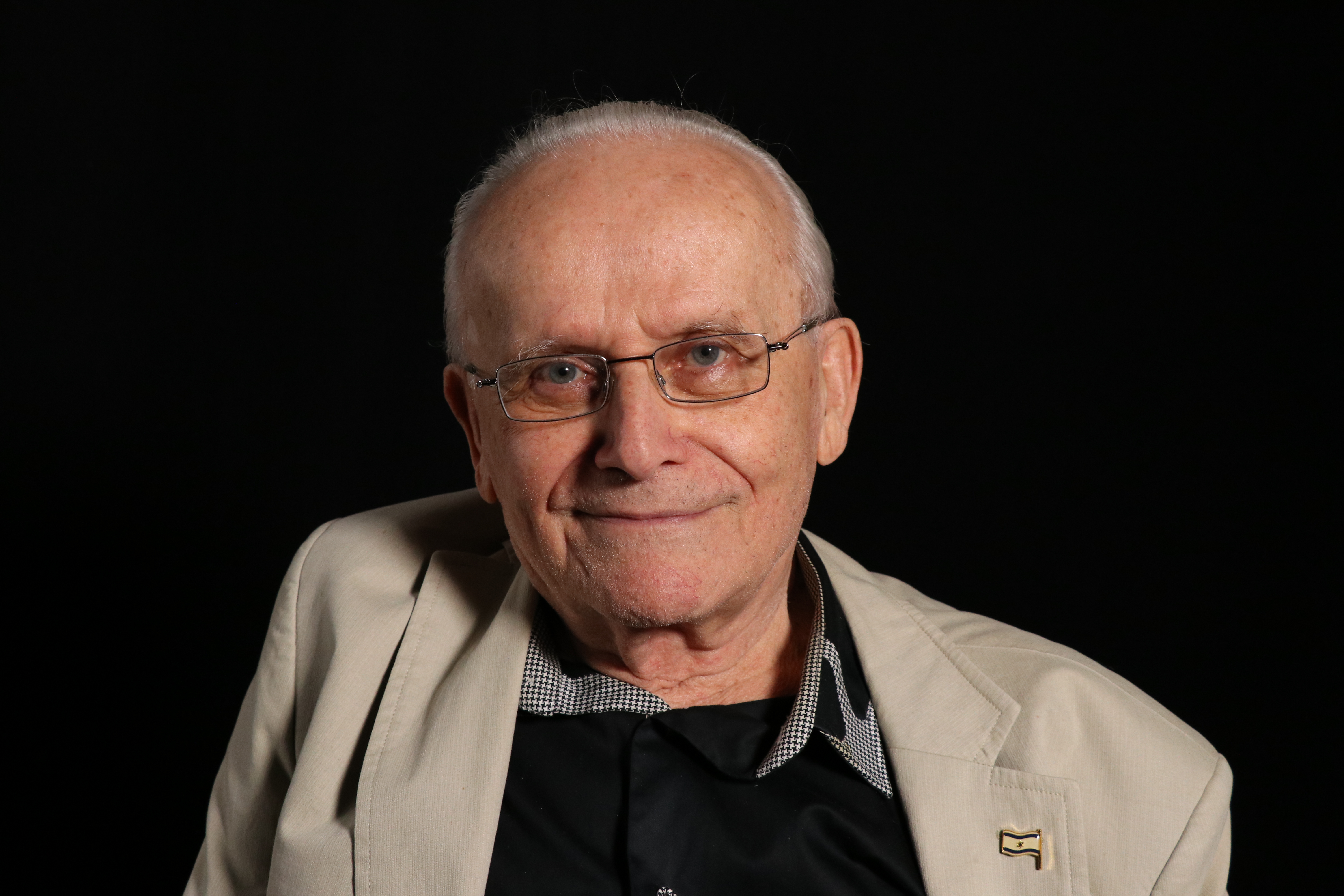
"Of course there was a decision to make, although one had to be invited to do so, not that one wanted to join the Communist Party. So I was approached by the dramaturge Vaculík, who was quite a liberal person, and he told me that they were considering it in that committee. These were individual organizations, this was an organization of directors and scriptwriters. And like several of my colleagues, they offered me membership in the party. Well, of course, I had considered it in various ways, but it was obvious that the move would be judged as probably opportunistic. On the other hand, the political atmosphere then, I didn't feel them as dramatically as they feel them today. I wasn't really friends with any dissidents. Twice I spoke to Václav Havel when he was dramaturge, and I offered him a play of mine when he was dramaturge of the Na zábradlí theatre at that time, he lived in a kind of a trailer there. I was close friends with the poet Josef Hiršal, so he certainly wasn't a supporter of the regime, but his books were published."
"I was expelled not only from DAMU (The Academy of Performing Arts) , I still have the paper at home. There were two stages, that either you were expelled from the school, but you could apply to another school in a year. Here it was so that I, in order to apply to a university, would have had to apply for an approval from the Minister of Education. I don't know how the then Minister of Education would have felt about that. And the beginning was: 'And you're going to work.' They were looking into it, the Stäte Security guys, so I went to Poldi (in Kladno), to Koněv, to the personnel department, that I had a secondary school diploma, an secondary technical school diploma, they said: 'Wonderful, can you draw?' I said I can draw, I can count. 'Well, that's wonderful, leave us the details here and come back the day after tomorrow.' I came the following day and he said: 'You scoundrel, you bastard, you worked against the republic, you think you're going to go to some drawing room and do your job there? Come on!' And he took me to Poldi."
"The first thing was that I had, I guess, tonsilitis or something, and so I was at home. And in the house I heard howling, like a beast howling. Terrible screaming. So I went to see what was going on, and it was the hpousekeeper. And the housekeeper was shouting, 'Stalin, the greatest man in the world, has died...!' And she was crying and shouting it all over the house. It seemed to me, even as a child, I wasn't very trusting, I thought it was ridiculous, with a woman that old, with a Stalin that we had at school, hanging next to Gottwald. The second thing I remember, Gottwald died. Well, what that was like for me as a kid in my fifty-third year, eight years old, I didn't know who he had been at all. And again, for two minutes everything stopped. People, cars, everything stopped. I had this furry coat on and I was running down the street somewhere, to some friends where we were playing ping-pong. And there was a guy standing in front of me, big like a mountain. He really looked to me, I was small, like a mountain. And he grabbed me by the collar and lifted me up and held me up at that height against his face for the whole two minutes that the sirens were going off. He was a miner, and I saw for the first time how that coal was buried in his eyebrows and wrinkles. And when the sirens stopped, he stood me up and he hit me with his hand, big as a shovel. He said, 'To remember all your life, our greatest man died today.' Well, I remembered it all right, because I didn't hear that ear for three days."
Jiří Svoboda was born on 5 May 1945 in Kladno. His father, JUDr. Jiří Svoboda, was a notary and his mother, Božena, née Procházková, taught German and English. Grandfather Leopold Procházka, a mechanical engineer and doctor of philosophy, was arrested during the war for listening to foreign radio. During his imprisonment in Germany, he became seriously ill and died after being transported to Prague in 1944. His parents originally lived in Dobřany near Pilsen, but after the occupation of the border area they moved to Hořovice and Kladno. He remembers the people‘s affective reactions to the death of the communist leaders Stalin and Gottwald in 1953. After finishing primary school, he studied at the secondary technical school in Kladno and graduated in 1963. He was admitted to the Theatre Faculty of the Academy of Performing Arts in Prague (DAMU), but after about a year he was expelled from all universities in Czechoslovakia for writing a letter critical of the regime. In 1966, he enrolled at the Film and Television Faculty of the Academy of Performing Arts (FAMU). His teachers included Elmar Klos, Evald Schorm, Karel Kachyňa, Otakar Vávra and the writer Milan Kundera, while his classmate was Agnieszka Hollandová. He experienced the rise of the so-called Czechoslovak New Wave and the relaxed cultural conditions during the Prague Spring. He lived through the occupation in August 1968 in Prague and did not take the opportunity to emigrate to West Germany in 1969. In 1971, as a graduate of FAMU, he joined the scriptwriting department at the Barrandov film studios, and four years later he was assigned to the directors. In his creative work, he faced the censorship and cadres of the normalisation both at Barrandov and Czechoslovak Television. In 1975, he joined the Communist Party of Czechoslovakia (KSČ). He also worked with filmmakers with whom the official places had problems - for example, Miroslav Macháček, Jan Kačer, Jiří Menzel and Ester Krumbachová. Among the films he most appreciates are Blue Planet, Just About Family Matters, The End of Berhof House, Scalpel, Please, Papilio, The Curse of the House of Hajn, The Velvet Killers, The Psychic. In total, he has made thirteen feature films, and his work for television is extensive, including more than twenty-five titles. He was often inspired by historical themes and personalities. In 1990, and again two years later, he was elected to the Federal Assembly. In the autumn of 1990 he became chairman of the Communist Party of Bohemia and Moravia (KSČM), whose name he later unsuccessfully proposed to change. After an attack on him by an unknown perpetrator on 5 December 1992, he called an extraordinary congress, but because he did not gain sufficient support within the party, he resigned and withdrew from politics. He continued to devote himself mainly to teaching at FAMU, was appointed professor in 2000 and became a member of the Academic Senate of the Academy of Performing Arts. He continued to work for Czech Television. Jiří Svoboda and his wife Milena, née Nižňanská, raised two daughters. In 2025 he lived in Prague.