"We had to bury only Russians. There was an SS man left on Medlánky hill and he already bloated because he had been there for two weeks. It smelled awful; I'll never forget that smell. It was terrible. There were two Russians lying under the hill, one had a clean head shot through his forehead. He wasn't wearing a helmet, so it went right through. The other one had half his head gone. They were festooned with hand grenades, so we couldn't take them into the trench. There was a Russian cannon still standing about 200 meters away. I ran there to get a soldier to come and remove the grenades. He dragged the grenades away and threw them into the trench. There was a machine-gun nest, a kind of a semicircle. It was deep, so he threw it in there and our fathers buried them in it."
"I also experienced, when we were in the shelter in the garden, Russian aircraft strafing. Those were the Shturmoviks ground-attack planes. They had 12.7 machine guns. Those were more like cannons. They had four of them, and they would strafe the street that goes to the dam, Bystrcká. The Germans were retreating and they were firing at them. And since they were starting over here in Medlánky, the shell casings would hit our roofs as they were firing. It rattled, it was a terrible noise. They would strafe them like that."
"There was an air raid of Brno on 20 November 1944. That was also the Americans; they flew to Vienna but then some of the planes dropped bombs on Brno. The inner city was hit the worst - Běhounská Street, Kozí Street, it was completely swept away. All the buildings in the former Kozí and Běhounská, right where the International hotel is, were all just levelled. We boys ran there the very next day, there was no tram service. We ran there and saw dead bodies piled up as they were pulling them out of the cellars where they had been buried. There were dozens of dead. Then an air raid hit Židenice too. They went for the Zbrojovka but nothing hit Zbrojovka. It hit streets like Gajdošová, Mezulánikova and so on. Those were small houses, civilian population. It was demolished. The Germans immediately issued orders and leaflets to prevent looting. They made our people form these patrols of three and they would walk around. When they caught somebody, they would immediately bust them and the Germans would kill them. They shot them immediately. They were just against looting. Right away, bang, done."
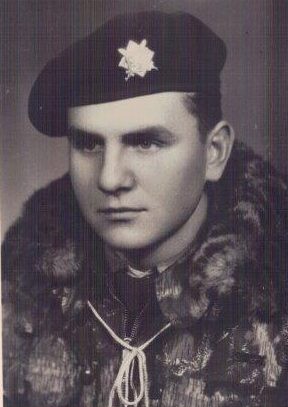
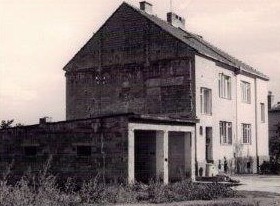
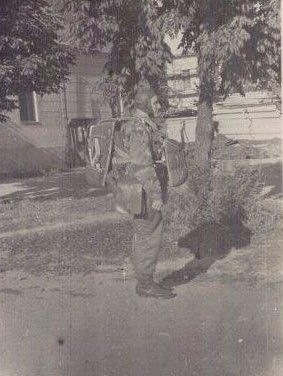
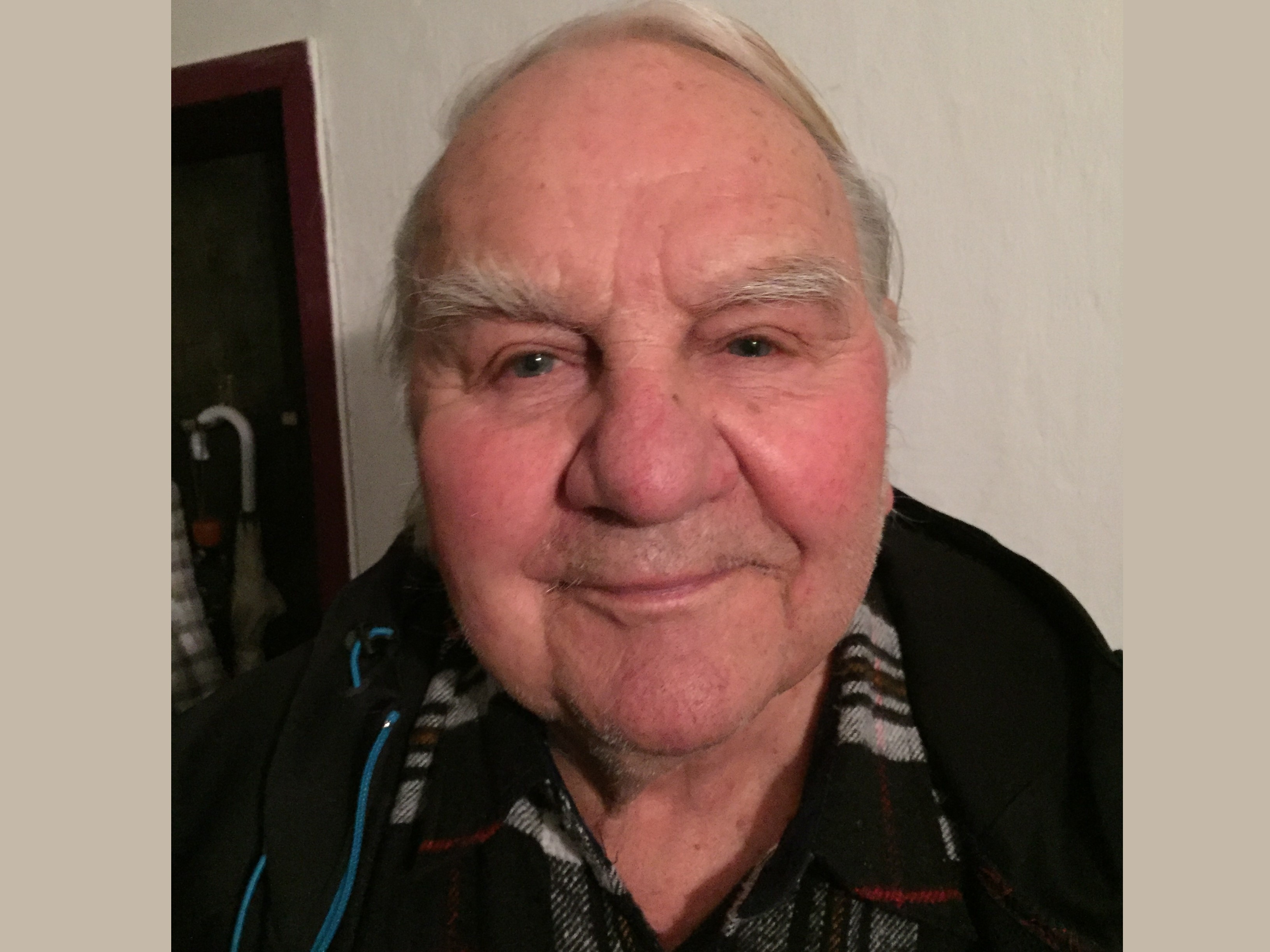
Vlastimil Ruda was born in Brno-Medlánky on 7 March 1933. His father worked as a graphic designer and his mother as a gardener. Vlastimil Ruda experienced the Nazi occupation of Czechoslovakia at age six and had many memories of the war period. He completed primary and burgher schools in Brno-Řečkovice and trained as a graphic designer. In addition, as a young man in Brno he went to the Kozák brothers‘ painting studio honing his artistic skills. Vlastimil Ruda joined the army in 1953 and became a paratrooper. He has jumped 65 times from a plane and a few times from a balloon. Back from the military in 1955, he joined a graphic cooperative and made a living as a graphic designer all his life. He married in 1986. He lived all his life in Brno and died in 2024.