Petr Procházka

* 1964

  • "I went twice - in 1988, a year before the revolution, in Seoul, Korea, and then twelve years later in Sydney. The biggest difference I noticed was that, of course, a StB officer went with us to Seoul to sort of direct it all, but they were nice to us and there was no pressure, but we just knew about him and all that. Very few of us could speak English, we were kind of stuck, a bit scared. But 12 years later the vast majority of the expedition, that's over a hundred people, just spoke English, and not just barely - it's just suddenly a much wider circle of friends, much more comfortable and suddenly there were much, much better results. We weren't so nervous because it was no more than a world championship. We don't get that many people coming to canoe races, so we can't have a hundred thousand people turning up for the canoe race, which would give me a meltdown because there are so many people there, which means the actual competition is pretty much the same."

  • "Because of politics, I went to the army a year early at the age of eighteen at my own request to join Dukla Prague, for various reasons, and I did the right thing. Even though I don't look it today, the smallest compromise we had to make was that we weren't allowed to wear long hair. Of course, it was a military unit, so it was quite logical, even today soldiers don't have long hair, but we had to submit to everything that the party and the government ordered, so to speak, and at any hint of resistance they made it abundantly clear that this wouldn't work like that. We had to make some concessions in our convictions. If someone didn't, they suggested from time to time that, hey, you better be good or you might as well quit here. It happened to one of my colleagues. He refused to take part in what they called an 'extended recovery program', which meant we had to take various medications they gave us, and when he said he wouldn't, he had to quit the national team and quit Dukla a year later. Another friend met a West German girl and they told him, there are enough pretty girls in our country, so find another one. She came to see him a month later, and forty-eight hours later he was out of Dukla because they knew right away that she had crossed the border, and they kicked him out of Dukla. I didn't have that much trouble, but we had to... we all had to compromise."

  • "We also went to Lithuania once, by train, and it was a powerful experience to see a part of the Soviet Union. It was not what they told us in school, athough Lithuania is a beautiful country. I didn't get to the West until I was 17, and then I also saw it was a little different from what we were told in school. Clean streets, order everywhere, lots of cars that looked like new, motorbikes... The things that a kid at my age looks for the most, so we were shocked. This was, as I say, somewhere around the age of 17, and it meant all the things you've probably heard, border checks, filling out the 'customs declaration', you had to obtain a customs clearance in advance, which I couldn't have done at that age anyway so it was done by some officials somewhere, but it was complicated."

  • Celé nahrávky
  • 1

    Štětí, 04.02.2025

    (audio)
    délka: 46:23
    nahrávka pořízena v rámci projektu The Stories of Our Neigbours
Celé nahrávky jsou k dispozici pouze pro přihlášené uživatele.

I‘m happy with what I achieved because it was more than I had ever expected
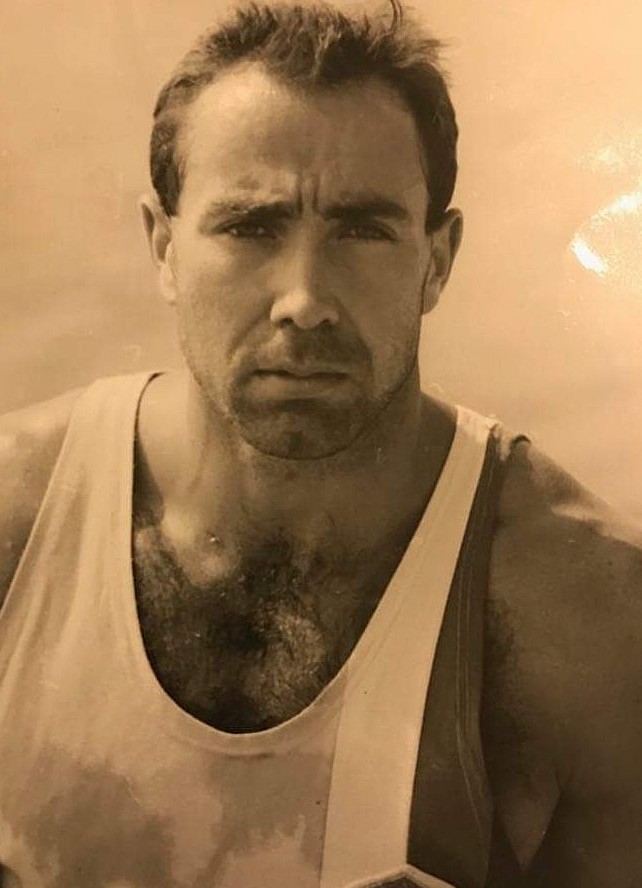
Petr Procházka in his racing jersey
zdroj: Witness's archive

Petr Procházka was born in Hradec Králové on 26 March 1964 where he lived with his parents until age nine. Then the family moved to Pardubice, where at age twelve he joined the speed canoeing club in TJ Dynamo Pardubice. He trained under Josef Doktor the father of later Olympic champion Martin Doktor. He trained for an auto mechanic and obtained his high school diploma by distance learning later on. In 1982-1984 he completed his military service in Dukla Prague, and won his first Czechoslovak championship a year later. He went to the 1988 Olympic Games in Seoul, South Korea accompanied by secret police officers, and in 2000 he competed at the Olympic Games in Sydney. In 2006, at age 42, he won his final world championship in Szeged, Hungary. He graduated from the Faculty of Physical Education and Sport in Prague, and after his sports career ended, he has focused on dragon boat racing and youth education in Račice, which is also where he was living in 2025.