“It was really something huge. I took two of my classmates with me. They were boys who were searching for faith. I have so many memories of it — sad ones and good ones. The boys wanted to go because they wanted to get to know the Church. So we went, and since I knew the place, we didn’t follow the main route, which was lined with police. I went through the woods, so we weren’t stopped or checked. We arrived at Velehrad, and there was a Mass in the afternoon. The entire choir loft of the Velehrad basilica was surrounded. The secret police were there. It always reminded me of Nohavica’s line: ‘Nebeská honorace, aleluja, má totiž svoje informace, aleluja.’ They really were up there on the heights. The Mass took place, and we knew that among the people there were secret police officers in civilian clothes. I shook hands with one of them, the boys did too, and then we heard… excuse me for using an ugly word, but that’s exactly how it was said: ‘Vole, come outside, nothing’s happening here.’ Because they had to stand there in the crowds. When we got outside, up by the shops there were soldiers with water cannons and weapons. They stood there armed in a line so that we wouldn’t try anything. On the rooftops of the houses. On top of the basilica there were water cannons as well. The entire upper floor of the Stojanov building — which at the time housed a care institution for disabled children, where the Sisters of Cyril and Methodius worked and lived — had to be cleared out so that the comrades from the secret police who were supposed to watch us had somewhere to stay.”
"They just took me to the police station in Olomouc. I prayed on the way. As you read the Bible, it says when they bring you in for questioning, don't worry about what you say, because the Holy Spirit is with you. At a time like that, when you really care about everything, it was about getting kicked out of school after five years, about continuing to exist, it comes to mind. I prayed to be brave, because I'm not a brave person. They let me sit there for an hour. There was a huge Lenin across the wall. I can still see it to this day. Comrades walked past me. After an hour, they took me to the police room. I remember there was a big picture of Gustav Husák, there were locked cabinets with padlocks and an unfortunate light. I immediately thought of my father. I thought, 'That's it, the lights again.' So the interrogation began. I was told that religious freedom is guaranteed by the constitution. That was the first sentence. The second sentence was: 'Do you go to church?' 'Yes, I go to church.' And the talk started. I said I made no secret of it. Then the investigator brought up that I ran pioneer camps for Catholic youth. So I said that wasn't true. I wasn't lying, because they weren't pioneer camps. I said that my grandmother died that year, that I was having a hard time. So I just talked my way out of it. Then he pulled out a paper and read the names of the kids and that they were kids from Ruda and Hostice. It started: 'Josef Vénos?' 'I don't know.' 'Jiří Št'astný?' 'I don't know.' Of course, all those kids were there. And that was the first time in my life that I lied, consciously, voluntarily. It was so that I wouldn't get the other people, the parents, into some kind of trouble, since I was such an enemy of the socialist country."
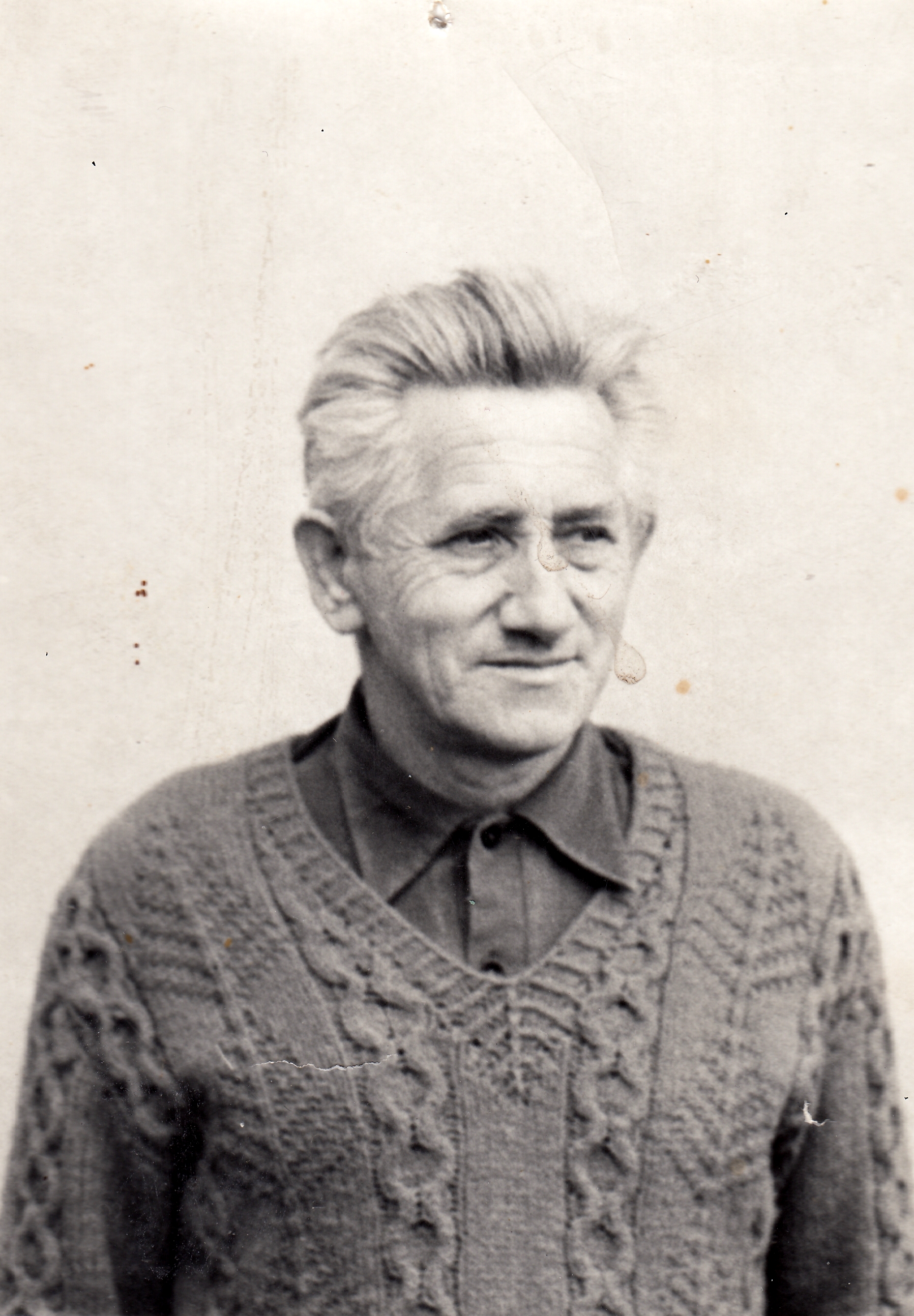
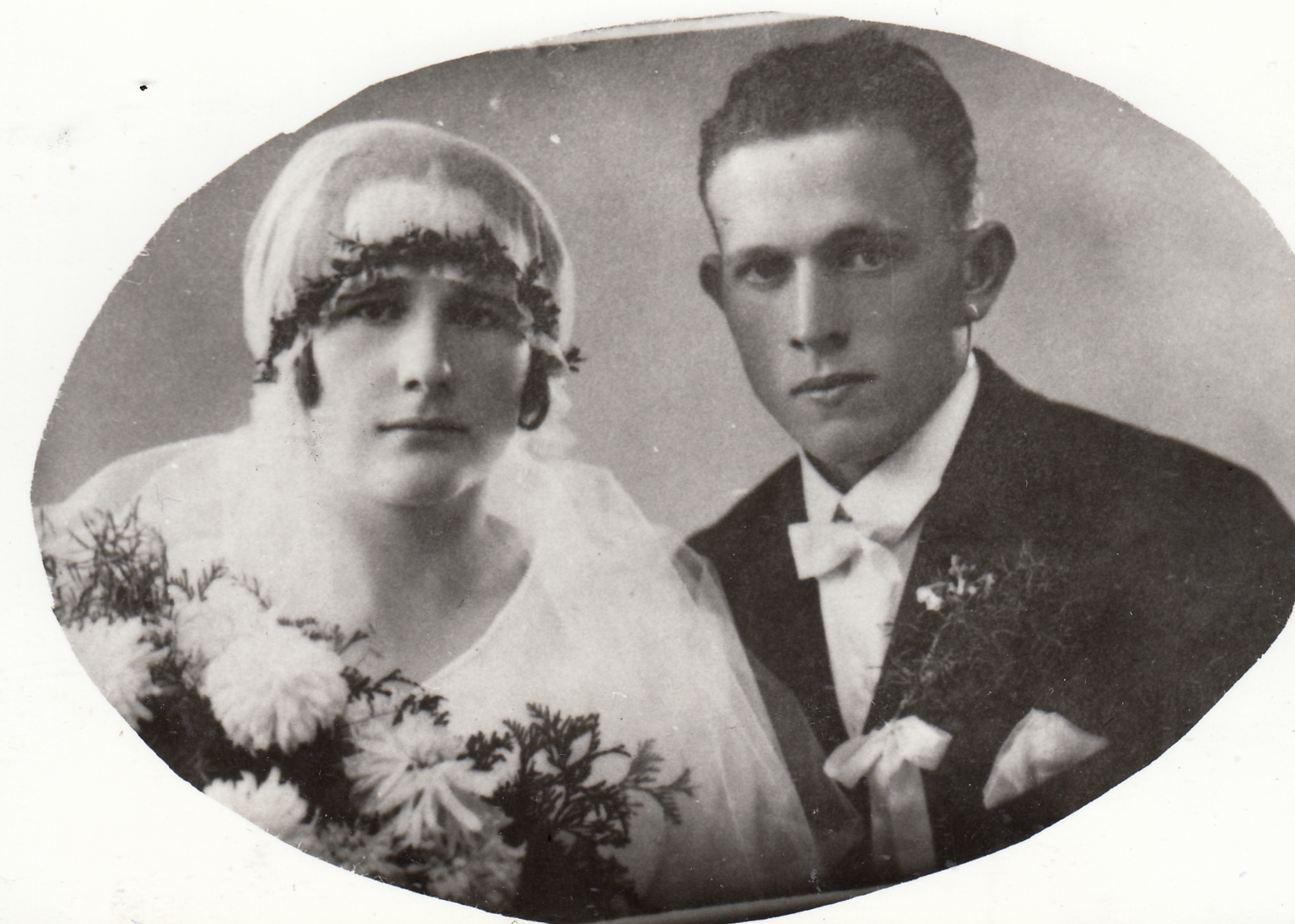
"My father was a pupil of a real grammar school. Then the grammar schools were banned, abolished, and he was sent to Germany as a young boy, as a twenty-four-year-old, for total deployment. He worked in Halle in a transshipment yard and there a supervisor insulted him, saying that he was a Czech dog and had no right to speak. Dad, being raised to Sokol and the truth, told him that a Czech dog wouldn't even sniff a German pig. I say it in the dialect. The German just took offense and turned in dear Dad for insulting the German race. He was facing the death penalty. He was locked up in a concentration camp. I'd have to find which one, but it's true. I have this memory of it. He said, 'I was young, so we were pretty much left alone. I was able-bodied, there was physical violence, but it was bearable.' I remembered the word Eintopf. They used to give them this soup where there was beetroot, and my father couldn't eat beetroot till he died. My mother and I liked beetroot. Dad ate everything, but the association of rotten beetroot was torture for him. The German capo found out that Dad was to be shot. He was probably the right man for the job, so he called it off. He said he'd jumped the gun and Dad could keep working. The end of the war was approaching, there were American raids on the Halle transshipment point. That was a chemical plant. My father, instead of hiding in the air raid shelter, he hid in a pipe under the bridge. He survived the air raid. He told me that it was terrible when the bombs fell around. And as a young boy, he turned grey there."
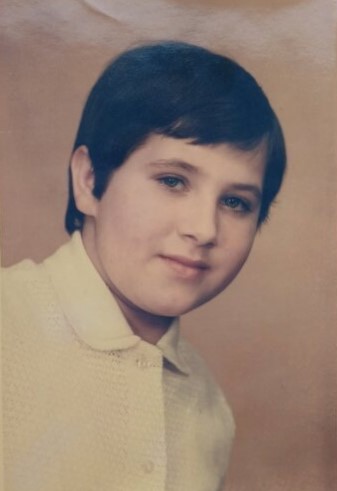
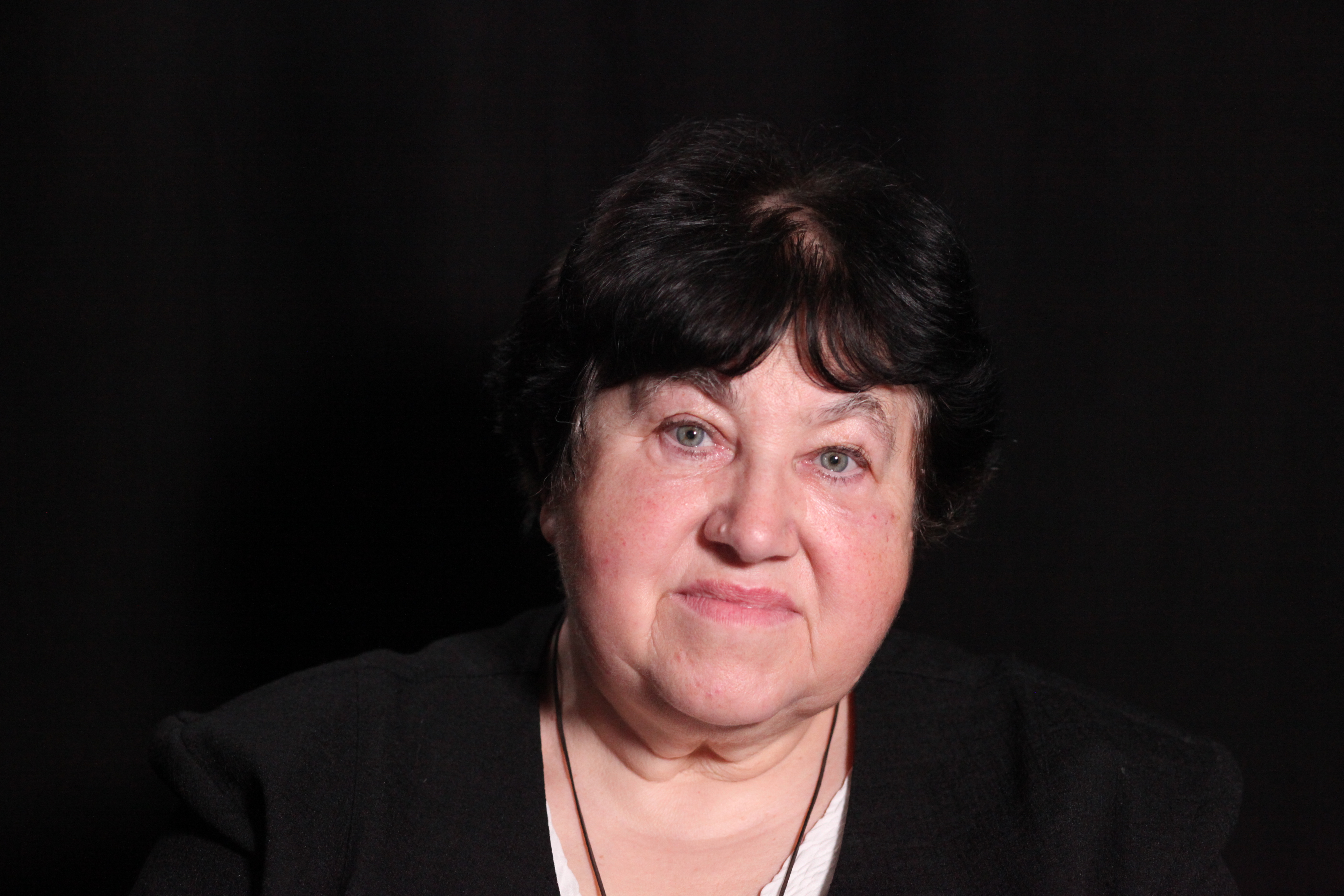
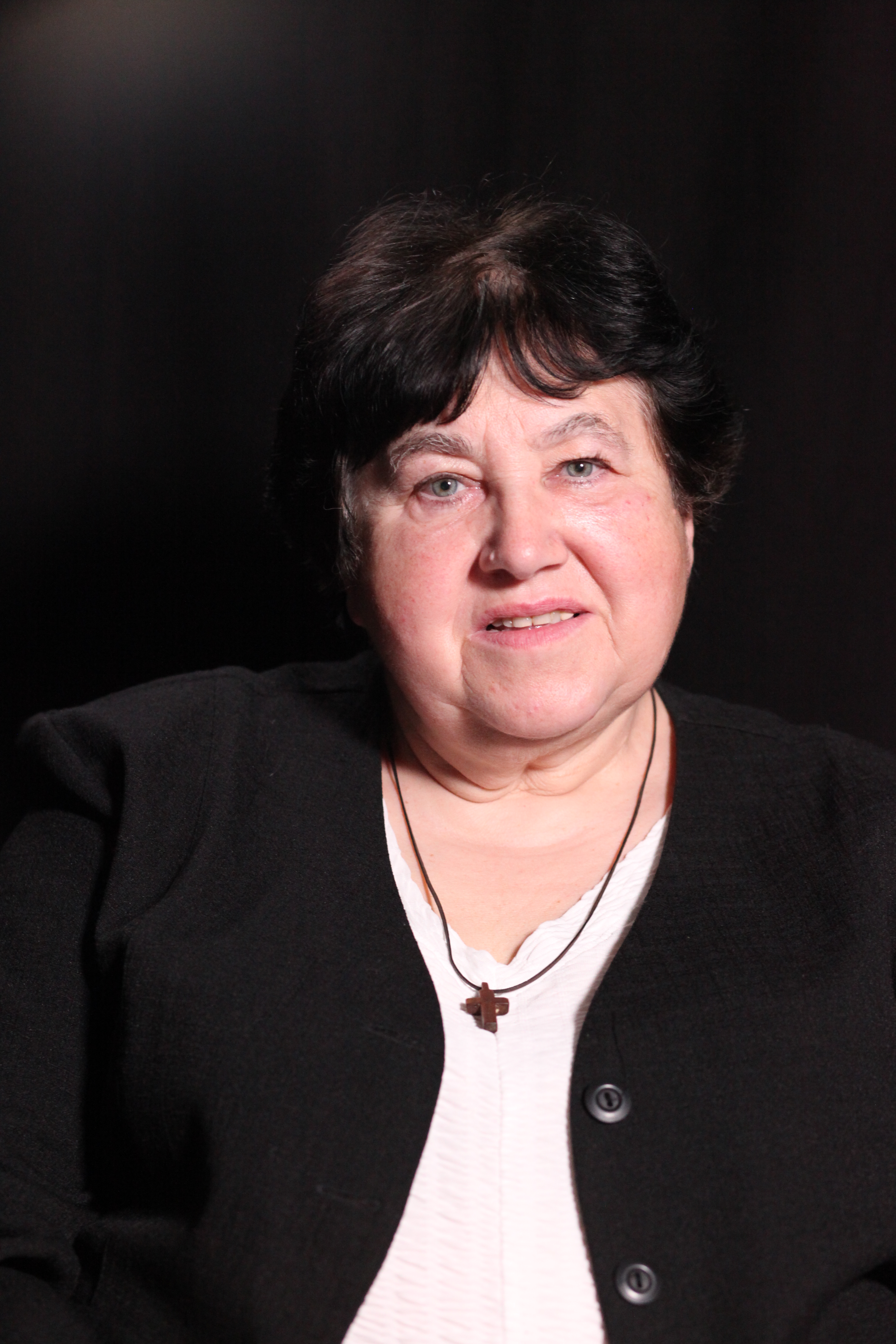
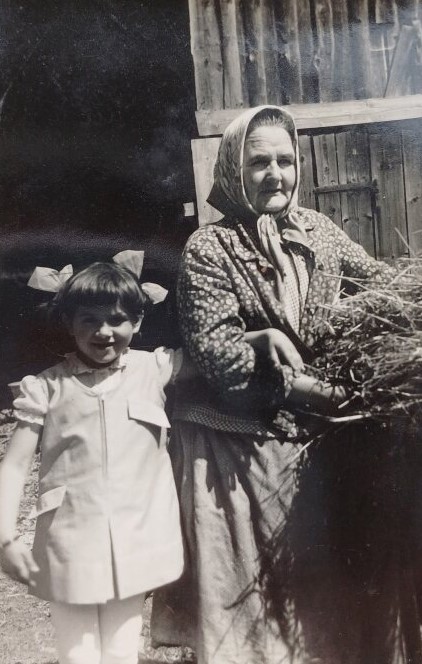
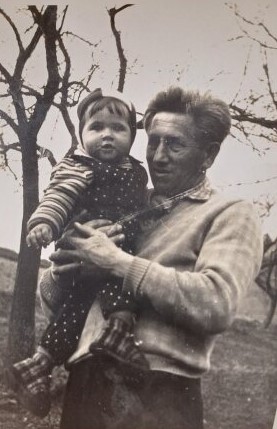
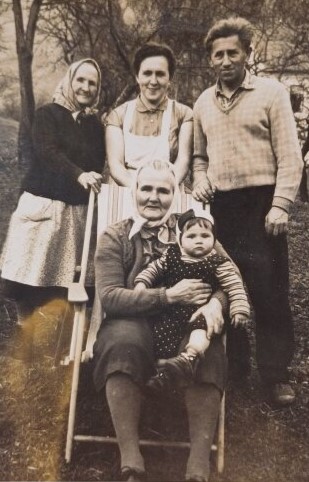
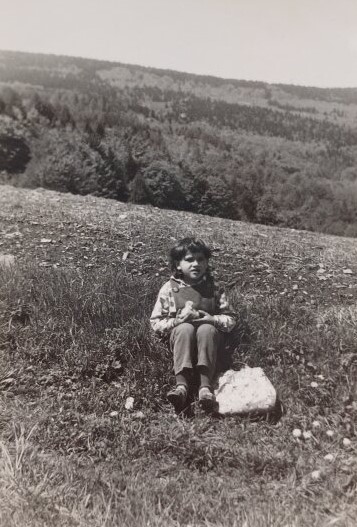
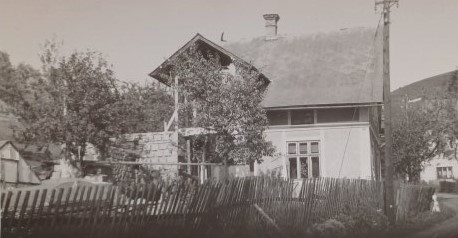
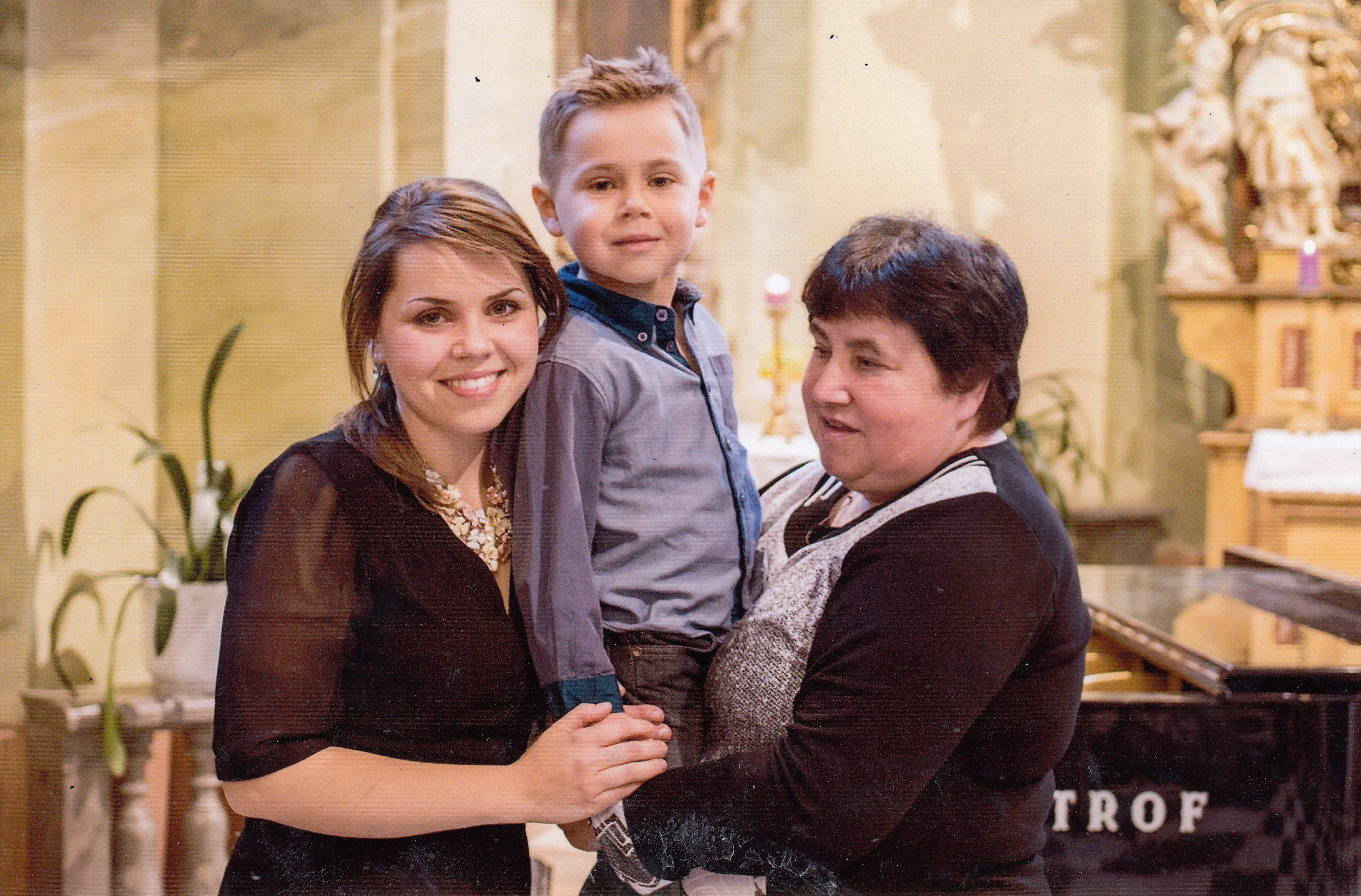
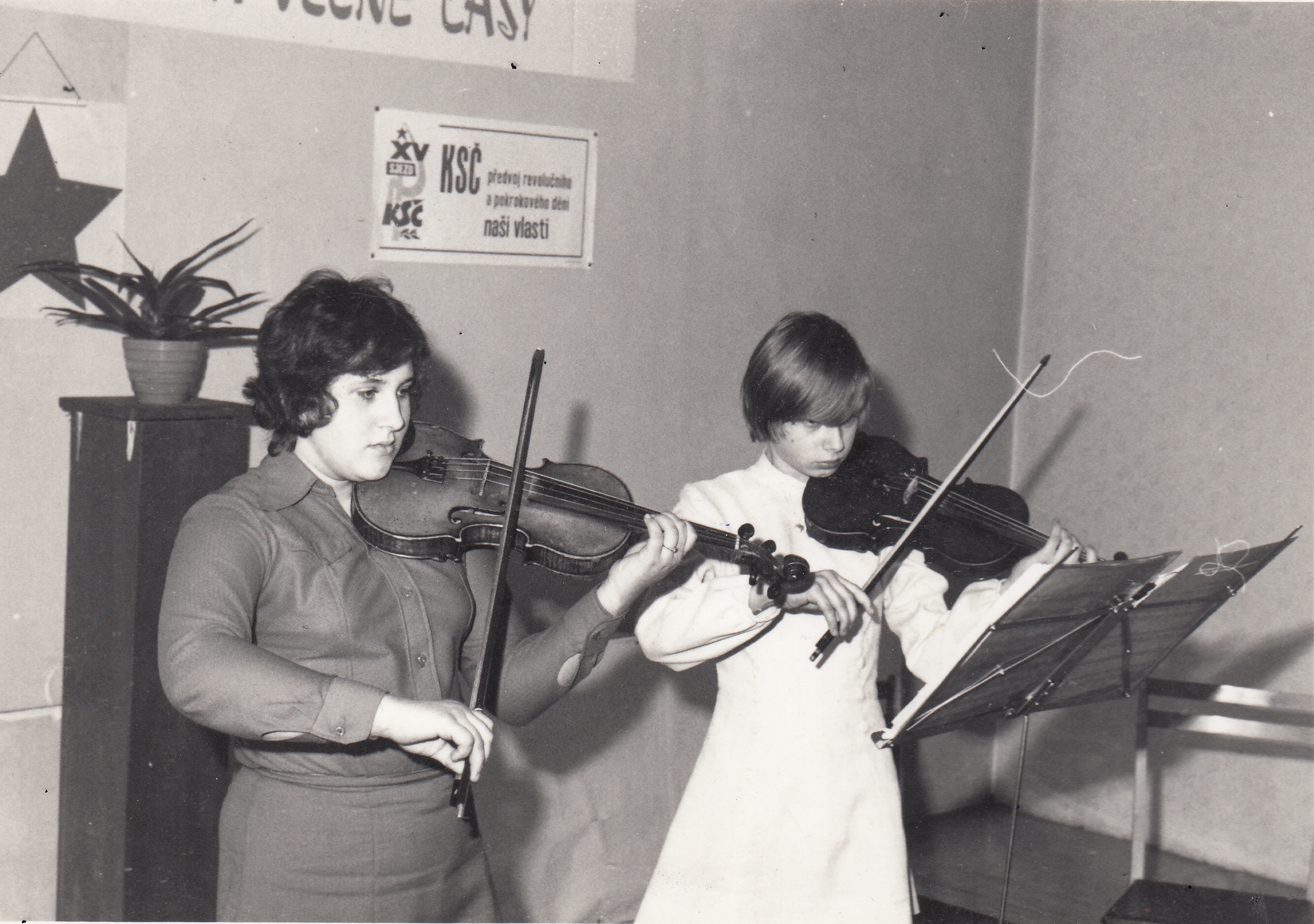
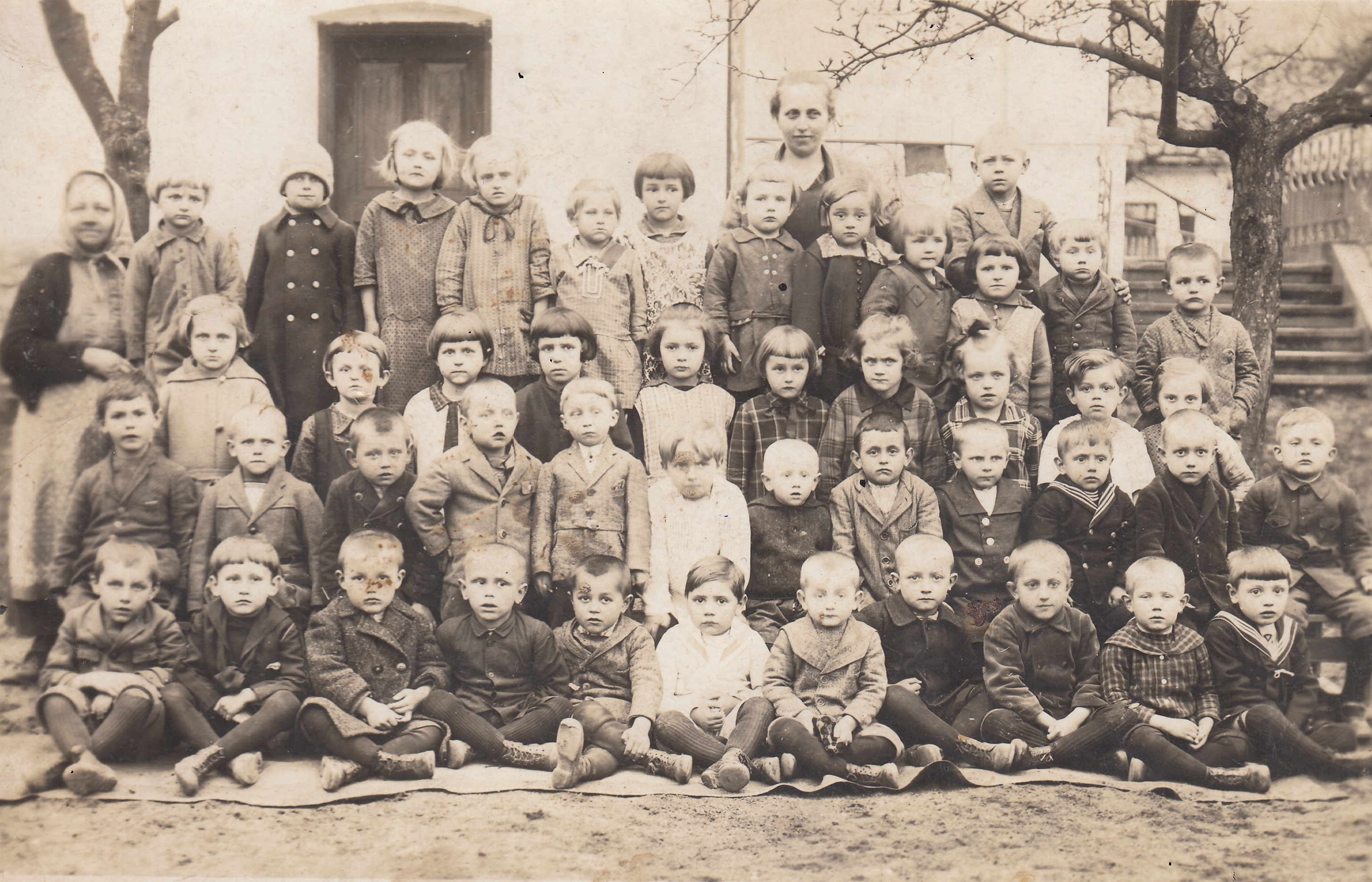
Lenka Bernadetta Nezbedová was born on April 16, 1962 in the maternity hospital in Šumperk. She has lived all her life in the small village of Štědrákova Lhota in the Hanušovice Highlands. Her grandfather, Josef Turek, was imprisoned by the Nazis in the Small Fortress of Terezín for several months during the Second World War. Her father Miroslav Nezbeda went through a concentration camp and at the end of the war was a member of the Rikitan partisan unit. He was also imprisoned during the communist regime. For attempting to cross the border, he spent two and a half years in the correctional labour camps at the uranium mines in the Jáchymov region. Lenka Nezbedová perceived the totalitarian nature of the communist regime from childhood. Because of her belief in God, she had a bad report card and did not get to study music science at the desired university. For political reasons, she almost did not even finish the Faculty of Education at Palacký University in Olomouc. She led camps of believing youth from the parish in Ruda nad Moravou, for which she was followed and interrogated by the State Security. Immediately after the state exams, all of which she passed with flying colours, she was summoned before the university disciplinary committee. She was threatened with expulsion, but it all ended in a reprimand. After her studies, she worked as a teacher at the Folk Art School in Šumperk. She took part in secret housing seminars, various youth meetings and spiritual renewals in various parts of the country. In November 1989, she was one of the organizers of a trip to Rome for the canonization of Agnes of Bohemia. During the Velvet Revolution she became a member of the Civic Forum in her job at the People‘s School of Art. After the fall of communism, she joined the women‘s Roman Catholic secular institute, the Work of Blessed Zdislava, under the religious name Bernadette. At the time of filming in 2024, she had been the prioress in Zdislavice for twelve years.”