David Matásek

* 1963

  • "I took a few blows and then I ran as fast as I could through the alley and there in Mikulandská I saw the result of the beating, there were people far more beaten than I was and in a far more terrible condition. People were bleeding there, there was an improvised bandage area where the policemen didn't beat anybody anymore, they just walked around and looked at what they had done. At the end of Mikulandská Street they had already pulled the police cars, whoever still had some complaints was put straight into the van and taken somewhere to the station. Whoever was bloody and didn't talk much more, they left him alone. That's where this party on Národní Street ended, and the party continued at a friend's flat, where we swore naively, and maybe under the influence of adrenaline and those wounds, that we never wanted anything to do with this regime again, that we would just do everything we could to make it end. It sounds funny today, but we were convinced of that. The humiliation we were subjected to broke something in us."

  • "We had the feeling that our gubernia, the Czechoslovak Socialist Republic, was pursuing some determined project of its own. I was 26 years old, or 25 years old, so I liked to provoke the establishment or the upper class. So to some extent I was asking for some things - whoever went to a demonstration, of course, had to count on just being beaten by the cops, or at least being sprayed with a water cannon, which was kind of our sport. Whoever was wetter won. So it wasn't exactly, well it was just toothless already, their, well I don't want to say terror, maybe that's too strong a word, but just the regime."

  • "We lived in Vackov, just above Ohrada, in a workers' quarter, in a terraced house with my mother, father and grandmother. And my mother walked then, because the transport through Wenceslas Square was not possible at all, and because my other grandmother lived in Podolí, she went to see her on foot, or whatever. And we had no news of her, no mobile phones, I think even the phone boxes didn't work because of the occupation. My parents believed in the reform process, in the Prague Spring of 1968, and somehow, I think, they understood quite fundamentally that it was over. And I saw my dad crying for the first time in my life, and it was a terrible experience for me, for a five-year-old boy, to see the demigod that you have on that pedestal the most, your parents. Suddenly I saw that he was also weak, that he was afraid of something. Then it took a while, or I mean after that it took 40 years, but then it took a while, sorry, it was 20 years, before they pulled away, but my mother and I used to drive along the river where the military settlement was in Malečice in the meadow. It was really the Russians, from the Warsaw Pact, it was this nation. And they had a field kitchen there, some tents and so on, they just had a military encampment there, and my mother and I used to go there. Mum used to ride a men's Favorit bicycle and I was sitting on the frame and we were riding around and I was singing 'Go home, Ivan' in a resistance way. That's what I remember, those are two completely personal experiences of the occupation."

  • Celé nahrávky
  • 1

    Praha, 13.12.2022

    (audio)
    délka: 42:58
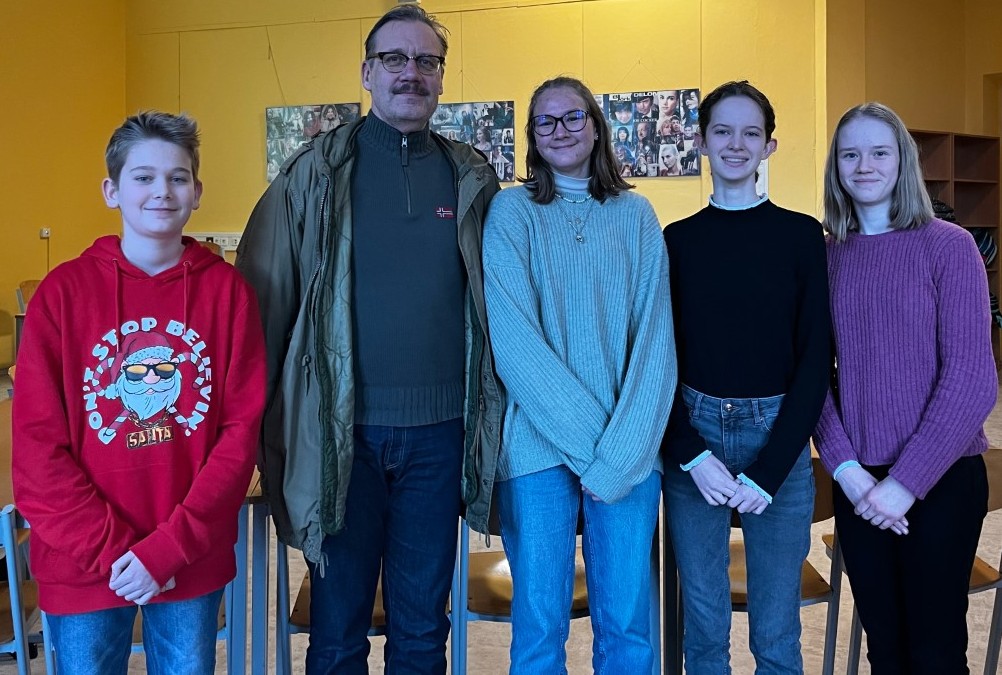
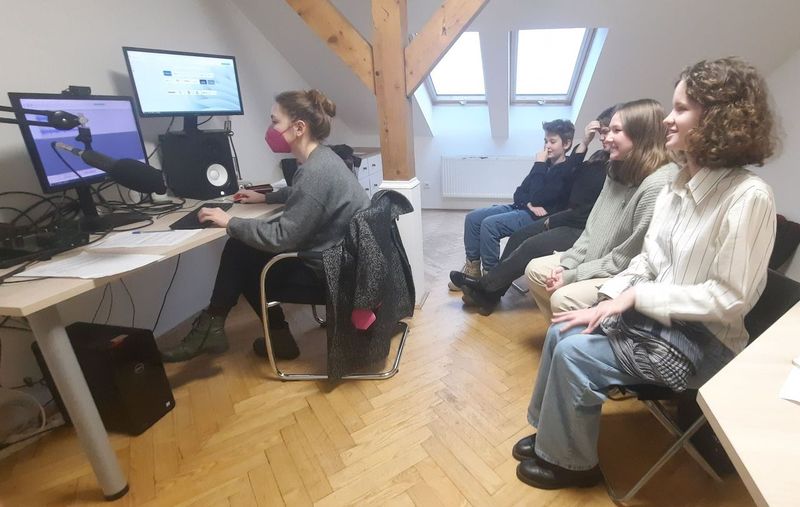
    nahrávka pořízena v rámci projektu The Stories of Our Neigbours
Celé nahrávky jsou k dispozici pouze pro přihlášené uživatele.

We have sworn to do everything we can to end the regime
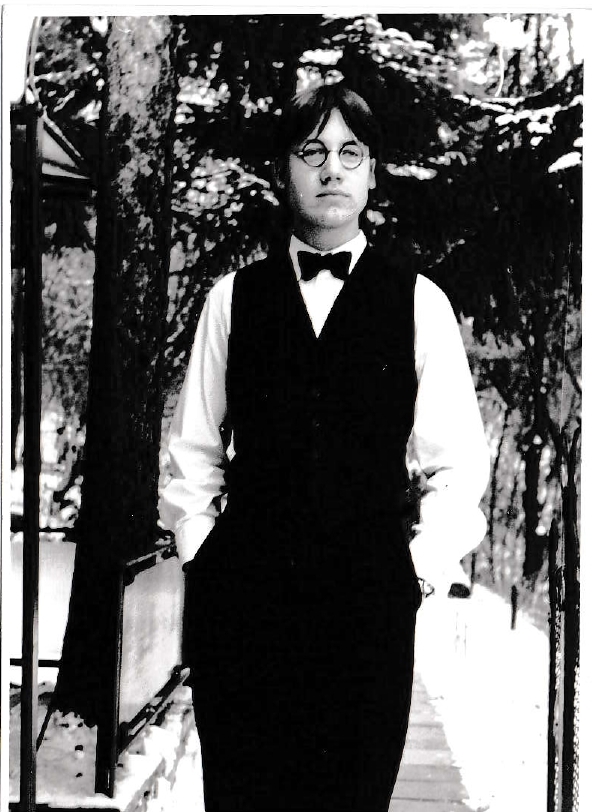
David Matásek as a student, 1980s
zdroj: witness´s archive

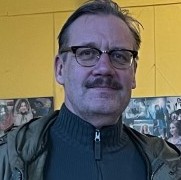
David Matásek was born on 14 February 1963 in Prague, Žižkov. He grew up in an artistic environment, both his parents studied toy design at the secondary school of arts and crafts. At the age of five he experienced the Soviet occupation in August 1968. He was an only child until the age of nine, then his two twin brothers were born. At the age of fifteen he entered the Prague Conservatory, from which he graduated at nineteen. Subsequently, he worked as a freelance actor in the group Studio Bouře (Storm), with which he toured the country. On 17 November 1989, he took part in a demonstration in Albertov and got into a clash with the police on Národní Street. From 1991 he was employed as a member of the National Theatre drama group. At the time of the Velvet Revolution, he considered emigration, which ultimately did not happen thanks to the regime change. In 2022, David Matásek worked as a renowned Czech actor in Prague.