"Nothing at all. There was no talk of the deportations at all at school. There was a map of the Czechoslovak Socialist Republic with Prague and Bratislava being the most important cities. The Sudetenland did not exist. There were no Jews, there were only our friends and it was the Soviet Union that liberated us; that was it. We learned about the Weimar Republic and the period before that in history classes. I quickly memorized the years and that was that. The period before Hitler was all about the Nazis wanting to take everything, they were the bad guys, and the Russians fixed it all. Just briefly like that, in two sentences, not more. It wasn't a topic at all and we weren't allowed to ask questions, which I think was justified. We would be frowned upon and only told that it was not in the curriculum. I was a black sheep by then anyway because I hadn't joined the socialist-communist system out of inner conviction. So there it was. In the second or third grade we got a new teacher who gave me a B for conduct even though I always got an A. My mother was furious and asked what I had done. I said I didn't do anything, just got a B. She went to the teacher and asked, 'What did my daughter do to get a B?' - 'It's your upbringing - you didn't send her to the Young Pioneer.' That was the reason. [The teacher] was a Stasi collaborator, but I only found out later."
"Of course I had all the childhood diseases. I was born when there was no food to eat. I was even in a children's hospital with tuberculosis without my mum for three weeks; that couldn't happen today. I was sick often; it was also psychological. When you grow up in an environment where melancholy reigns, where nobody laughs, where you only think about what was in the past and why we are no longer there, it passes on to the child. To me, animals were the most important thing. I knew how to handle and live with animals."
"I can only describe it as I was told. First, they gathered them in the Lerchenfeld [Skřivánek] quarter, counted them, and decided who would board the cattle cars, when and where, and where they would go. For example, my mother's godmother went all the way to Hamburg because she lived in Teplice. Maybe it was decided by municipality. They went to Damshöhe to a camp where they were split again and some went to Lower Saxony and so on. They were told to look forward to going to the most beautiful country with lakes and forests. My mother only knew the mountains and my grandmother had asthma and she suffered terribly. Then the three of them arrived at the destination and were put up next to a cow sty. They heard people in the town whispering 'look, beggars have come; what do they want here?'"
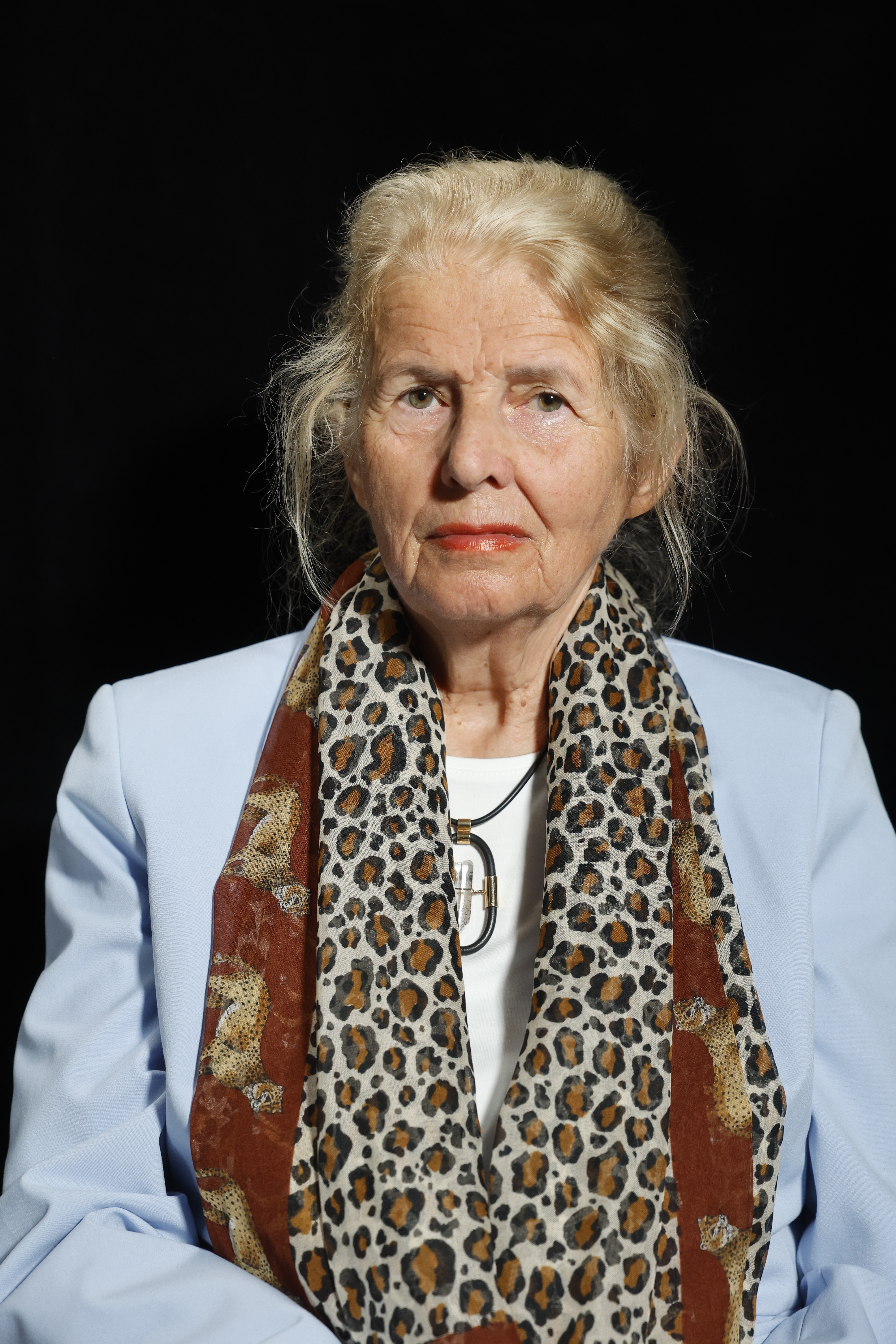
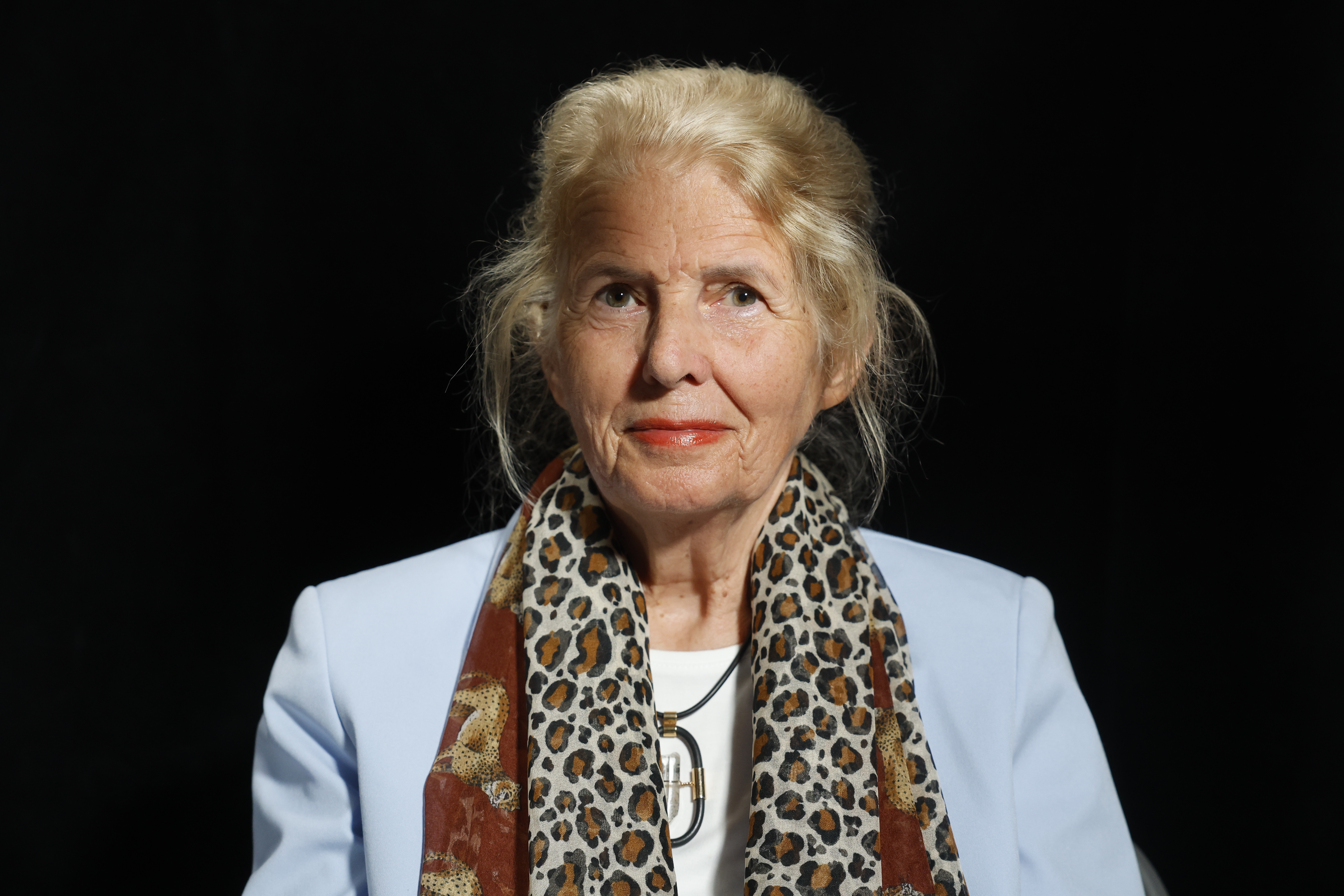
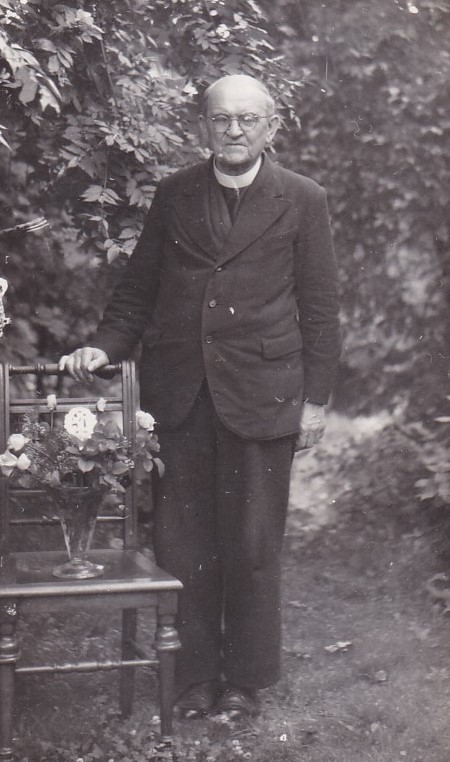
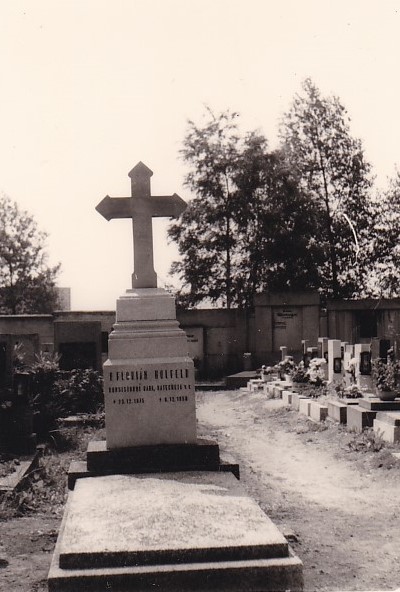
Monika Holfeld was born in Waren, GDR on 27 July 1948. Her parents Gertrud and Ludwig Holfeld came from the Sudetenland. Her grandparents Anna and Josef Stettin lived in Telnice in the Ore Mountains. Her mother trained as a drug store assistant in Ústí nad Labem. In the summer of 1946, they were deported to the Soviet occupation zone in Germany and settled in Waren. Her father came from the family of textile manufacturer Alexander Holfeld in Jiříkov; he studied and became a postal inspector. The family was deported in 1946. The parents met in Waren and married in 1947. The mother did not take the deportation well. The parents did not have the communist world view. The witness got a B in third grade for conduct because she was not a Pioneer member. She completed a technical high school as a construction draughtswoman and went on to study architecture at the college in Neustrelitz. She worked in a planning studio in Neubrandenburg and in a design office in Waren. She learned Czech and guided Czechoslovak architects visiting Germany. She went to Czechoslovakia both privately and on business from the 1960s on. In 1990 she moved to Berlin and joined the Chamber of Architects. In 1997 she founded her own architectural office in Berlin. She wrote professional books, assisted as a consultant in the rehabilitation of prefabricated houses in the Czech Republic, and later specialized in barrier-free buildings. Monika Holfeld has lived in Berlin since 1990.
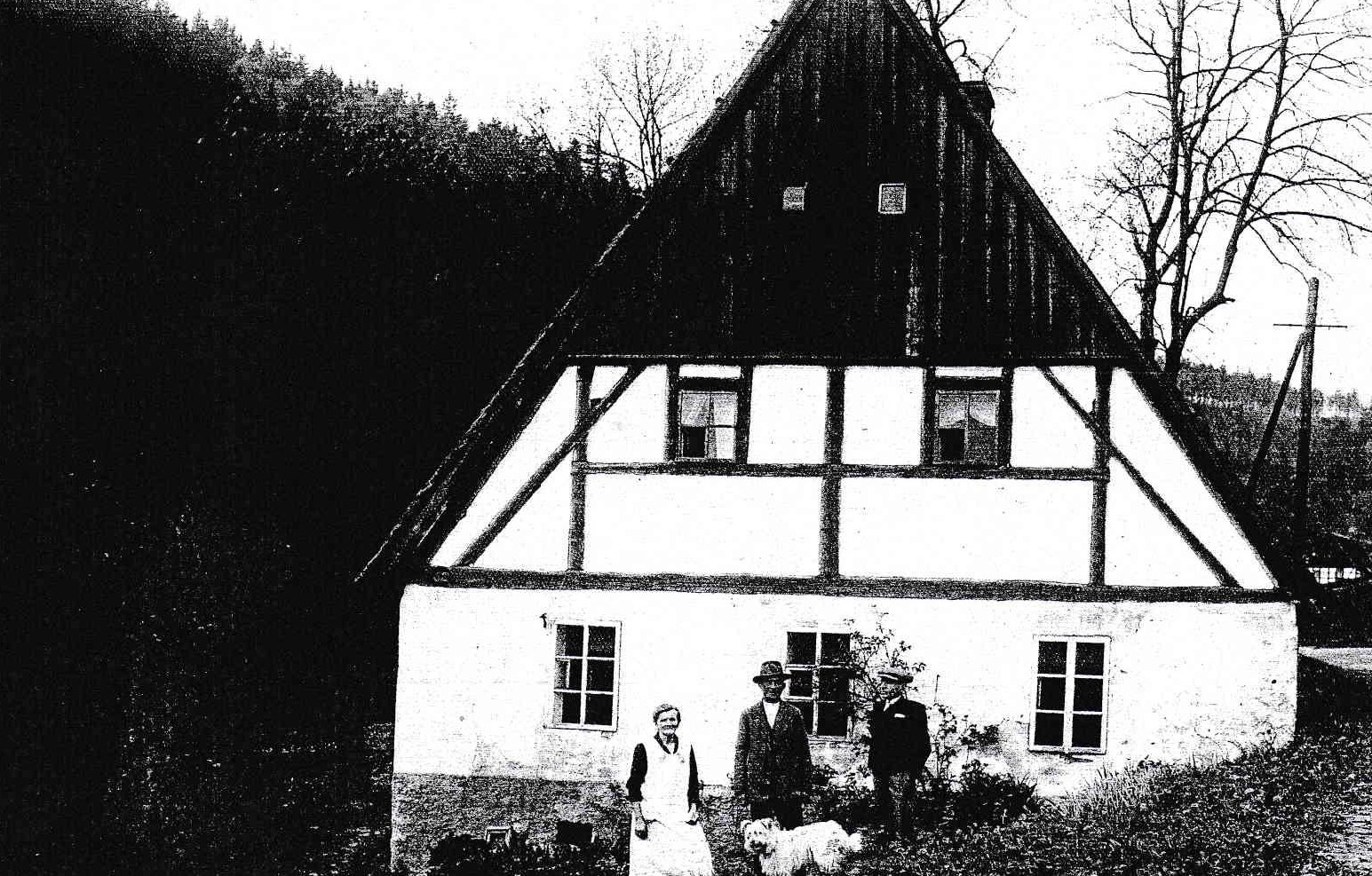
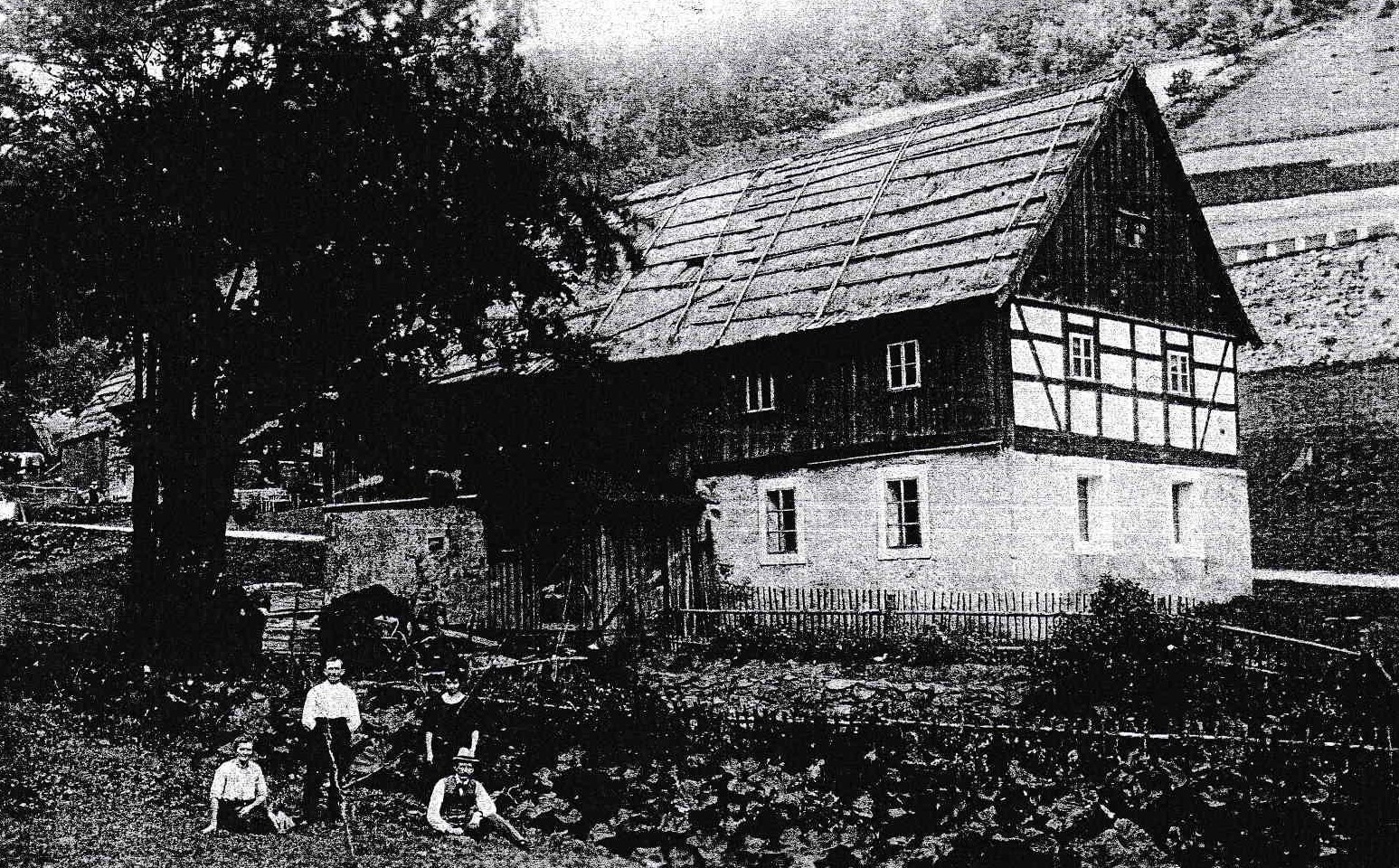
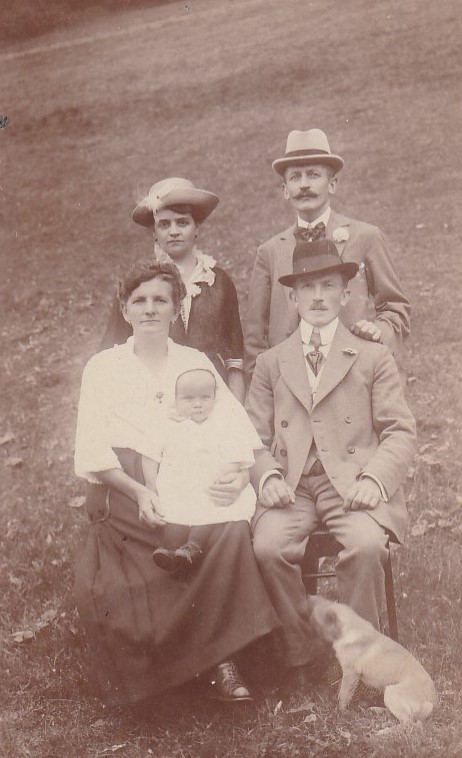
Family photo from 1921. Grandparents Anna and Josef Stettin with one-year-old mother Gertrud Stettin (front), grandmother's brother Wenzel and his wife Emma Weigelts
Family photo from 1921. Grandparents Anna and Josef Stettin with one-year-old mother Gertrud Stettin (front), grandmother's brother Wenzel and his wife Emma Weigelts