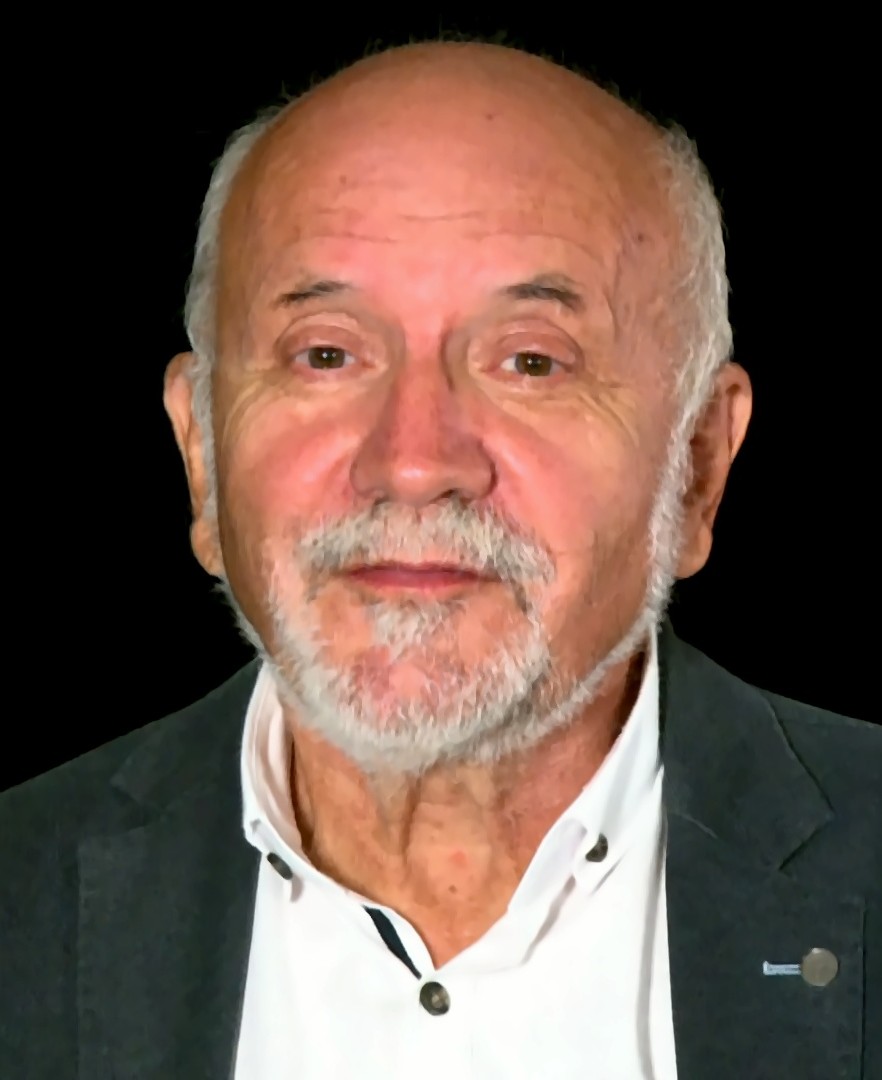
"Unfortunately, Čuba and I parted ways in 1989, after November. Because I had a number of friends in Špalíček, in the Civic Forum, and at that time I brought a message from the Civic Forum that they wanted to meet with Čuba, but he refused. So that, in my opinion, was the source of all the things that were negative in relation to the cooperative farm in Slušovice, because you don't refuse such an offer. Čuba, as I understood much later, thought that the whole process, which began with November 1989, would be just like perestroika in Russia, that it would not be a complete change of the system. That it would just be something on the outside. So he didn't claim allegiance to it."
"In 1975, when I got that appointment as a research postgraduate, then later on I was removed from it. They said I hadn't fulfilled the political assignment, that I was unreliable. I didn't find out until much later what it was. It was mainly because sometime in 1972 or 1973 [1971], when there was a general election, my grandmother and I went to the polls and I studied exactly the communist election law at that time. It was written there that a vote was invalidated if you crossed out the full name with a horizontal line. So my grandmother and I took our pens and rulers and went behind the screen, which was not very common. We spent quite a lot of time behind that tarp because we crossed it out very carefully line by line. I don't know if they had a camera there or if they just knew. I don't think there were cameras then. But they knew it very well, because I lived in Prague 5 and the Microbiology Institute was in Prague 4. So the Communist Party of Prague 4 got a message from the Communist Party of Prague 5 that Zelený was unreliable because he voted that way and didn't vote for National Front candidates."
"I was also in Cambridge on 21 August 1968, so I learned about what was happening in the Czech Republic [Czechoslovakia], but not online like today. It was just headlines on TV. That the Russian army and others from the Warsaw Pact had occupied the Czech Republic [Czechoslovakia]. We learned relatively little of that information. It wasn't exactly simple. I didn't know what was going on. I wasn't able to talk to my parents until sometime in early September. My sister and I stayed there, staying with friends of our mother in London. I also took part in a big demonstration a week after the occupation, after 21 August. It was overwhelming for such a young person. There were about a million people there. It was coming out of Hyde Park from Speakers' Corner and going to the Russian Embassy. I remember throwing stones at the Russian embassy and that other protesters broke some fences and then the English police pushed us out because they had to keep the Russian embassy there safe."
Karel Zelený was born on 11 September 1950 in Prague. His grandfather was the owner of a thriving cloth factory in Batelov, his other grandfather, Adolf Zelený, served as the chief general of the judicial service during the First Republic. His father, Karel Zelený, became a meteorologist in the British Royal Air Force (RAF) during the Second World War. While studying at the grammar school in Košíří, Prague, the witness went to England as a volunteer, where he was shocked by the news of the occupation of Czechoslovakia by Warsaw Pact troops in August 1968. In London he took part in a large demonstration in support of his homeland. In 1969, Karel Zelený successfully passed the entrance examinations for genetics and micromolecular genetics, microbiology and virology at the Faculty of Science of Charles University. In the same year, due to post-occupation purges, Karel Zelený Sr.‘s father was fired from the publishing house Naše vojsko, where he had worked since 1950. He found a new job as a boiler operator at the State Pedagogical Publishing House. During the normalisation period, the family became involved in the spreding of samizdat literature. After his studies, he joined the Research Institute of Antibiotics and Biotransformations in Roztoky near Prague, where he worked as a geneticist. In 1975, he applied for a post of scientific aspirant at the Institute of Macrobiotics of the Czechoslovak Academy of Sciences. Although he successfully passed the entrance tests, he was not selected for political reasons. He completed his postgraduate studies later. In 1985, he accepted a job offer from František Čuba form the cooperative farm in Slušovice and built the Agrogen biotechnology centre, which dealt with genetic engineering for agriculture. During the Velvet Revolution he became a member of the Civic Forum of the cooperative farm in Slušovice. For this reason, Čuba dismissed him from the post of director in December 1989. In 1991 he started his own business. He co-founded MGP, a company dealing with the distribution of radioactive preparations and medicines. He was also working in the company at the time of the recording, in 2021.