"For example, I know that before May Day, not in our ward, but in various wards in Bohnice, several people were always admitted by decree from higher places so as not to disturb May Day. And everybody knew it, even the people knew it. They also knew that in two days they would go home. Although, of course, they rebelled, of course, yeah, because they were unjustly locked up in a psychiatric ward, even if only for 48 hours. Yes, I know about this."
"I have the feeling that I have never actually done an expert opinion on someone who was in detention for political reasons. Perhaps I know of one exception, but it's really a very questionable case like that, which was, I think his name was [Augustin] Navrátil, from Moravia, he was a religious gentleman who sent messages to the Pope in Italy. He was apparently taken into custody because of that. The fact was that he was a strange personality and he was a relational personality to the point of being paranoid. One of the most difficult diagnoses in psychiatry, and therefore in psychology, because the psychologist contributes the results of his test methods and interviews to the final diagnosis, so very difficult is to draw the line between paranoid personality disorder and paranoid psychosis, that is, illness. He was always paranoid. And in my opinion, the older he got, the more escalated his behavior became. He complained about everybody everywhere. He wrote hundreds of letters to various institutions. Yes, it's one thing to complain, but to write, I don't know, every day to the national committee or to the president's office or to the ministry of culture, to write there every single day, I think that goes beyond the limits of personality disorder. However, again, there was no other severe psychopathology that would correspond to that psychosis. So we did an expert opinion on this man. Because he seemed to us to be very complex, in such cases it was done in the Bohnice hospital by calling a panel of experts. This means that after the primary consultation, all the staff in the expert room in the hospital, which could be about fifteen people, either psychologists or psychiatrists, met. And we, who wrote the report, were to brief the others on what we had found, how we had investigated, what conclusions we had reached. And the others who were sitting there should have commented on it. At that time, we were basically unanimous that this person was already at the stage of mental illness. The truth is that, for example, the three of us who wrote this, two psychiatrists and one psychologist, were aware of one other thing. If someone is diagnosed with a mental illness, he is not fit to serve a sentence, he will not go to prison, but will undergo protective psychiatric treatment, and he will do so in his place of residence. Each residence was covered by a particular psychiatric hospital. And we knew that Mr. Navratil's wife was a psychiatric nurse. And he would be transferred to that hospital. I think that played a big part. In addition, a person is in a psychiatric hospital for such a long time, there used to be this terminus technicus, until the treatment has served its purpose. Now it is that once after a year the person has to be reviewed to see whether he is cured or whether the reason for his hospitalization still exists. This means that he cannot be discharged without there being a risk that he will commit some offence, either against the environment or against himself. It doesn't matter. Whether there's a risk of suicide or a risk of any criminal activity that he couldn't handle against those around him. So to be charged with the political paragraph that Navratil [she mistakenly says "Wonka"] had, for subverting the republic and something like that, he would certainly have spent a longer time in prison than he did in the mental hospital where he could have had daily contact with his wife. So that's one of the situations where I would say that the psychiatry could have helped. Although really the decision was borderline."
"Ward 17 was a ward where both the accused were hospitalized, awaiting trial, and during the course of that accusation, whether the accused were at large or were experiencing it in custody, some signs of mental illness manifested themselves, or these people said they were attending psychiatry and waiting for an expert opinion. That was one category of patients. And the other patients were those who had already begun to have mental problems of any kind while in prison. So these two categories were in the Ward 17. All the staff, including the chief, we were employees of the hospital. That is, civilian employees of the treatment facility. Of course, the hopuse itself was guarded by guards, because you have to remember that quite a large percentage of our clients were murderers. And a murderer convicted of, say, two or three murders - what happens to him if he tries to take one of us hostage there or escape? He can't get a higher sentence than he got. So, yes, I think it was necessary that a ward like that should be guarded, there should not be free access. And of course we as staff entered the rooms, not the cells, in the presence of the officer. So that we were protected if we were attacked by one of them. The fact is that many of those officers had been there for many, many years. And I was amazed at how much they learned. I would say, not that we paramedics have adapted to the police drill. On the contrary, they understood a lot. They understood that when a policeman enters a room where there is a convict, he sometimes cannot stand to attention. For example, because he's taking some medication that makes him dizzy. Or he was suffering from depression. And suddenly they began to understand that the rules that apply in detention or in prison don't apply. That was such a benefit that I thought, yeah, these people are learning here, and if they go back to the facilities they had come from, maybe they'll bring something of that humanity there."
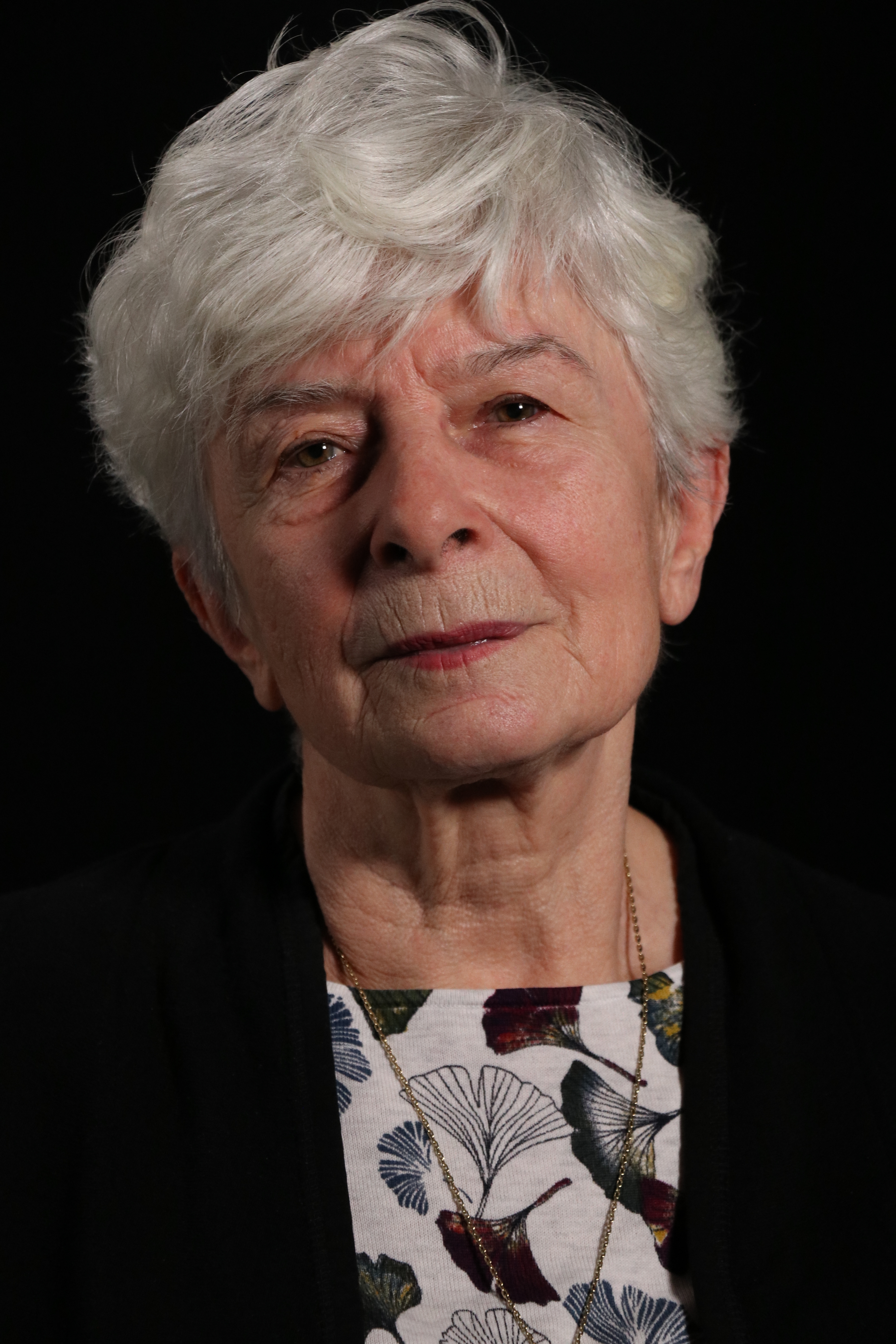
The psychologist Štěpánka Tůmová was born on 12 December 1948 in Prague into the family of a former tradesman, later a civil servant, Václav Tůma, and a teacher, Helena Sadílková. She grew up as an only child, especially her mother made great demands on her academic results. Her parents were politically rather conformist, and politics was not discussed at home. She graduated from the Secondary School of General Education in Nad Štolou Street in Prague‘s Letná district, graduating in 1967. From 1968 she studied psychology at the Faculty of Philosophy of Charles University, where she joined the student strike at the beginning of her first year. At the end of her studies, she completed a one-year internship as a psychologist in child psychiatry in Erfurt, East Germany. For two years she worked in psychiatry at the Central Military Hospital in Střešovice, then in the adolescent ward at the psychiatric hospital in Bohnice. In 1982, she met her future husband, former political prisoner Pavel Holý, who had been sentenced in 1949 for preparing the Scout anti-communist uprising. After the closure of the Bohnice juvenile ward, she worked as a psychologist in the Ward 17 with a special prison regime, where people in pre-trial detention and in prison were hospitalized. For example, the political prisoner Pavel Wonka was briefly hospitalized here during her time there. She also worked as an expert witness in the field of psychology, preparing expert opinions on perpetrators. As part of a consortium of forensic experts, she participated in the evaluation of the Catholic activist Augustin Navrátil, who was found to be mentally incompetent. After the abolition of the special unit in the Ward 17 in the 1990s, she worked as a lecturer at the Institute of Postgraduate Medical Education and continued to work as an expert witness.