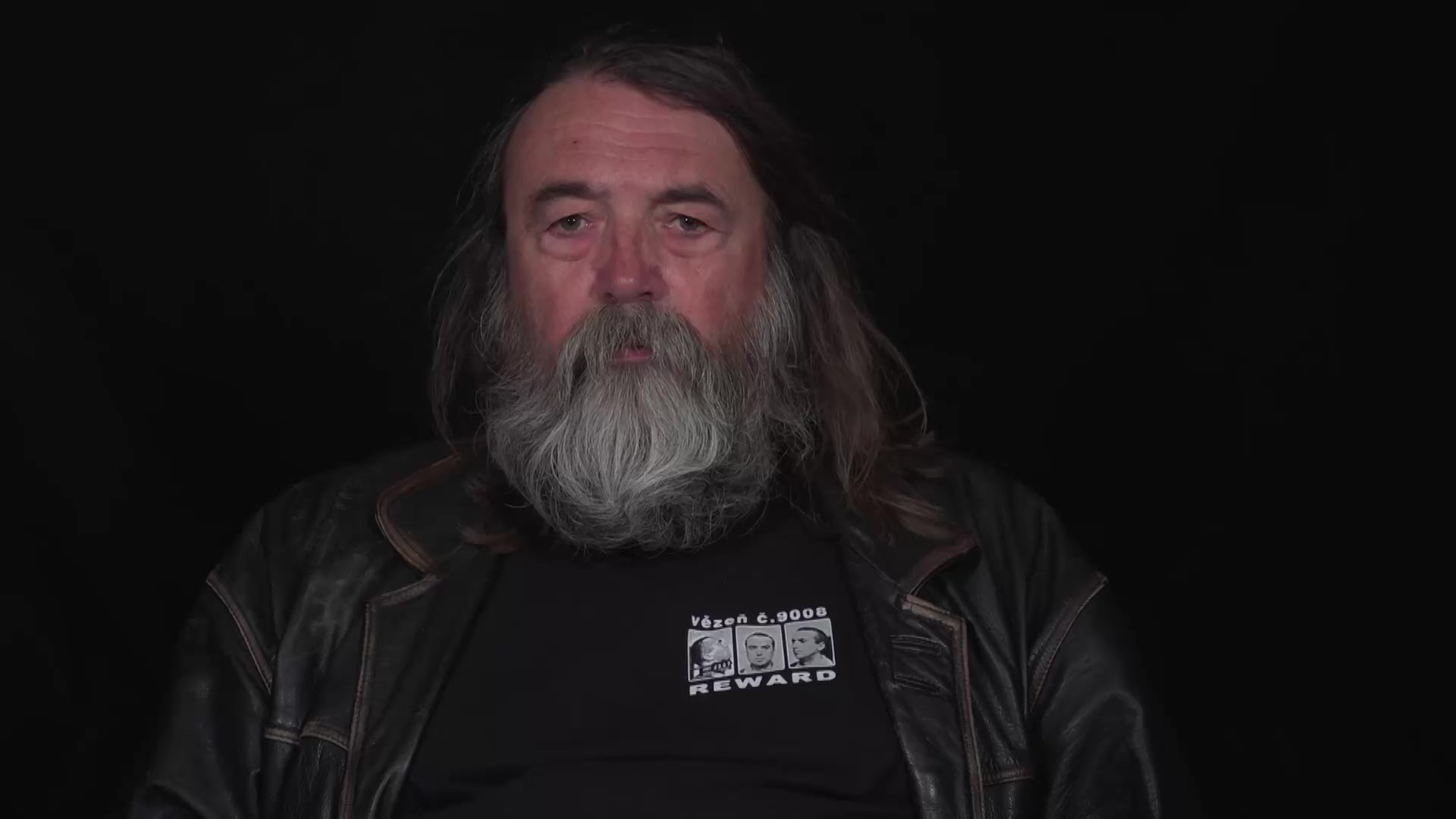
Stanislav Pitaš

* 1957

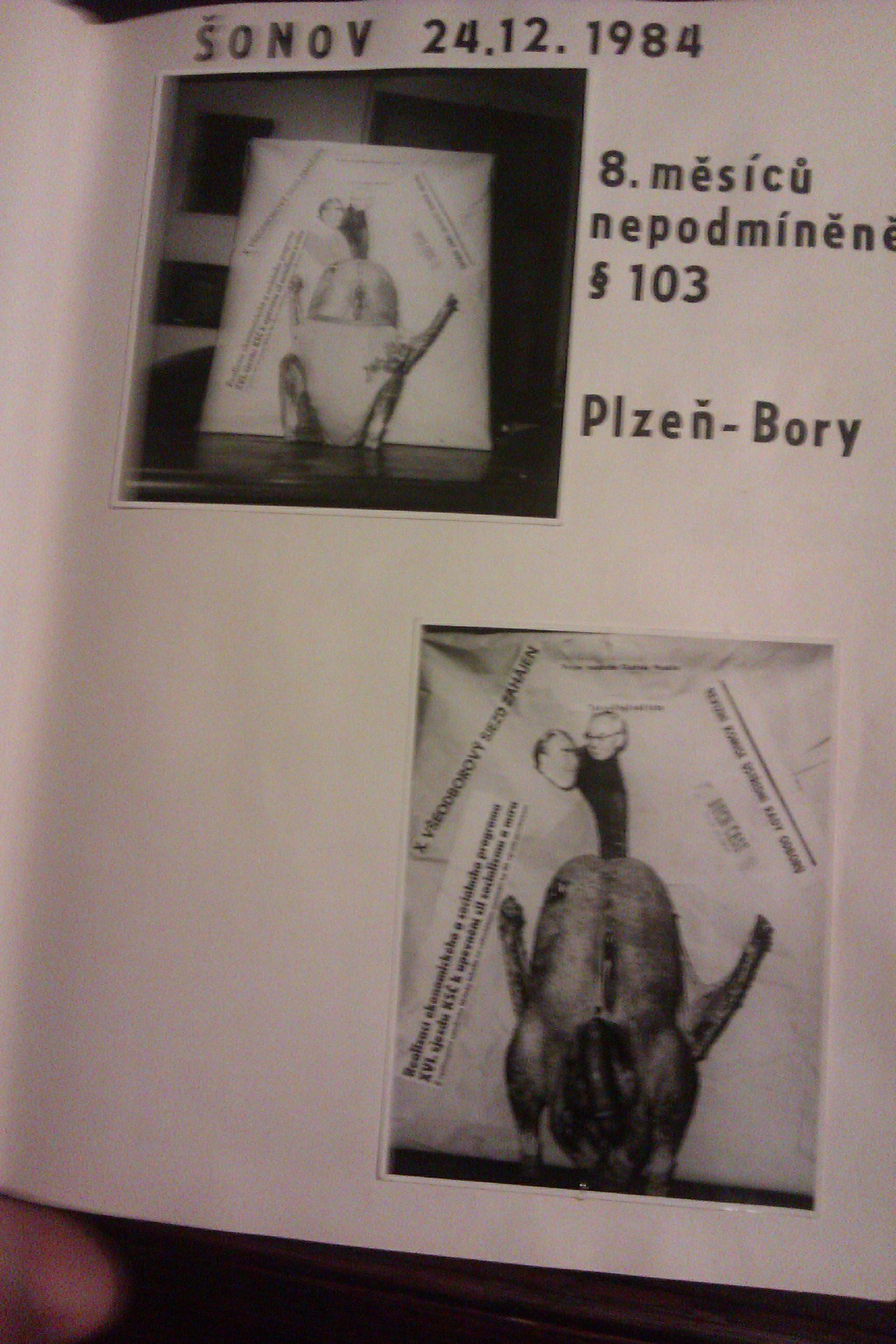
  • "In 1984, we were all alone for Christmas, me, Jarda Janeček, and Slávek Doubek, who lived with me at the time. We didn't have any women, we were sad, so we decided to celebrate New Year's Eve together at my place. We welded a Christmas tree out of wire and hung all kinds of crap on it. And we roasted a goose, which... the woodcarver Libor Krejcar made me a beautiful faucet, shaped like male genitalia. We installed it on the roasted goose. We cut out slogans from The Red Justice newspaper, like 'We will fulfil the five-year plan in two years'. And we attached a photo of Husák and Brezhnev to the neck of the roasted goose. Then we made another one and instead of a wooden penis, we put women's panties on it. We also attached various communist medals to it. We took a photo of it with the intention of making postcards and sending them to ordinary people. Only one photo showed a thumb, otherwise it was impossible to tell where it was taken and who was there. But my friend Jarda Janeček was also growing marijuana in Rozkoš with Standa Maršík. I didn't know about that. The police found out somehow, and in April 1985, they searched Jarda's house. They came with a drug-sniffing dog, which ran around the house like crazy, and the police searched the place and found four of these photos, made as postcards. They immediately lost interest in the drugs because it was a political matter. They pinned him down and he could have refused to testify. But he... couldn't handle it... and told them where it was photographed, on what occasion, whose idea it was... And as soon as he said that Pitaš, the Charter signatory, was there..."

  • "Three years ago, my friend who owns a construction company asked me if I could come and work on his excavator because he needed some help. I said, ‘Sure, why not?’ So I'm driving the excavator around Broumov, and there's a guy sticking his upper body out of a sewer. I think to myself, he looks familiar. I stop, walk closer, and the guy climbs out of the sewer. When he's about four meters away from me, I say, 'Captain Adámek?' He stops in his dirty overalls. Now the gypsies were yelling at him in that hole. And he looked at me for a moment and didn't recognize me. He says, 'And who are you? ' I say, 'Dissident Pitaš.' And so he's like... 'It's been a long time, huh? ' And I say, 'Good, right? How come you're working? You should be retired by now. ' He says, 'Those bitches didn't recognize some of my years.' That he still has to work. I thought I'd tell him, 'Come on, let's go for a beer. I'd be interested to know what made you so full of hatred that even my mother's funeral from prison didn't work out, at times it was all shit... ' But then I think to myself: Dude, am I going to hang out with a State Security agent and buy him beer? It was enough for me when I saw him being scolded and bullied by those gypsies. I left him alone."

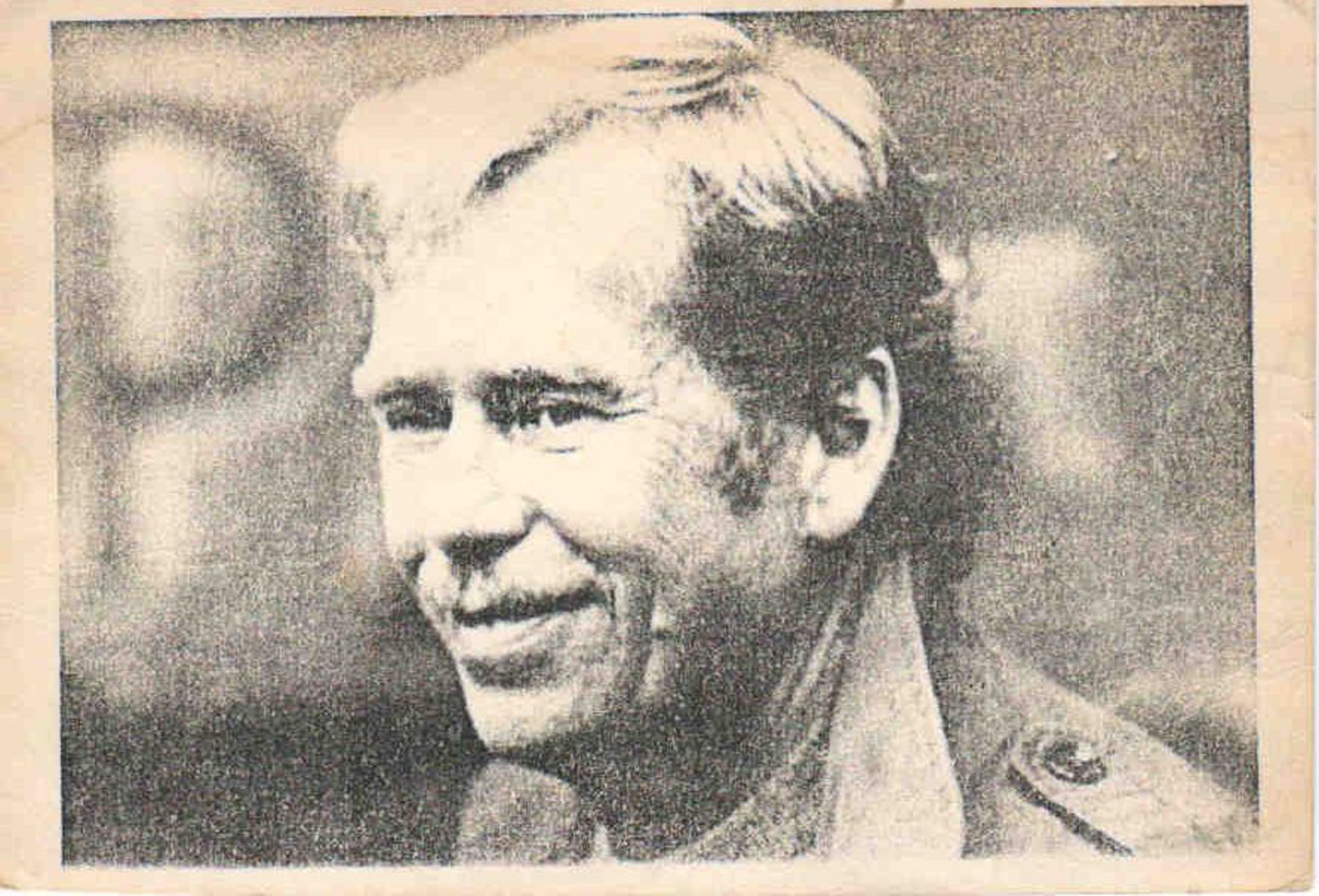
  • "I would say that Kojzar, the Bolshevik journalist, turned me into a dissident. We used to go to the Radio pub. I read the newspapers there. Now I don't know exactly if it was the article 'Fat Payout from Holland', when [Václav] Havel received the Erasmus of Rotterdam Award, which was accepted on his behalf by Honza Tříska, because Havel was afraid to go and collect the award himself, so that they wouldn't revoke his citizenship. Or was it the article 'Sellouts" [Losers and Self-Appointed Leaders]', even worse, I think also written by Kojzar. Anyway, I read about the prize there. But at the same time, I also listened to Voice of America, and there they talked about Havel in a completely different way than Kojzar wrote. And because I'm a curious person, I want to see and hear everything with my own eyes and ears... There was a bike leaning against the pub, so I took it and rode to Hrádeček. I was lucky that I made it through and that the cops didn't catch me. The second stroke of luck was that the Havels were at home. And the third was that they welcomed me in. I stood there like a dork, said I was so-and-so, had the newspaper under my arm, and said I was interested... that I was confused and would like to understand the situation better."

  • “I thus declared I was joining a hunger-strike, at that time there was a so-called chain hunger-strike being held in Europe for political prisoners, and it was pretty well organized: you just filled in a form where you wrote from when until when you were going to fast, and you sent it somewhere, I no longer remember where, and it was a forty-eight hour hunger-strike. For example, I held it on the twentieth and the twenty-first, and then I received a paper which said that for instance some other person in Austria or in Czechoslovakia was doing the hunger-strike after me. When they arrested me here in Náchod, the hunger strike was in progress at that time, and I refused to sign the protocol and I declared that I was starting a hunger-strike for being falsely accused and that I refused to cooperate. They thus took me to the pre-trial detention facility in Hradec Králové, where they were allowed to keep me only for forty-eight hours, and then they released me and outside there were already other two StB agents waiting and they arrested me again and took me for interrogation and house search, and they prepared an indictment and that was it.”

  • “I felt that things would have taken a bad turn if I had stayed there. The last incident was this: we were going to a certain pub called Kotva, which is still open even today, and in the first hall there were members of the State Police sitting there, and we would be always passing by them into the second hall, and they thus knew about us perfectly. I went to the toilet, and one of the StB men came there as well, and since it was Friday, he asked me what we planned for the weekend, and I told him that we were going to Poland to help the Solidarity movement print posters. He laughed at it, because he thought that I was just kidding. But we really did drive from Trutnov to Wrocław on Saturday morning and we slept in some school building there, and we were printing pamphlets and posters and distributing them all over the city. They gave us many things, like pamphlets and badges with the sign Solidarność. And on Monday we went for a beer to that pub and the same StB man asked me: ‘So how was Poland?’ I said: ‘Yeah, it was fine,’ and I gave him one of the badges. He was really thrown off by it at that time.”

  • “We were going to Prague for protest rallies on the Human Rights Day on December 10, or during the Palach’s Week. We were supposed to go there, and we thus met in one house in Česká Skalice, because we were to leave from there. The StB agents assaulted me there, and I lay on the floor and they forced me into the car and one of the StB men claimed that he had suffered harm because I had allegedly attacked him, and I was thus accused of attacking a public official, although I had two witnesses who testified that it had not been like this.”

  • Celé nahrávky
  • 1

    Šonov, 22.03.2015

    (audio)
    délka: 01:16:37
    nahrávka pořízena v rámci projektu Stories of 20th Century
  • 2

    Šonov, 04.12.2018

    (audio)
    délka: 47:49
    nahrávka pořízena v rámci projektu The Stories of Our Neigbours
  • 3

    Hradec Králové, 21.09.2019

    (audio)
    délka: 03:41:49
    nahrávka pořízena v rámci projektu Stories of the 20th Century TV
  • 4

    Šonov, 13.07.2020

    (audio)
    délka: 02:48:46
    nahrávka pořízena v rámci projektu The Stories of Our Neigbours
Celé nahrávky jsou k dispozici pouze pro přihlášené uživatele.

I did not want to embarrass the dissent
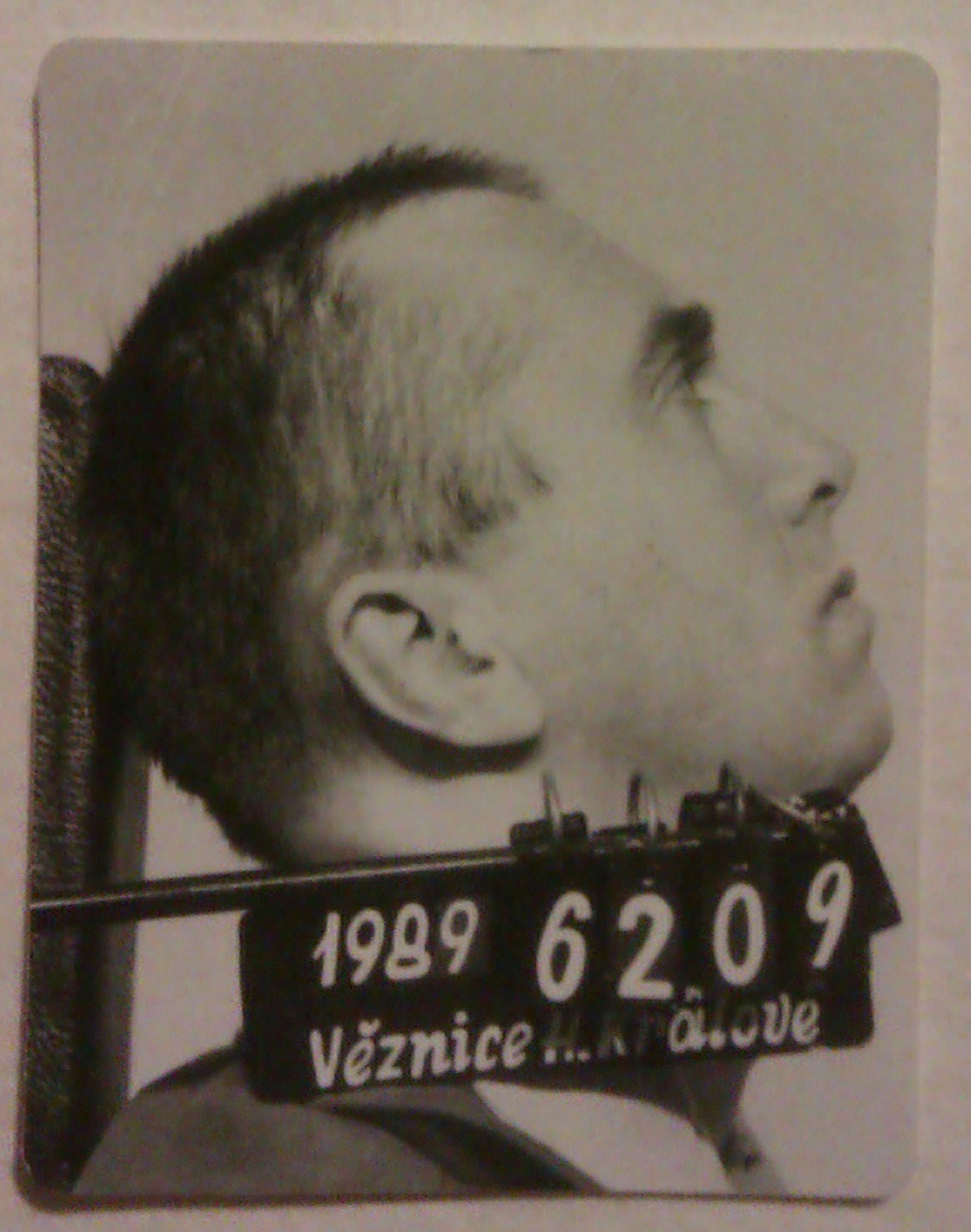
Photo from the 1980s
zdroj: archiv pamětníka

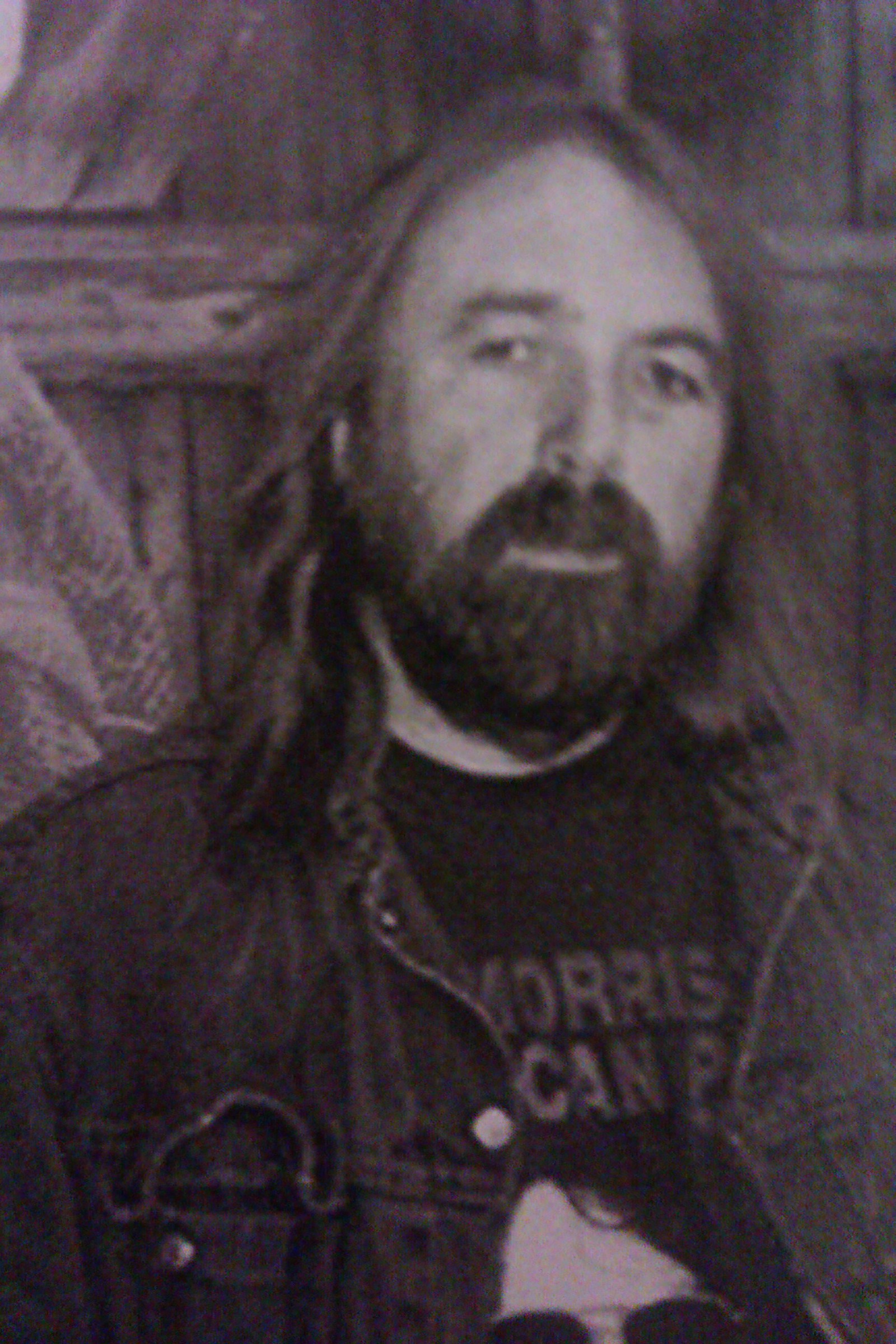
Stanislav Pitaš, also known by the nickname Guma, was born on December 12, 1957, in the village of Kocbeře in eastern Bohemia. He trained in road construction and spent most of his life working as a blue-collar laborer. He became involved with the dissident and underground communities and signed Charter 77. His friendly relations with the Havel family and the community in Nová Ves near Chomutov earned him the permanent interest of State Security. In 1982, he moved to the border village of Šonov in an attempt to escape State Security surveillance, but he was unsuccessful. Between 1985 and 1989, he was imprisoned three times – for undermining the authority of the president, for assaulting a public official, and for stealing socialist property. His mother died during his last imprisonment. After the Velvet Revolution and his release under an amnesty, he became a member of the review commission for the closure of the prison in Žacléř and also a member of the police review commission. For many years, he organized various concerts and cultural activities in his home town of Šonov near Broumov. In 2006, he became deputy mayor of the village.