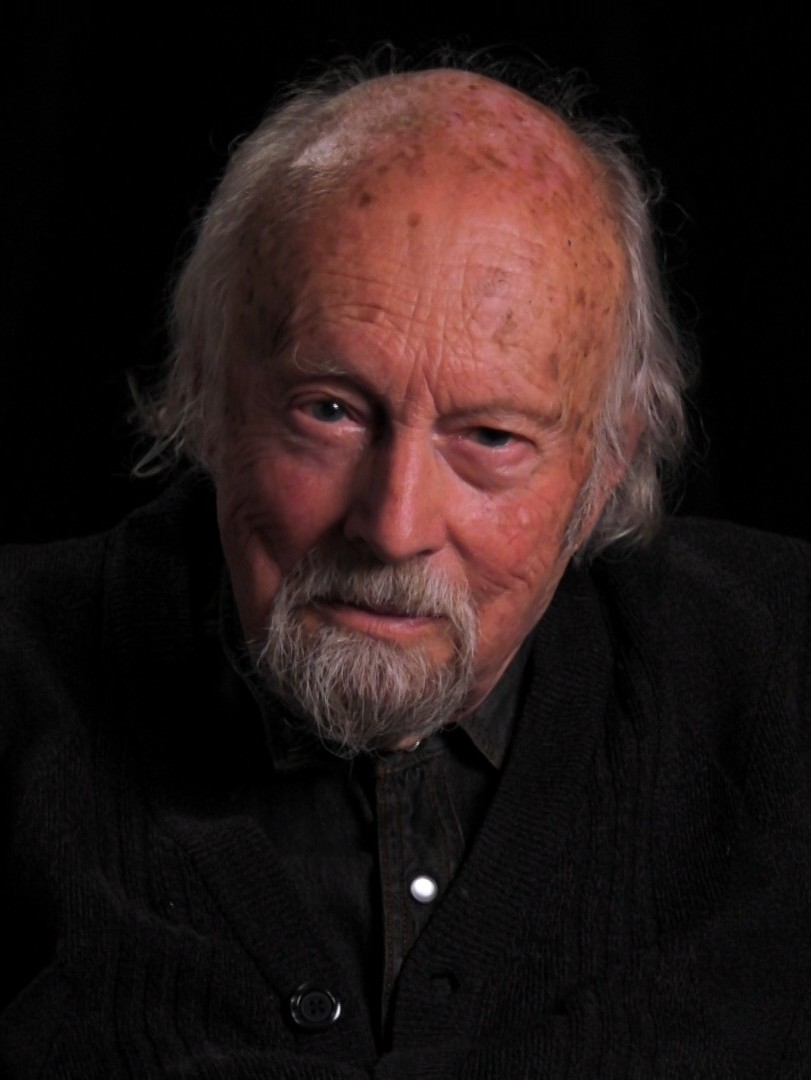
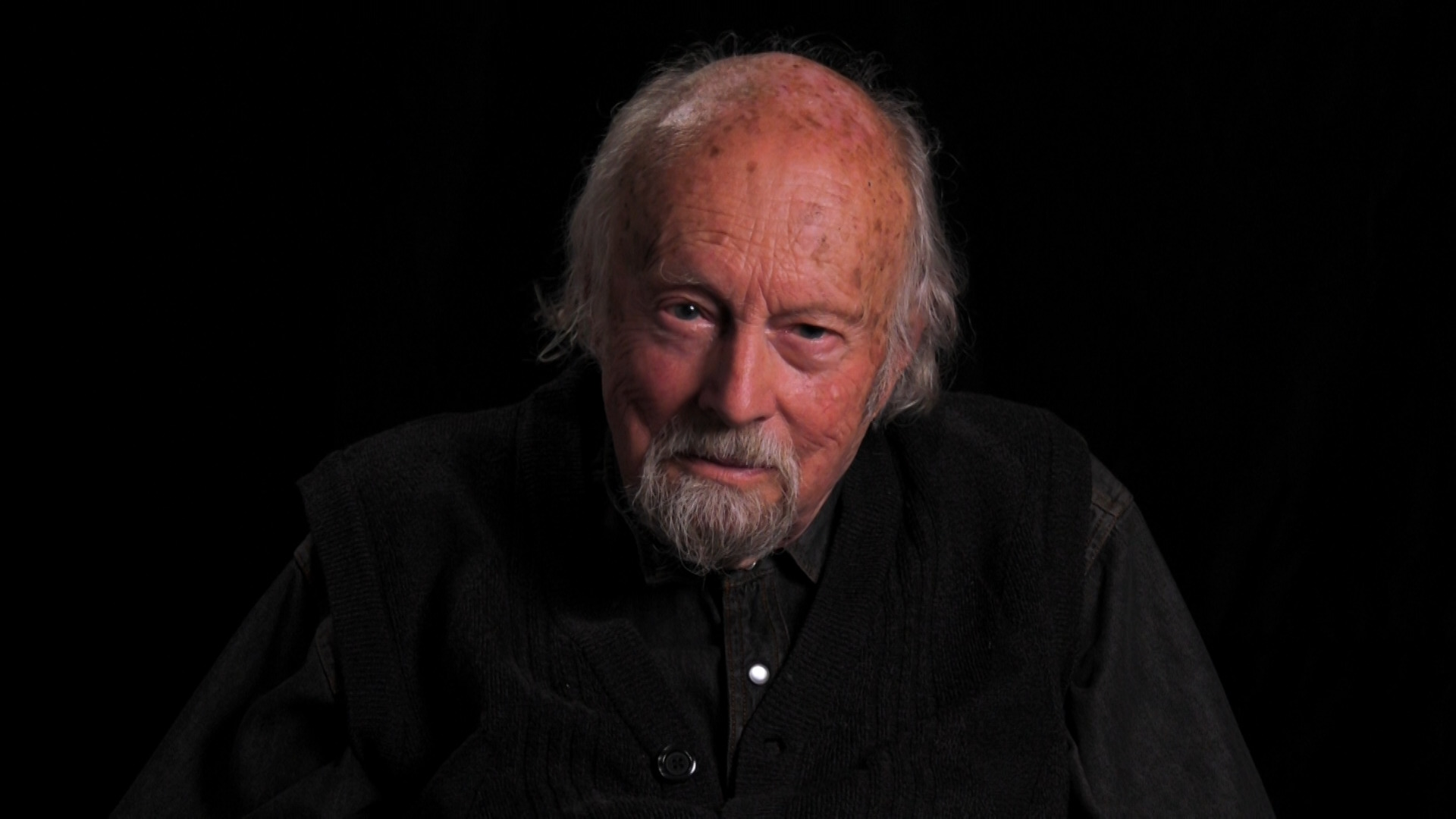
"I experienced it when they called us into the grammar school's gymnasium in Tábor and told us that the four of us had been expelled from all grammar schools in Czechoslovakia for anti-state statements. In my case, it was a statement, and in my classmate's case, it was that she ostentatiously wore mourning for Beneš. In the autumn of 1948! My statement was that... I was in the position of garbage collection referent, and we were called in by the head of the action committee, Švehla - practically a Gestapo officer who, when he talked to my father, had a gun on his desk. A terrible guy, he was the head of the action committee... At the grammar school, someone took down a picture of Klement Gottwald and replaced it with a picture of Truman. I'm convinced they did it themselves, because it never got solved. At that time, I came in as a representative of the students during the investigation. Švehla yelled at us that if it happened again, he would close the whole grammar school, and we would all go to work in the factory. My classmate Josef Buk, later a member of the Central Committee of the Communist Party, made a denunciation, saying that I had said that we used to be burdened by the Nazi boot and now we were being burdened by the Communist boot."
"A German countess was living on the right, her name was Von Jungmann. She lived with her 90-year-old mother, who fortunately died before the end of the war. This countess greeted everyone first. I remember that there was a brook that flowed there - it's built up now - and we used to go there to get vegetables, because that's where the Bulgarian gardeners used to farm, and she used to go there every evening to bathe. She was such a typical old maid. She'd take a couple of dips, do two tempos, throw her raincoat back on and go home. So she was thrown out too; she was in the concentration camp. She had a huge collection of records, music books, and a huge library, and they threw all this stuff out in the street in front of the villa. It was raining on it, and it lay there for about a month. One day, somebody found some stamps there and told us, so we went and rummaged through the books, which had beautiful old bindings. Unfortunately, I caught her there one day. I think she had come to do some errands, and she was standing there at her house. She saw it all; it was her whole life. After all, she was an old maid who hardly ever went out. That was the amen of her life. She was in a terrible state, and she was whining. I had to go away because I couldn't watch it."
"We played football there. Several times they [Hitlerjugend] ambushed us, took the ball away from us, and cut a hole in it with a dagger. They threw it back to us, the ball was useless. Then we kicked with a rag because we had run out of balls. One day, I was walking home from the patch, and on the way, I was attacked by two members of the Hitler Youth. They pinned me against a fence, and one pulled out a dagger and put it to my neck. They laughed. I screamed in horror. A Czech gendarme was walking by, and I screamed for help, and he just walked away as if I wasn't there..."
Milan Nakonečný was born on 8 February 1930 in Horažďovice. His father, Teodor Nakonečný, was originally a Ukrainian White Guard who emigrated to Czechoslovakia, where he worked as a notary. Milan Nakonečný experienced the Second World War as a teenager and therefore has many vivid memories and diverse stories. For example, he experienced the well-known bombing of České Budějovice. In 1947, the family moved to Tábor, where he was expelled from high school after February 1948. His path to graduation and university studies was complicated because of his bourgeois background, and later, the regime was also bothered by his views. He became acquainted with the working class as an employee in the Kladno mines and worked in paper mills. In 1958, he graduated from the Faculty of Education, majoring in psychology and pedagogy. From 1962, he worked as an assistant at the newly established Faculty of Journalism, where he was invited by his professor František Hyhlík. In 1967, he graduated in clinical psychology from the Faculty of Philosophy, and in 1968 and 1969, he studied in Munich. After the Prague Spring, he was expelled from the faculty in 1970 and worked at the regional marriage counselling centre in České Budějovice until 1975. Then, he taught at the Secondary School of Education in Soběslav until 1985 and at the Child Psychodiagnostic Institute in České Budějovice until 1989. After the Revolution, he was able to devote himself fully to what he enjoyed most: teaching. Among other things, he headed the Department of Andragogy and Personnel Management at Charles University and taught at the Faculty of Theology at the University of South Bohemia. After the Revolution, he published widely, especially books on psychological topics. He is known to the general public for his award-winning Lexicon of Magic and is a follower of Hermeticism and esotericism. After the Revolution, he revived the Hermetic Society Universalia. He was a widower, had a son Milan and lived in Tabor in 2025. Milan Nakonečný passed away on December, the 4th, 2025.