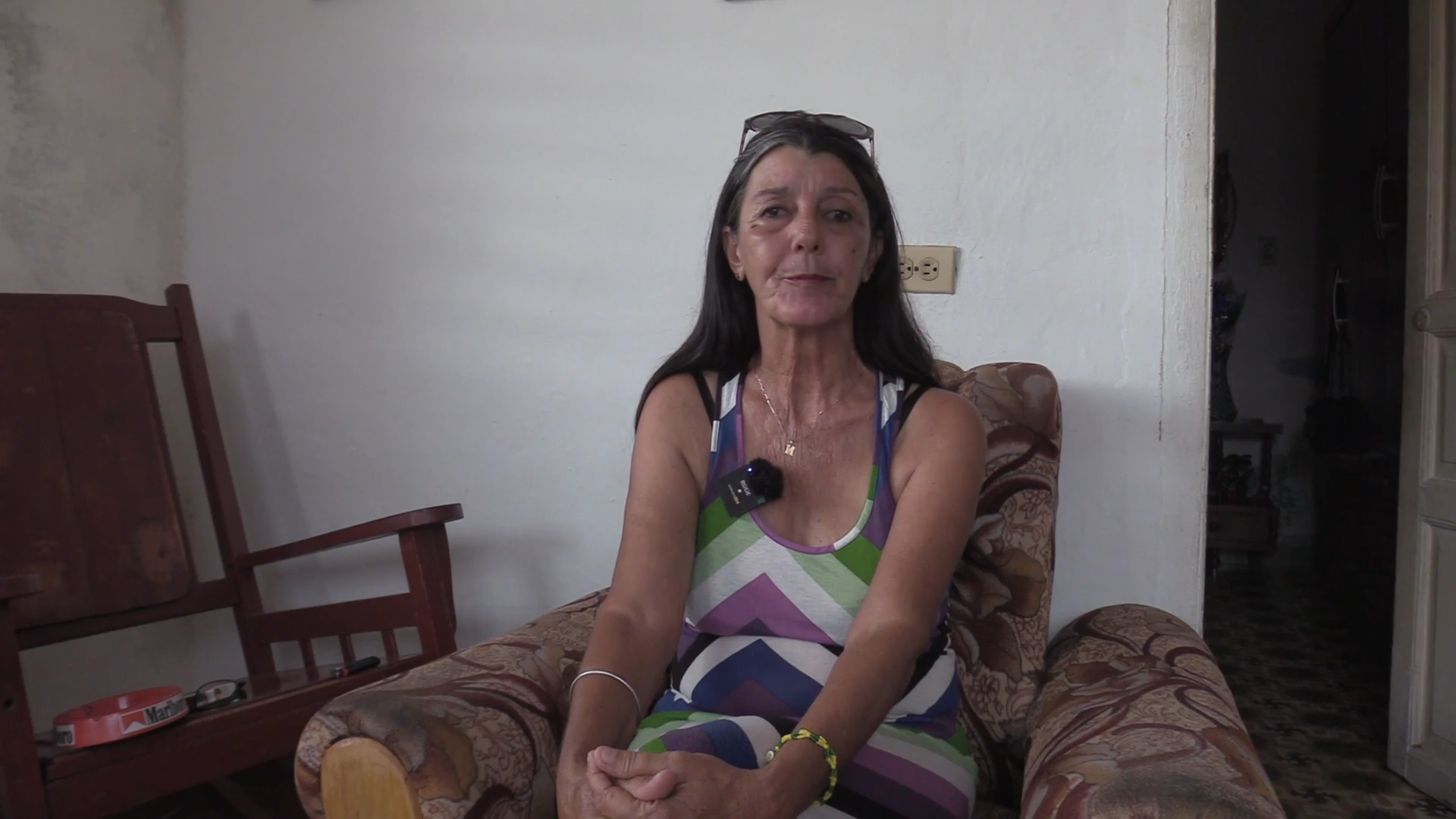
María Elena Mir Marrero

* 1962

  • "I was at home when they knocked on my door. I didn't know who they were; they showed me an ID card and said, ‘You are under arrest, follow me.’ There was a car outside and I followed them. This had never happened to me before, although I had known people to whom it had happened. I thought, ‘These people have come for me.’ They took me away and brought me to the police station here in Guanabo. There, they sat me down on something they have inside, like a prison cell but bigger. They sat me there, locked the door with a padlock and bars, and left me there. I don't know what they did outside. Then they took me out of the bars where I was, blindfolded me, and put me in a car. That car started going round and round. I was blindfolded, so I didn't know. The car stopped, and I felt them getting me out. I felt a door open, some stairs going up, another door open, and they sat me down; the house was made of wood. Once I was sitting in a chair, they took off my blindfold, and I saw a table in front of me and two or three people who I later realized were security officers. The interrogation and threats began: that they would take away my parental rights, that this couldn't be, that this, that that. They offered me food, but I always had the audacity to say, “I'll starve to death,” and I didn't try anything: no water, no food, absolutely nothing, not even the cigarettes that were there. I can't tell you if I was there for two hours, three hours, I don't know how long I was there, because everything was about those people intimidating you, harassing you, instilling an unbelievable fear of them in me. And if I tell you one thing, it's that from that moment on, my conviction that I was not on the wrong path became even stronger. Perhaps if the verb had been different, perhaps if the way they projected themselves had not been so forceful; perhaps, but that's when I understood. At that very moment, sitting there, I understood that I am a very strong-willed, very rebellious person. I understood that if this bothers you, it's because it hurts you, and if it hurts you, it's because I'm right. And from that moment on, my conviction was stronger. We were in there for two, three, four hours, I don't know. They closed my eyes again, put me in the car, and left me in a remote area. There is a place called Barrera, like a curve, dark, dark. They opened the car, took off my blindfold, and left me standing there, with no means of transportation, with nothing. When I saw myself there, I didn't know where I was; I oriented myself by looking toward the light in front of me. I always said, “North, I have to go north,” because there was a very bright light. When I got out, I realized that a bus was passing by. I spoke to the driver—at that time the bus fare was 40 cents—and I said, ‘I don't have any money, but I need to get to Guanabo,’ and I made it home. From the moment I opened the door to my house, my son was in tears; my mother had picked him up; everyone was worried, no one knew where I was. And from that moment on, I said: things went wrong for them, they didn't convince me. In other words: if I took this step and I'm here, it's because I believe in it, because I feel it, because my conviction will prevail; and if one day they prove me wrong, maybe I'll change, but so far, to date, that hasn't happened. I don't think it will happen, because life, the problems we've been through, the situations we've faced, continue to give you the conviction that you're on the right path, that you're not wrong, that the freedoms we're born with are being crushed here in Cuba, and that if we don't raise our voices, who will? Who is going to shout it out? Who is going to say it? Who is going to defend this people? So I'm staying here."

  • "What I can tell you about that date is that it marked my life. As scholarship recipients, they took us to Revolution Square in buses and dropped us off there. I returned to my school without shoes, a tie, or any sense of direction at 2:30 in the morning. I never went back to Revolution Square again in my life. A few years earlier, I had started my teaching career at the age of eleven. It affected us so much because it was really a disaster. A whole day without food. Like a cow farm let loose there. And it marked my life in such a way that I never set foot in Revolution Square again."

  • "You were studying, and during the course you had fifteen days or a month... I don't remember the date... everyone had to participate. We cleaned furrows, picked coffee under mosquito nets suffocating from the heat, strung tobacco leaves, which was also horrible. We cleaned very long cassava and sweet potato furrows. // There are so many things that mark you in the scholarship that it's incredible. First, the separation from family. The children weren't used to this. The food... there was minimal medical care compared to today. However, the most important thing is that the children suffered from separation from their families. On Sundays, we would go out loaded with all the food that was easy to get at that time. We had to face the ideology that was imposed on us. This was very shocking. You left sixth grade, where you said, “Pioneers for communism, we will be like Che,” but there it was totally different. The insistence that you be a member of the Communist Youth, the participation in political events with which you sometimes disagreed. These are things that marked everyone's lives. All of that causes a change in personality. I was raised by my grandparents, who were not in favor of this process. My ideas did not go along with what the process was about. They always taught me what it meant to be independent, to be able to express yourself, to be able to believe in yourself. All of these values were shattered there. You had to comply with different concepts and continue with the indoctrination.

  • "You started at about 148 pesos. Depending on your years of service and your evaluation, your salary would be raised to 171 and 192 pesos. At that time, the salary was enough. Prices were very low compared to today's prices. I don't know if it was enough, but I had a very concerned family, and they sent us food and clothes. However, comparing the salary of 148 pesos in the 1970s with the current salary of 3,000 pesos, it was possible to live on it. Although you didn't live in luxury, you could cover your basic needs. // With five pesos, you could go to the pizzeria in Guanabo and buy a ham and chorizo pizza that cost 1.60 pesos. A malt cost 40 cents. Then you could go to the ice cream parlor and buy a cup with five large scoops of ice cream for 1.50 pesos. And when we went out, we would sit down to eat a chicken breast with French fries and a soda for 2 pesos. About five pesos was enough to buy all that. Today, a pound of rice costs 350 pesos and a package of chicken costs 2,500 pesos. If you earn 3,000 pesos, how are you going to support a family? It's sad. And the MIPIMES and private vendors are also exorbitantly priced, it's not enough. The salary is not enough to buy the products."

  • Celé nahrávky
  • 1

    Cuba, 01.01.2025

    (audio)
    délka: 01:37:31
    nahrávka pořízena v rámci projektu Memoria de la Nación Cubana / Memory of the Cuban Nation
Celé nahrávky jsou k dispozici pouze pro přihlášené uživatele.

“Everyone knows that teachers like to speak loudly.”
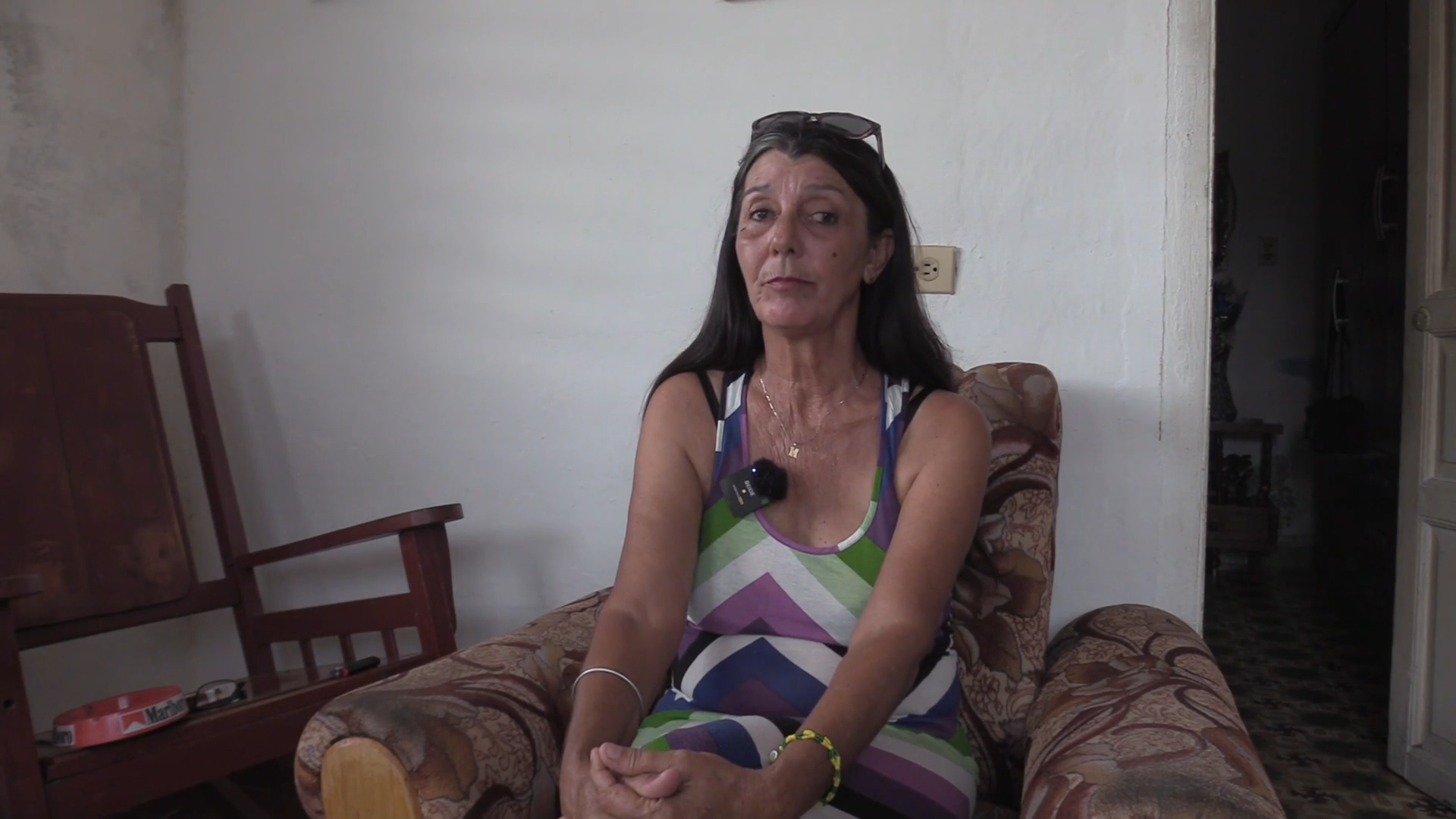
María Elena Mir Marrero, 2025
zdroj: Post Bellum

María Elena Mir Marrero was born on January 16, 1962, in Guanabo, a beach town near Havana. Her parents, who had three daughters in total, were of peasant origin. While her father was unable to work due to an injury he had suffered, María‘s mother worked in public health. The family‘s finances were supported by her paternal grandparents, as her grandfather worked in tourism and could afford to provide his first granddaughter with all the food and toys she wanted. Her happy childhood was interrupted at the age of eleven, when the young girl decided she wanted to study to become a teacher. This meant moving to the city of Batanabó on the south coast, several hours‘ drive from Guanabo. María lived in student accommodation and suffered greatly from being separated from her family. During her first year, she also had to participate in rural schools in the province of Pinar del Río, where the children helped with agricultural work. In her second year of studies, she was able to return to Guanabo because the José Martí Teacher Training School opened in Cojímar. Her studies culminated in what was called social service, which in María‘s case meant several years in the countryside of the province of Holguín, where, at approximately 15 years of age, she taught adults. Without obtaining permission from the authorities, she decided to return to Guanabo and worked as a teacher until 1984. She had always been a rebellious person, naturally opposing oppression and injustice. The way she expressed herself in front of her neighbors and the public led to encounters with several leaders of the Cuban opposition movement, which resulted in her involvement in various organizations. For example, she participated in the preparation of written documents to promote the Cuban Council and served as a leader of independent unions, focusing primarily on educating workers about their rights. She had the opportunity to visit several European countries and see what life is like in a free society. In order to achieve the same for all Cubans, she continues to work to raise awareness among the population through education.