Vladimír Marek

* 1954

  • "When my brother ran away, I was forbidden everything. I couldn't travel, I couldn't do anything. For example, I had a label USA on my jacket, so they tore it off. They caught me at the town hall and said, 'Take it off right now!' I said, 'Why?' And they said, 'They're killing in Vietnam.' And I said, 'What do I care?' And they said, 'No, take it off! Take it off right now.'"

  • "[In the prison in Bory] it was a bit looser. There were about twelve of us. It was one entrance, but three rooms, small ones, and I think it was in groups of four, so there were twelve of us. There were arguments here and there, too. But I was lucky, because when I got on, I was going up the stairs and my friend was already yelling at me - he was a typist there - and he was already yelling at me and greeting me. He gave me Sparta cigarettes right away, I was still smoking at the time. He also introduced me to a guy from Liberec and he had fish. It was just that we were from Liberec, so they left us in peace. Because guys form Liberec were famous in those days." - "How so?" - "They were afraid of them, I think." - "So there were three men from in Bory?" - "One of them went straight home, Vrát'a. He finished right away and said to me, 'Hey, I'm going home. You came now and I'm going home.'"

  • "That Ježdík, just Ježdík. Those others, not that they were good, but they were just... This one was ugly. Maybe he was telling me if I knew the difference between life and death. I said to him, 'Life is life and death is death. So what's the difference?' And he's like, 'Just a comma.' And now he's dictating a sentence to me: 'Justify, you can't execute. And when I write: Justify, you can´t execute, that's life. And when I write: Justify you can´t, execute, it's death." And just like that, psychological... And I say to him, 'Why are you threatening me?' Or he says that people like me, it happens to people like me, that they get hit by a car and so on. Just like that. They couldn't get at me through a family. They just pushed the other guys through kids or girlfriends. I didn't even want to have kids at the time because of that, because if they had pushed me, I don't know how I would have acted. I didn't really care that way. I claimed that I was single and that I wasn't even seeing my parents."

  • Celé nahrávky
  • 1

    Liberec, 14.08.2025

    (audio)
    délka: 01:05:36
    nahrávka pořízena v rámci projektu Příběhy regionu - Liberecký kraj
Celé nahrávky jsou k dispozici pouze pro přihlášené uživatele.

Do you know the difference between life and death? A State Security officer asked me
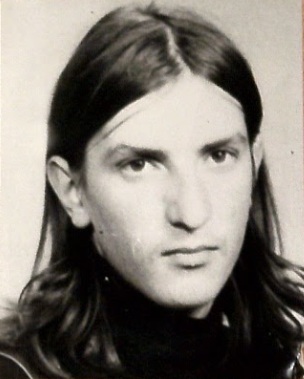
Vladimír Marek, called Máňa, as a young long-haired man form Liberec, 1970s
zdroj: Security Services Archive of the Czech Republic

Vladimír Marek was born on 22 May 1954 in Česká Lípa into the family of František Marek, a driver, and Miloslava Marková, a worker. Immediately after his birth, the family moved to Ostašov in Liberec, where they started living with his grandparents. After finishing primary school, he trained as a bookbinder and started working at Severografia in Liberec. His opposition to the communist regime began to manifest itself in him from childhood. At first he witnessed the confiscation of his grandfather‘s property by the local cooperative farm. In 1969, after anti-occupation demonstrations, his older brother was forced to emigrate to West Germany. Vladimír Marek got into trouble with the communist authorities in 1972, when he was first tried for rioting and left court with suspended sentence. He was then convicted twice more in the following years, for social parasitims and his last sentence was for participating in a crime. Vladimír Marek became a part of the Liberec community of the so-called long-haired guys and maintained a close relationship with them, participating in various events together or just spending their free time together. In June 1977, he became a signatory of Charter 77, officially expressing his opposition to the communist regime. At the turn of the 1970s and 1980s, he participated in the publication of the samizdat magazine Váhy, which was published among North Bohemian dissidents and opponents of the regime. Until the fall of the regime, he was constantly harassed by the communist authorities. After the Velvet Revolution, he took the opportunity to travel freely and hitchhiked all over Western Europe. Since 1991 he has lived alternately in the Netherlands and the Czech Republic. He holds a certificate as a participant in the resistance and resistance against communism. At the time of recording (2025) he lived in Liberec.