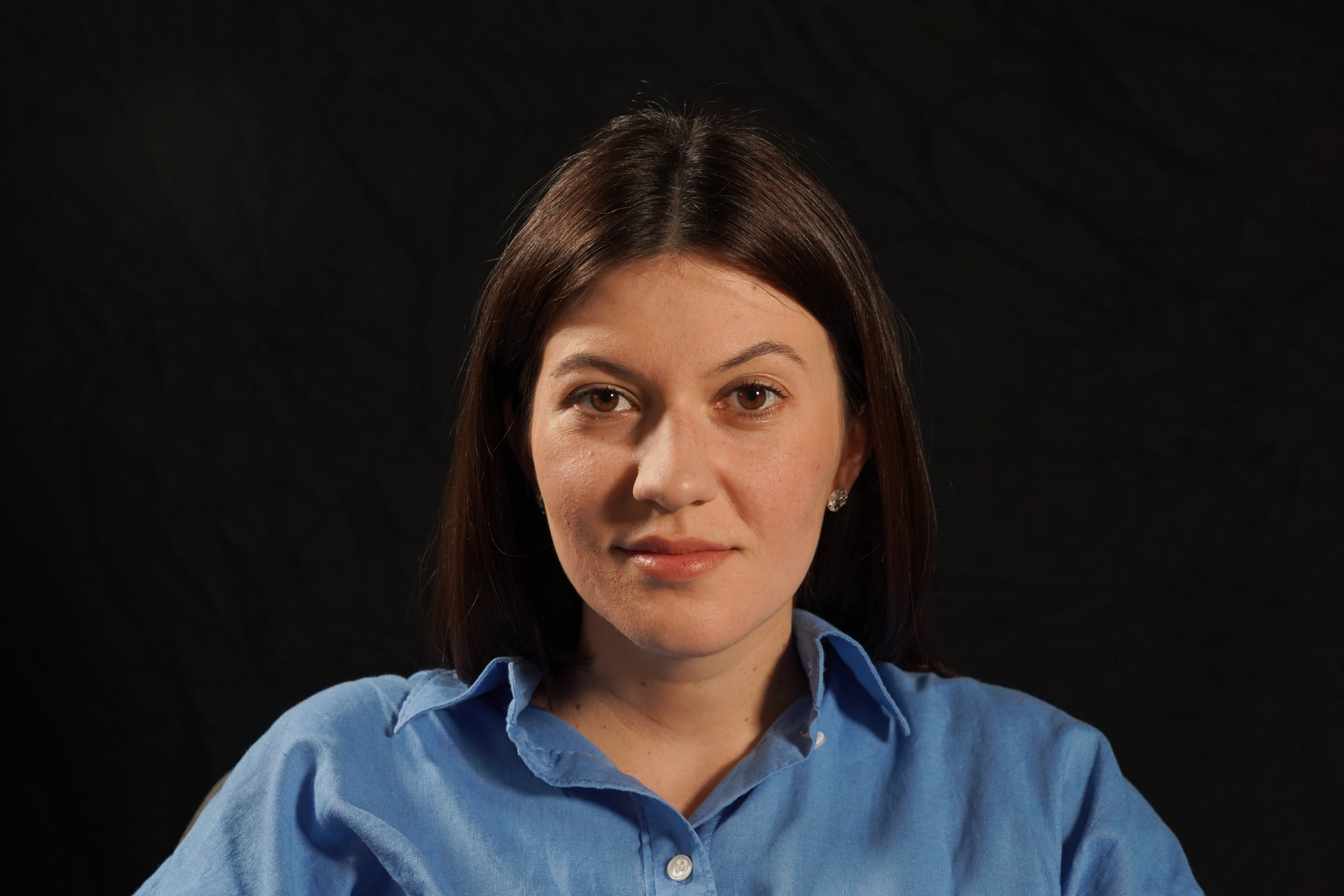
Олена Крижановська Olena Kryzhanovska

* 1996

  • In [20]23, I realized that it was simply unbearable. At first, there was talk of the “two to three weeks” and “barbecues in May,” then there were messages saying that it would all be over by the end of [20]23. My husband and I had been planning to live together. We understand that this is not the end of the story — the decision was made that I would return home. It took quite a long time to prepare. In September [20]23, I returned to Wrocław and told my manager that I was quitting and returning to Ukraine. They said, “Oh, let's think of something for you.” I said, “Listen, I've been saying for a year that I need to work from Ukraine.” I said, “I'm quitting, and that's it.” I gradually began to move my belongings. These meetings throughout the summer, the road between Lviv and Wrocław, became more and more frequent. I realized that living in two cities was not feasible, because in the end, it was not a life. Considering that I had plans for a family and everything else, it was simply unbearable. I began gradually searching for a job in Ukraine. At the end of the year, the situation was not the most favorable, as the job market had generally declined. But when I was standing at the train station in Przemyśl, I received an offer from a company in Lviv. I was traveling to Ukraine, and I already knew that I would start working there in a week.

  • In [20]23, I traveled to Ukraine more and more often. At that time, my company, unfortunately, did not allow me to work from Ukraine. It was a banking structure, with many restrictions in terms of security and everything else. I often had this situation: the company seemed to allow remote work, but I had to enter the address from where I was working. Every time I logged into the system, they would read my geolocation. It was very funny because my contract specified two addresses: my home address in Wrocław and the address of a hotel in Przemyśl. What happened was that I would arrive on Friday, work in Przemyśl, get on the train, and go straight home for the weekend; then on Sunday night, I would return to Wrocław. I think I wrote about this in a Facebook post somewhere. I think I traveled about 20,000 kilometers during that entire period. There were always very funny stories in the context of crossing borders and the people I met. Mostly they were women, of course, traveling with children, but often they were also our soldiers going to training. I always loved coming to this train queue in Przemyśl, because you start to feel at home.

  • I remember waking up on February 24 with several missed calls from my sister. She wrote to me that there would be a lot of misinformation. I didn't answer the phone because I was asleep. And [my sister] wrote that “there will be a lot of misinformation, so you have to filter the information.” I called her right away, and she said, “The war has started.” She was in Ivano-Frankivsk at the time. They had moved from Lviv to Ivano-Frankivsk. Her husband had gone on a business trip to Lviv at the time, and she was with her little boy, my godson, [born in 20]18. She said, “Frankivsk is being bombed.” Against the backdrop of all this information noise, it seemed more like intimidation to me, and no one expected that on the 24th, every city would actually be bombed. My assumption was that they [the Russians] would go further — to the Donetsk and Luhansk regions — but it was clear that it would not be a full-scale invasion. I immediately called my husband. He said, “Yes, we're sitting in the basement.” Moments like that. I called my parents. My mother opened a small shop in [20]15 in one of the districts of Lviv. My mother said, “I'm going to work.” I said, “Mom, who needs your bed sheets right now?” We then made a decision: my sister's husband is from a more mountainous area of the Lviv region. We thought that it would probably be safer to go to the mountains. I remember sitting there, we were working on a case, we work from nine to five, I called my mom, I convinced her to leave the city. My mom said, “God, the store, I can't close it, I have two cats.” And on top of that, I was following all this information remotely. Frankly, it looked very dire from a distance. When you read that Russian troops were entering Chornobyl, I thought, “God, that's so close.” In the end, I convinced her, and my sister took the little one, my mom, and my dad. And they went to the mountains, to the Plai area, they stayed there for a week, and we gathered some relatives and friends. They stayed there for a week. And my mom says, “That's it, I'm going home.” Those few weeks were just so tense, it was completely unclear what was going on. At the same time, we started raising money in Sweden and looking for companies that could provide us with body armor, helmets, and thermal imaging devices right away. In other words, we took action locally. At that time, when I was in Sweden, there were seven Ukrainians. We mobilized and took action very quickly. [We were thinking about] what we could do and how we could help.

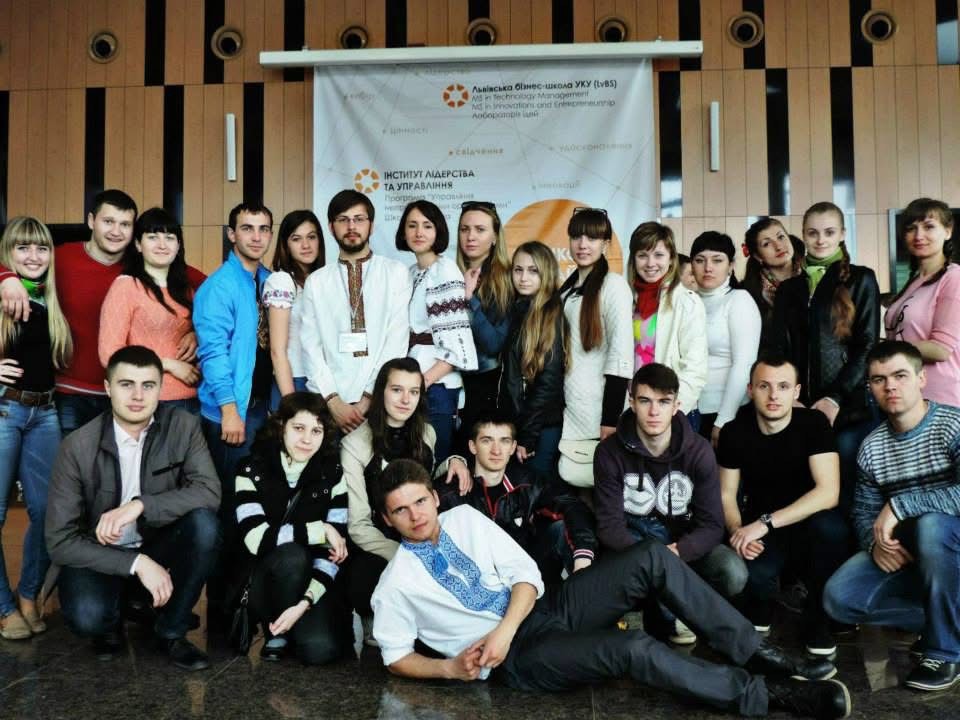
  • I always say that I chose the university, really. It was a very conscious choice because it was such a great environment. My dad always used to joke, "They're preparing you for a world that doesn't exist." He’d say, "You live in your bubble, and when you get outside, that world isn't there." It was always about "birds of a feather flocking together" there. There wasn't this barrier between professors and students, you could always go and ask any question, give any suggestion, or criticism, and have a proper discussion with professors in class. And this was accepted as acceptable, this difference of opinions, maybe even some arguments. From the very beginning of my studies, considering I had already volunteered a bit in high school, I joined the student organization Vidlunnia [Echo]. They worked with orphans. This was kind of a specialized thing for social pedagogy. We organized children's camps, often visited children in the orphanage. We looked after the orphanage in Lavriv, a small village, and in Dobromyl. Besides some of these activities with the children, we, of course, came for St. Nicholas Day, we collected gifts for the children, wrote letters with them, then distributed all these letters to people, and collected gifts for each child. I was in the Student Brotherhood of the Catholic University, which held many events, [such as] screening films for the Pokrova Day [Intercession of the Theotokos] to conduct educational activities. I remember we held an event near the Danylo Halytskyi monument in Lviv. There was a lecture about the Pokrova Feast Day, a film screening, plus we distributed food to people there, collaborating with many organizations, like the Maltese [Relief] Service. They were very active in supporting UCU, not just for one-off events, but a collaboration was established with them over the years. Plus, I got involved in organizing Easter Together [events] myself: this event was later renamed East and West Together, if I'm not mistaken. We opened applications for students, selected students, arranged free accommodation with hostels, arranged food with restaurants, and we had a lady at Shuvar [wholesale and retail market in Lviv] who gave us sweets for St. Nicholas Day and pasky [Easter bread] for the students for Easter. This was a broader collaboration with many businesses in Lviv. Often it was some Molokiiya or Halychyna [dairy brands]. That is, they gave us their food for free, in exchange for some advertising, or were just, like, "Okay, take it." So, this active community involvement, volunteering, started right from the first year. Honestly, we were involved in something every month.
  • Celé nahrávky
  • 1

    Lviv , 07.06.2025

    (audio)
    délka: 02:07:41
    nahrávka pořízena v rámci projektu Returning Home
Celé nahrávky jsou k dispozici pouze pro přihlášené uživatele.

Living in two countries is unbearable

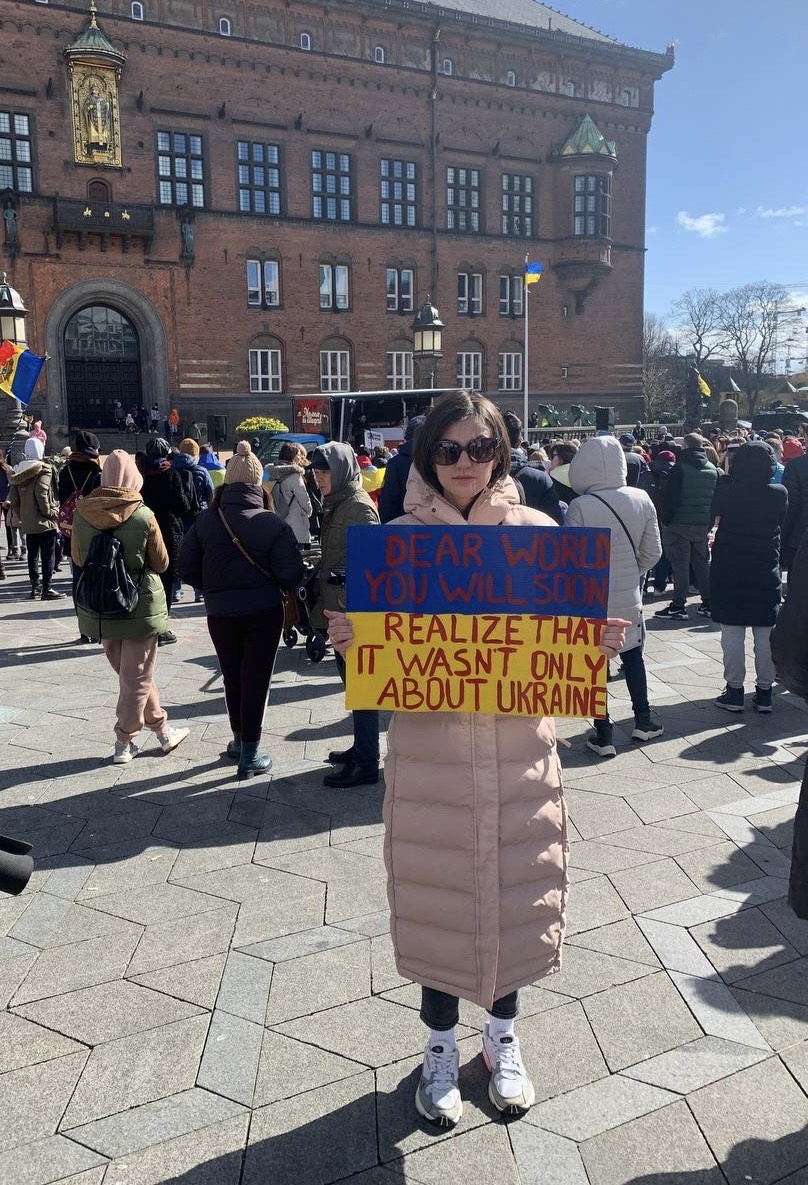
Rally in support of Ukraine in Copenhagen, March 2022
zdroj: Personal archive of Olena Kryzhanovska

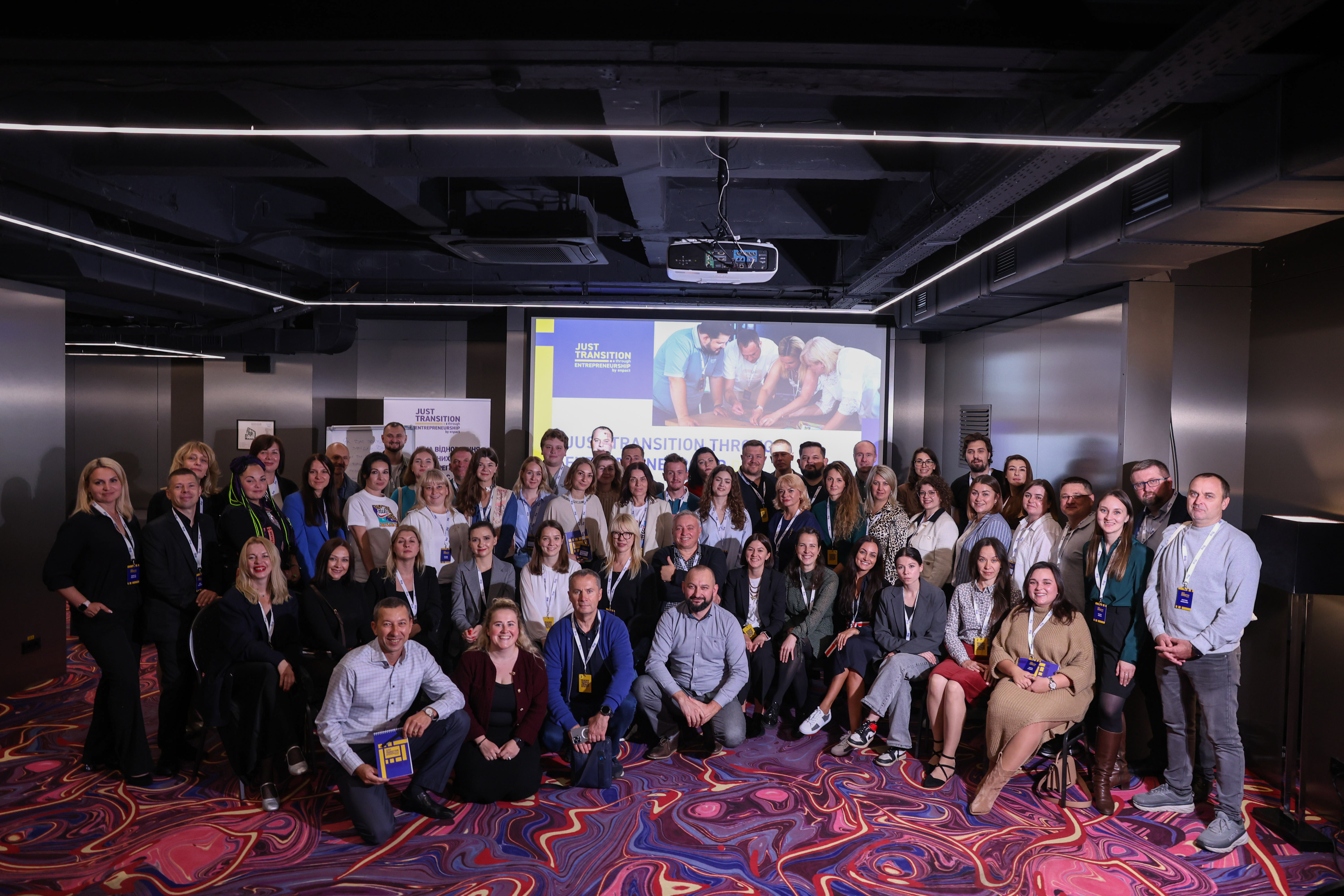
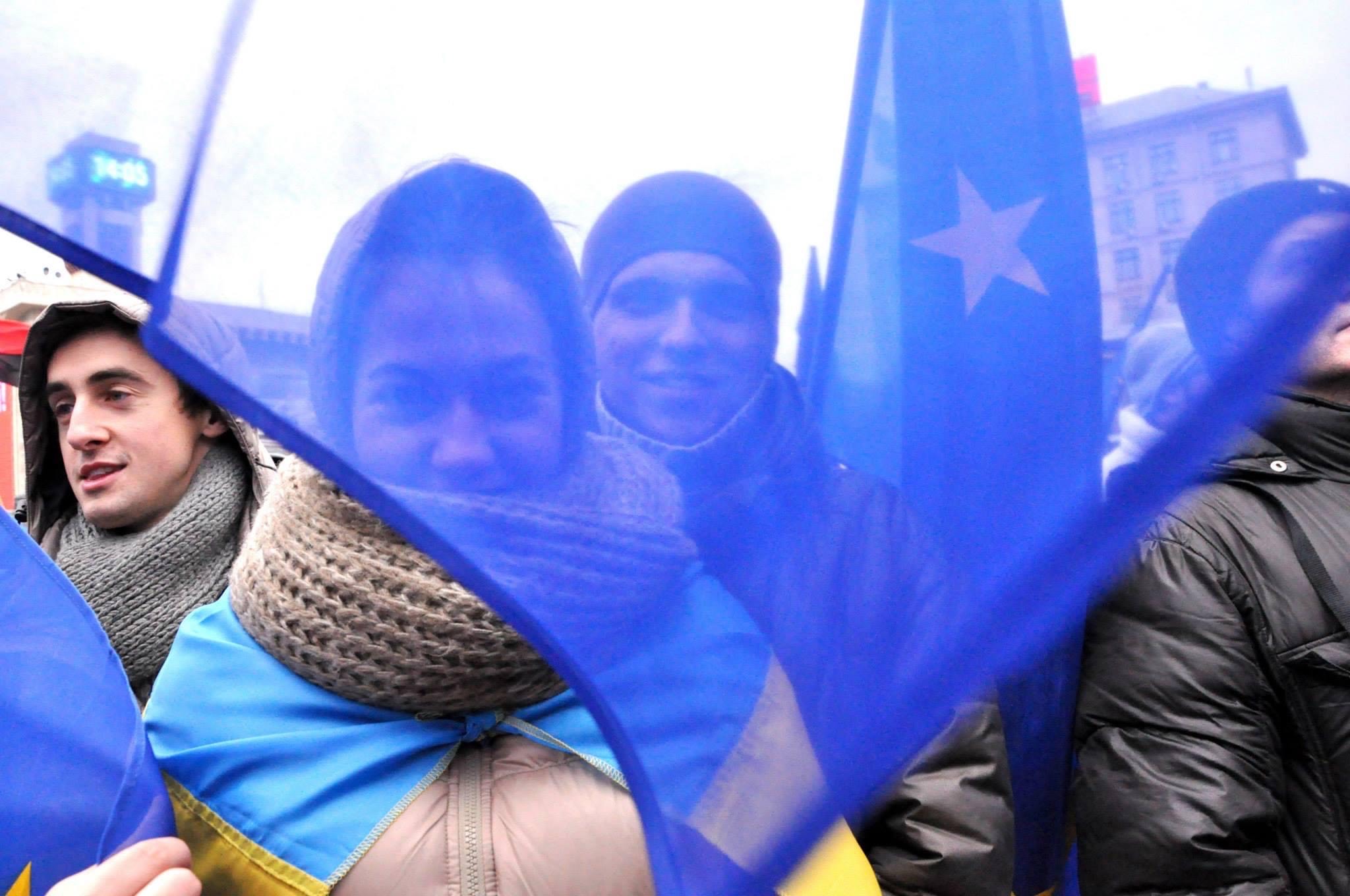
Olena Kryzhanovska is a manager, co-founder of the Hair for Share charity initiative, and a graduate of the Ukrainian Catholic University. Her family has Lemko and Polish roots. While still studying at school, she joined the Easter Together campaign at the Ukrainian Catholic University as a volunteer. In 2013, she began her studies in social work at UCU. As a 17-year-old student, she joined the Euromaidan protests in Kyiv, where she stayed for a week until security forces dispersed the protesters on November 30, 2014. She worked at the Lviv Business School of UCU on projects for entrepreneurs from eastern regions. In 2021, she began studying at Lund University in a management program and was abroad when the full-scale invasion began. After studying in Sweden and living in Poland, she decided to reunite with her family and return to Ukraine. After her return, she participated in a program to support Ukrainian small and medium-sized businesses. In 2025, she resides in Lviv, where she balances work in the IT industry with consulting for social initiatives.