
Mgr. Mirko Juna

* 1945

  • "The guys took me to the police office, now I, a decent person, gave them the right of way at the door - I didn't realise that one was in front of me and one behind me, so that I wouldn't run away from them. Then they asked me what I was collecting and why, what all I had at home, who I was writing to abroad, that was what they were most interested in."

  • "It was Christmas and I took colored chalks when my classmates told me to paint Christmas decorations on the blackboard. I stayed there in the afternoon with two of my classmates and painted a nativity scene on the entire blackboard. A little stable with a donkey and the Holy Trinity. And the next morning the teacher, who I think was teaching geography, came in, looked at it - and said it had to be wiped clean, that we were going to write a test, that he needed a blackboard. He was a more polite teacher, and we were friends with him as a family later. So I wiped it out, and when the classes was over I drew a new picture, three kings. That's how I got myself into more trouble. The next one was my aunt, a postwoman in Turnov. And they smuggled some religious literature from America, some of it went to her. So she was also in the centre of interest of, today we would say criminal investigators, so she was also interrogated."

  • "In Turnov in the fifth grade I was the only one who was not in Pioneer. My class teacher was very eager to put a sign on the door of his classroom saying that there were one hundred percent pioneers. And I spoiled it for him because I knew my daddy wouldn't bear it. And the teacher wouldn't bear it either. And so it happened that all morning, instead of teaching, the teacher, then a comrade, would sit on the bench in front of me and all the time he was persuading me and telling me to join Pioneer. And then I looked in vain for excuses to get out of it. Then I ended up crying, even though I never cried in front of other children, my classmates. But I couldn't stand it anymore, so I said I'd apply. Then there was a meeting, and of course I didn't go there. And in the morning the girls ran to meet the teacher and he, I heard it from the corridor, shouted, 'I knew that he wasn't coming!'"

  • Celé nahrávky
  • 1

    Jilemnice, 18.06.2025

    (audio)
    délka: 02:03:19
    nahrávka pořízena v rámci projektu Příběhy regionu - Liberecký kraj
Celé nahrávky jsou k dispozici pouze pro přihlášené uživatele.

A scout who became a writer and filmmaker
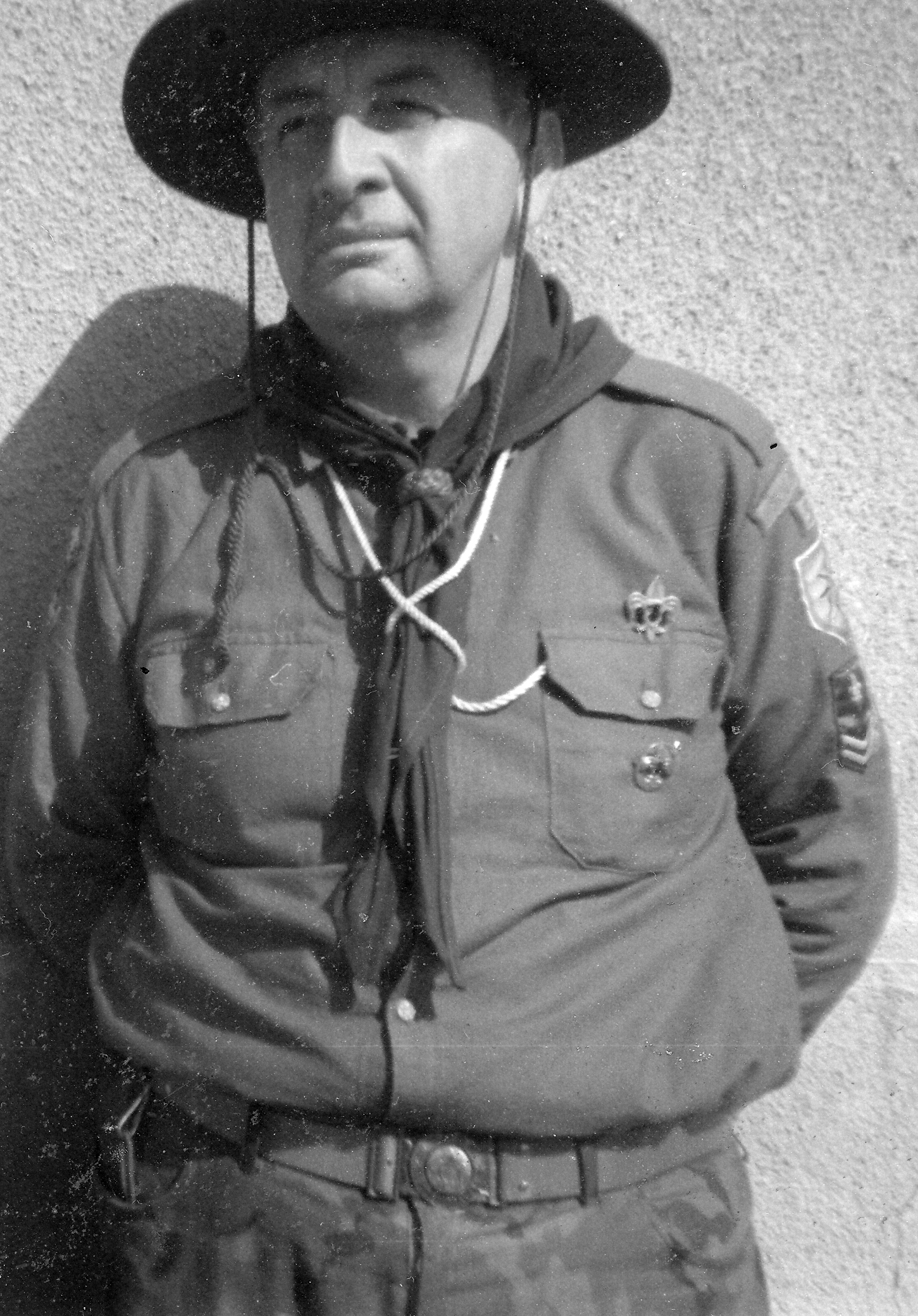
Mirko Juna in a hero costume at the beginning of the nineties
zdroj: Mirko Juna´s archive

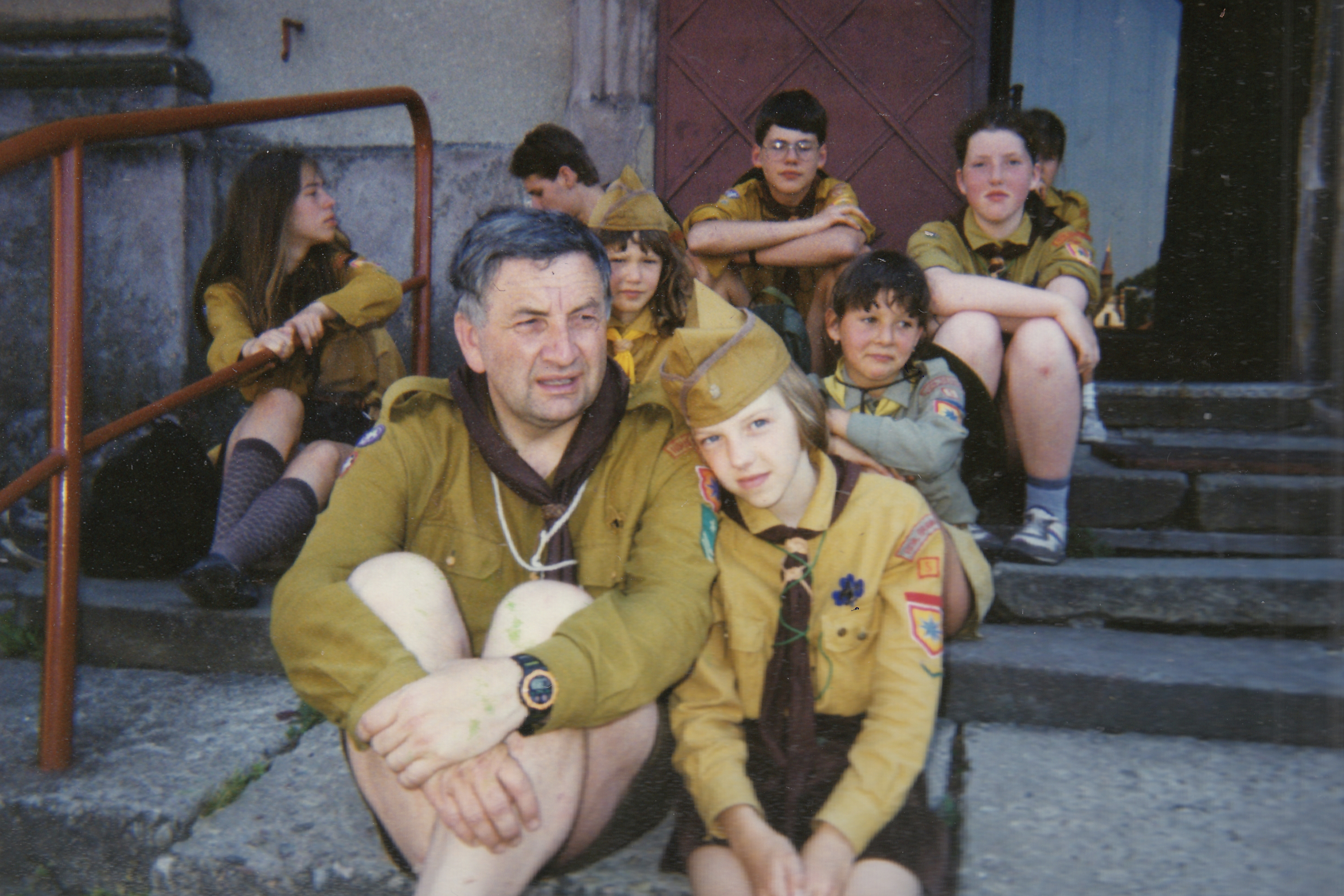
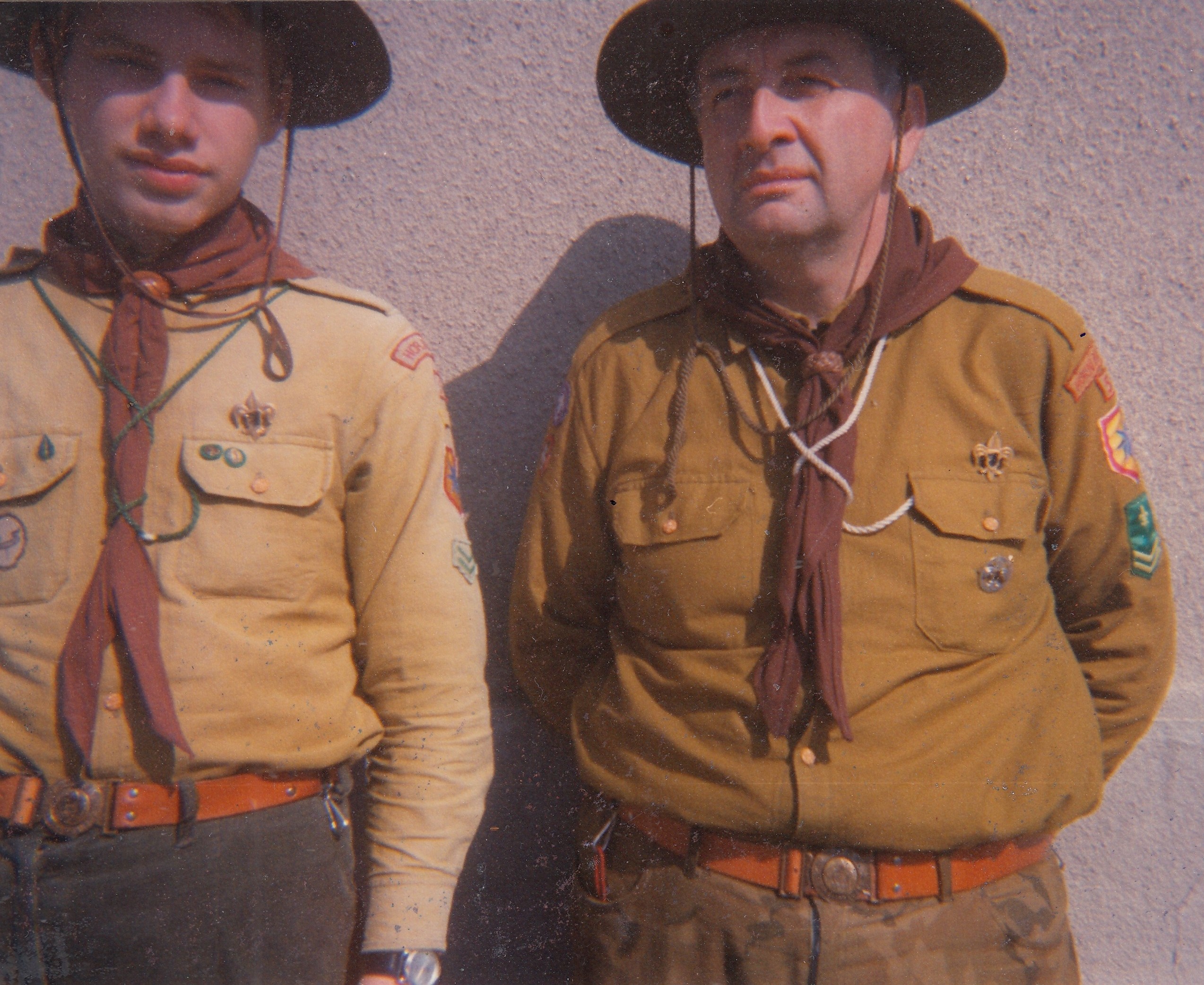
Mirko Juna was born on 23 April 1945 in Jičín. His father, František Juna, worked first as a policeman and later as a glassmaker and stonemason. His mother Marta Junová, née Davidová, was a textile shop assistant. Mirko Juna was fond of art from his childhood and went hiking with his parents. Between 1960 and 1964 he studied at the Secondary School of Glass Arts in Železný Brod, where the world-famous glass artist Stanislav Libenský was the director. In 1968, he graduated from the Faculty of Education at the University of Hradec Králové in the fields of art education and primary school. During the occupation by the Warsaw Pact troops led by the Soviet Union in August 1968, he took photographs in front of the Czechoslovak Radio in Prague. He was not at the military service, because of allergies he only attended the summer military exercises in Pardubice. Until 2007, when he retired, he taught not only art education, but also geography and history in Trutnov, Vítkovice and other villages around Jilemnice. He also taught at the people´s art school and a smaller music school in Jilemnice. In his spare time he went hiking and camping, and during the normalisation period he led the TOM youth hiking clubs. During the Velvet Revolution in November 1989 he created and distributed posters with scout symbols in Jilemnice. He then stood at the third renewal of scouting in Jilemnice. He founded the children‘s scout troop Blue Star in Horní Branná and led it until 2008. He participated twice in the international Scout Jamboree in Dronten in the Netherlands. Mirko Juna was also a collector, collecting scout magazines, hats and costumes, badges, stamps and chronicles. As part of his collecting activities, he maintained contacts with collectors in this country and abroad, and State Security became interested in him. He was interrogated several times by State Security officers and burned part of his collection for fear of persecution. Mirko Juna is the author of five books about the Boy Scouts, published under the title Camp under the Blue Star. He also made six films at his own expense, the originals of which are now in the possession of the Semily State District Archive. In 2025 Mirko Juna lived in his house in Zvědavá Street in Jilemnice.