Михайло Іванків Mykhailo Ivankiv

* 1984

  • Thoughts [about returning] were constantly swirling in my head over those years. Sometime in 2024, I finally realized that my social integration wasn't working out. That is, I couldn't find my place in the Netherlands. Yes, it's an incredibly comfortable, incredibly cool country that gives you everything you want. That gives you peace, that gives you opportunities. But, as I said, I had peace, opportunities, but I didn't have a life. That is, I understood perfectly well that I... this was not my country, it would never have become my country. And that I'm sitting here, in comfort, even though I know I should be there [in Ukraine]. That I shouldn't be writing a logistics system for a chain of stores, but I should be writing a logistics system, perhaps, for the Armed Forces of Ukraine. That I have to... that it's my responsibility, to be there. It's something similar to those two, to that elderly couple that approached me near St. Michael's. That I have to be here. This was somehow constantly swirling in my head. The circumstances aligned, the stars aligned, that somehow... somehow it happened. There was no specific day, moment, or flash of lightning from the sky. Of course, I prepared a few jokes in response to the question, "Mykhailo, what the hell did you come back for?" And those jokes were that I was sitting and watching a video and saw that they weren't fighting correctly, like the drone wasn't flying in at the right angle: "That's not right, come on, Syrskyi [current Commander-in-Chief of the AFU], where are you, where did you send the troops? Well, they can't do anything without me." On New Year's, Zelenskyy called me, saying, "Mykhailo, sorry, we're here, we tried, well, I really, really didn't want to bother you, but we've tried every which way — it's no good without you. So, you need to come and help out a bit." Well, I'm not going to refuse the president, am I? I say, "Well, you know... Say no more, I'm on it. Hold on, hold on, I'm coming. Packing my bags, I'm on my way." So I returned.

  • It was a shock. A huge shock. Again, I didn't know what exactly to do, how to act. I remember the first few days, I was just riding my bike to get a haircut, to the barbershop, and I saw Ukrainians standing on Dam Square. So I went up to them — or so it seemed to me — I intended to just quietly approach them and ask how they were doing. But it all ended with me starting to scream at them, starting to shout at the top of my lungs, what the hell they were standing there for, what they were doing here if no one was listening to them. There's a war there, there... friends and relatives are dying there, people are being killed just like that, killed for no reason. And here we are, standing and trying to get through to people who are completely indifferent to us. We're not even trying to get through to them, we're just standing and crying to each other, screaming at each other. This is all the same stuff from two weeks ago, on the eve of it all, when we stood around saying to each other things like, "Oh-oh-oh, Putin is about to attack." And now we're standing here, "Oh-oh-oh, Putin has attacked." But we keep doing the exact same thing, standing with flags. And crying. That day, we kind of spontaneously gathered and went to a spontaneous rally at the NATO headquarters. We talked to some representatives there, then dispersed. We tried to gather again to organize some protests, some movements in the Netherlands itself, to do something. I got disillusioned with it all very quickly. And the connections with the people I met at the beginning in the Netherlands, at the start of the full-scale invasion, were greatly lost. There were some general chats where we tried to organize. On my part, there was a lot of aggression, a lot of harsh words. For example, when one of the organizers of the Ukrainian diaspora in the Netherlands told me, "We need to make a website." I asked him, "Okay, fine, I can do it, but what for?" Well, because the previous one looked unprofessional. Well, I... I just told him to get lost, saying something like, "There's a war in Ukraine, and you're worried about an unprofessional website? Hello, man, what are you even doing?" I also had many, many personal demands about how things should be, what exactly the Ukrainian diaspora in the Netherlands should be doing. Unfortunately, I found no response to my requests. But because I kept in touch with my students who went to do their master's degrees in Europe — specifically with Yaryna — we tried to do something together. And there was the Bamberg organization, the German Bamberg:UA, who were trying to help somehow, to volunteer, to help send cars, send aid to Ukraine. And then my friend “Yeshka,” Maksym, called me and said, "Mykhailo..." I don't remember anymore if I called him or he called me. I think it was me. I was having thoughts then about returning to Ukraine, so I wrote to him. Well, he's a military man, an ATO veteran, a “Cyborg” [soldiers who participated in defense of Donetsk International Airport in 2014-2015]. I wrote to him, saying, "Maksym, I'm thinking of returning to Ukraine." He wrote back to me, "Mykhailo, you're no fucking use here. I need three cars right now. Go get those cars. Just sit in Europe and earn money, provide for the front." And I sort of took it upon myself to handle it, for me it was like, "What, buy cars? How? I hate cars." But there was a need, somehow, the right people were found, and at first, we did it all in a completely chaotic way.

  • In the evening, we patrolled, we tried to take over the duties of the police a bit, we maintained public order. We stood at the gate, like, making sure no one entered St. Michael's [Monastery] with weapons or batons. When a lot of people, a crowd, came, I tried to send them somewhere, tell them where exactly to go, or just take someone with me so they could wash up, eat, and sleep in relative quiet. So, and household things, bringing and setting up a tent — well, all sorts of different things. Talking to the monks to ask them what was happening. At that time, actually... It's strange that, being there, being at St. Michael's, I had absolutely no idea what was happening around me. I remember a friend came up to me, we — well, he saw me, I was standing at the gate — we hugged somehow, talked with Lysyi [a nickname meaning “bald”]. And he also said that, well, we're going down, we're going there, to the Maidan itself. Right, and three hours later, Mykhailo called me and said that Bohdan Solchanyk had been killed and that his body was now being taken to Lviv. Something like that. I still remember that I just replied somehow absolutely coldly, thoughtlessly, "Well, yes, yes, that happens here, there's some shooting." Later, I blamed myself that at that moment I had absolutely no emotions, because everything was in a fog. Everything was like I... I didn't know what was happening, didn't know where I was, what I was, what was around me. There were only some moments. Or, I remembered, there was one episode that moved me very much and showed me that, yes, Ukraine has a future, Ukraine has hope. It was when I was standing at the gate at St. Michael's, watching who was going where, you know, just the usual routine. And I noticed that two people approached, an older couple, a husband with his wife. The wife nudges him with her elbow in the stomach and tells him, "Go on, get out your passport." They both took out their passports, came up to me, opened them, and said, "Here, look, see, we've come from here" — I don't remember where exactly from. They came, they show me, their hands are shaking, they say, "Here we are"... They came up to me, they say, "We came here, we don't know what to do." They are retirees by age, you know, older, not from Kyiv, not from Kyiv [region], and they say, "Here we are, we don't know what to do, but we know we can't sit at home, that you can't just sit and watch all this on TV right now. We know we have to be here." And that showed me that, well, not all is lost. That there is some Ukrainian spirit that tells you that you can't, you can't sit at home. If some injustice is happening, if there's trouble, then you have to get up and do something.
  • I woke up in the morning, was getting ready for work, and decided to check Twitter to see what's going on there, what people are writing. I remember that I... I was following Sasha Koltsova on Twitter, she was actively covering the events, what exactly was happening. And I remember one of her tweets: "An ambulance is needed on Khreshchatyk." Well, I didn't bother to figure out what exactly was happening after that. I quickly put on a bulletproof vest, grabbed a stick, pulled a snowboarding helmet on my head, and ran to Mariinskyi Park. I ran to the first barricade, they didn't let me go any further. And from Mariinskyi, from that barricade, I ran to Instytutska Street. I got there just before the Berkut [riot police] formed up, when they started pushing people out. I remember, I was still running there, I stopped — I was carrying the helmet in my backpack — put the helmet on my head, watched the rubber bullets fly. I exchanged a few words with someone, and then they started pushing us out, dragging us from Instytutska towards Maidan Nezalezhnosti. Since I was a man and felt somewhat strong, I tried to hold back the Berkut, somehow... Well, actually there were three or four of us guys who tried to form some kind of line and beat our sticks on the cobblestones or on some wooden shields or something, threatening the Berkut — and thus stop the Berkut for a few minutes, so that the people who were retreating had time to fall back. Unfortunately, there was little time and not everyone managed to retreat, they pressed us against the first barricade—made of snow, and a large crush formed there. I remember a few more moments when it actually came to a clash. An elderly man was standing next to me, and one Berkut officer swung at him, then I tried to wave my arms or something, the Berkut officer saw it was an elderly man, looked at me in my helmet, and was like: "Okay, better him." So, he whacked me on the head, I lost consciousness, fell, then in that crush they picked me up, I got hit on the head with that baton again, on the ears. I was trampled a bit, but then in that daze, having been hit hard on the head, I climbed over the barricade and sort of staggered away. I still tried to call Yurko, to say: "Yurko, there's trouble here, they're brutalizing people, we need, come here, if you have any contacts, get some self-defense hundred here so we can push the Berkut back a bit, so that here...". Well, as it turned out later, two people were trampled to death there, so there remained... One body was left, and the second, I think, was taken away somehow. I remember these events a bit as if in a fog. I then went to the Trade Unions Building, then I heard from Yurko that they too — their hundred had retreated, Yurko had a concussion, a flashbang had exploded under his feet. One of our guys... his hand was torn off, Andriy. They took him away, immediately sent him to Poland for treatment. And one of our guys was beaten so badly that he was in intensive care — he never came out of intensive care, he died.

  • We had meetings about three times a week where we discussed current events, how to react to them, and planned our responses. For example, we were the first to react when Russia started digging a dam on the Tuzla Spit island. As soon as we heard the news, we gathered in literally two hours and set up a tent — a small tent city of three or four tents — across from the oblast state administration. And we kept a round-the-clock watch there. It was fun, because at night it was boring, we got a bit bored, and played soccer on the square in front of the Lviv Oblast State Administration. But it was a fun, great time. In a way, we were kind of reckless. We had specific principles: we wouldn't cooperate with any political force. We were independent, fun, and creative. And all this time, what I was doing — well, Sprotyv itself wasn't a hierarchical structure — and what I and others were doing was coming up with some kind of protests, like preparing for these protests, drawing some posters. There was a protest called "Beat the Drum," or "We Care" — we were looking for equipment. When they closed Lialka — by the way, this was one of our first successful protests that we did... back then we were just forming the Sprotyv civic movement. When they tried to shut down businesses and suppress the opposition in Lviv, the "maski-show" [masked police raids] came for Markiyan Ivashchyshyn, and he was arrested for a time, for a week, I think, and at the same time, they tried to close the Lialka café-club. It was a legendary underground club where a lot of young people gathered, but at the same time, it was perhaps the biggest source of income for all of Dzyga [café chain]. And the Lialka café-club helped them somehow stay afloat and cover some financial issues. And besides, Lialka hosted a ton of different underground concerts, and alternative culture developed there. Okean Elzy performed for the first time in Lialka. So, when they were closing Lialka, when all this started, we... At first, just some five or six random people came, drew their posters, and came to Lialka — to the Puppet Theater — and expressed their position, like we are against this club being closed. Then we got in touch with Markiyan Ivashchyshyn himself. Well, unfortunately, he had slightly different problems at the time, so he wasn't directly involved in this, but we met and worked very actively with [musician] Solomiia Chubai. So, we organized, I remember, a big concert — oh, the nerves that went into that. For a week before this concert, right in front of Lialka, we held jam sessions, fought off skinheads, repaired and soldered equipment in the rain, hauled stages, carried them in, hid everything for the night so it wouldn't get broken. We fought off the police — not police, militsiya. Fought off skinheads, fought off everything. We worried, we argued because... well, since it was... weekdays, quite a few people came to our round-the-clock jam sessions. So, yeah, it was a pretty intense and stressful period, but... it happened.

  • Celé nahrávky
  • 1

    Kyiv, 28.06.2025

    (audio)
    délka: 02:26:11
    nahrávka pořízena v rámci projektu Returning Home
Celé nahrávky jsou k dispozici pouze pro přihlášené uživatele.

If you don’t fight evil, it wins

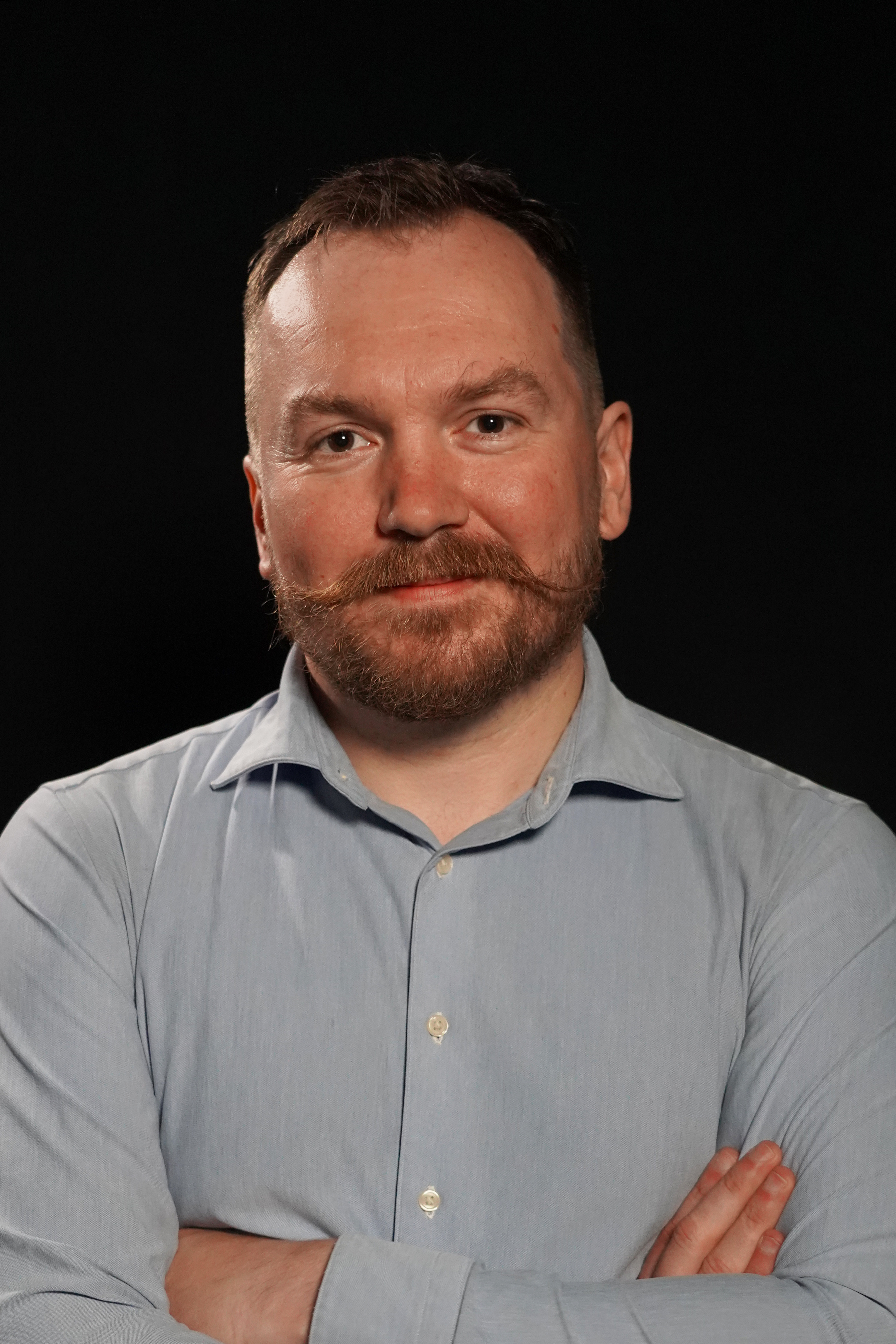
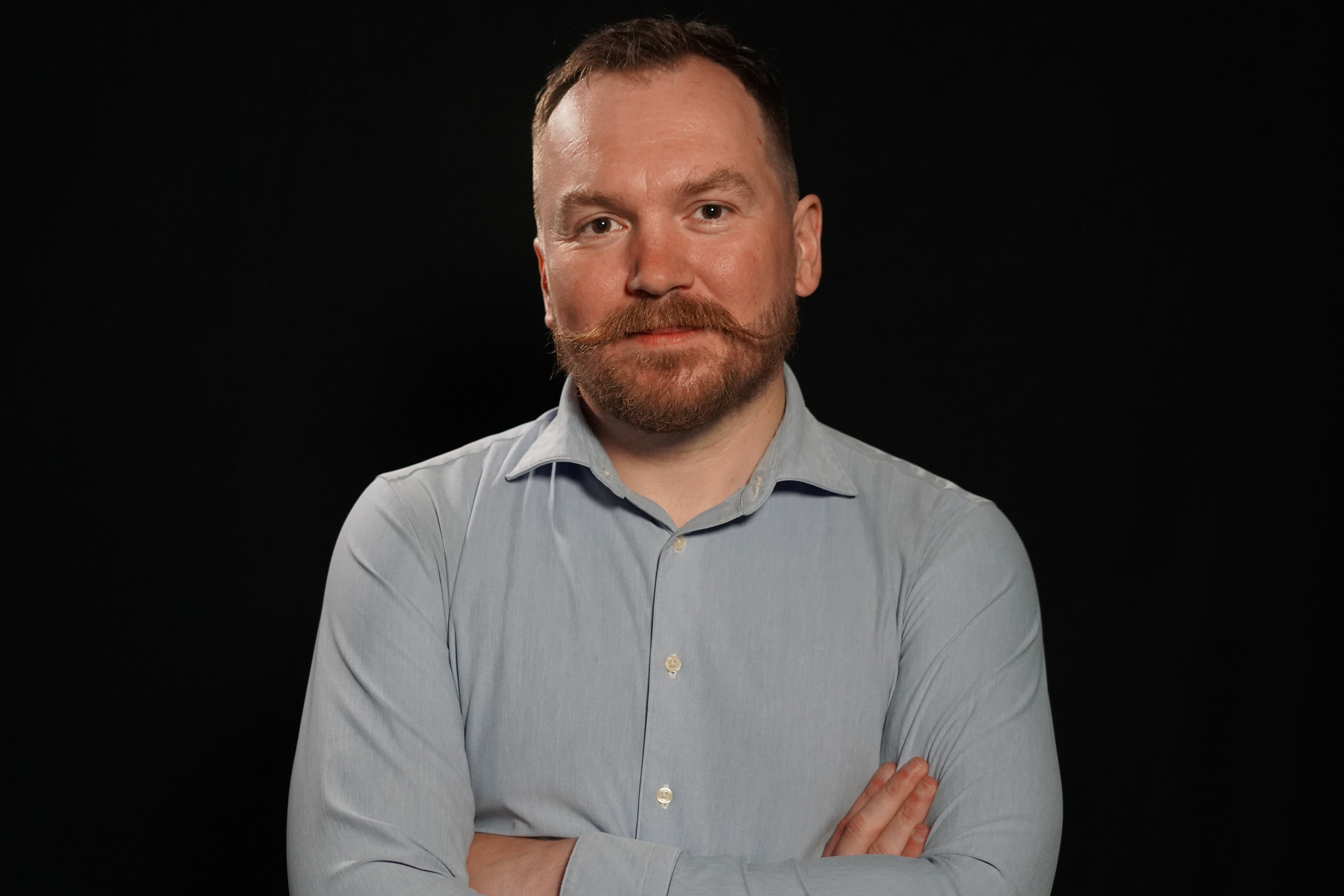
Mykhailo Ivankiv during the interview, 2025
zdroj: Post Bellum Ukraine

IT specialist and serviceman Mykhailo Ivankiv was born on June 28, 1984, in the village of Zhuravno, Stryi Raion, in the Lviv region. He studied computer engineering at Lviv Polytechnic National University. During his student years, he participated in informal subcultures and was a co-founder and active participant in the Sprotyv youth civic movement. He took part in, among other things, the Ukraine without Kuchma protests and the Orange Revolution. He worked in the information technology sector in Lviv and Kyiv. He was a participant in the Revolution of Dignity in Kyiv, serving in the 14th Hundred of the Maidan Self-Defense. He taught IT courses at the Ukrainian Catholic University in Lviv. In 2019, he emigrated to the Netherlands, where he lived and worked in Amsterdam. With the start of the full-scale invasion, he participated in street rallies in support of Ukraine and volunteered. In 2024, he returned home, and since 2025, he has been serving in the ranks of the Armed Forces of Ukraine.