"Yes, we did. We were shaking our keys so much that I lost my wallet in the crowd. Unfortunately or fortunately... It's hard to express it like that, we believed it. - "I would ask if you had any expectations of how Czechoslovakia would change. If you had any expectations of how it would be different, better." - "It was mainly that we would catch up, that we wouldn't fall behind. There was a feeling that we were still behind, only compared to the Czechs. That was always the case under the communists and it is still the case now. But it was felt that there were possibilities for that take-off, especially among the young. They must have felt it more than the old ones."
"We made a mess during the war as boys. We stole something there. Then the police tracked us down and I had a mess, a scandal. The soldiers, the Dukla people stole, discos, amplifiers, microphones were in fashion at that time. We simply condemned it. It was still a kind of adolescent recklessness, but that was the time. Back then, it was like a drug, these materials, when they were obtained somewhere. -"And were they some kind of army stuff?" - "More than one group had it stored in a hotel in a warehouse, so we more or less liquidated it for them. I had a trial at Pankrác for that and luckily I got a suspended sentence, because it wasn't theft of socialist property, which is tough in the army. It was theft of private property, which was a suspended sentence." - "Were you detained at Pankrác for longer or what was it like?" - "There was only a trial, it lasted half a day. I was kicked out of Dukla, I lost my national team and I was sent to a penal labor unit."
"They simply took them for granted. I didn't see anything extra special, but they took it for granted. We took it for granted because of the simplicity. It's not my fault, I was there, but it's no miracle, just smooth work. In the right place at the right time and the job done right. They recognized them or tried to work like them. They are such grips already when they are preparing. The Germans and the French are finding out. Later the Chinese started, they even drew us, what we were doing when we went to training, when we left training. They mapped everything, whether we were in China or here when they were at camps, us, not only us but also Martikán. That was almost a fifteen-year period. which was so extremely intense until 2012."
Well, I also experienced some problem that our priest even slapped one such communist teacher, I don't know exactly what he did, but he started cursing against the faith, he was orthodox. He started cursing against those Catholics. At that time, we also had religious education, and so on, but the conflict occurred precisely at the school like this, where the priest went to that class in the afternoon sometimes, everyone, I don't know, twice a week. There was a conflict there once, and then they banned them, that religious education stopped. That was, I don't know if I was, I could have been in the seventh grade, I guess, in elementary school.
They had to participate in some races, international, junior European championships, they were in Špindlerův Mlyn, but they were missing one boat from the Slovak team, so if they don't want to go, they already know how to drive, so if they don't want to go to the race. Well, they went and coincidentally the favorite sailed there, all three of them, so they finished third, bronze, so it motivated them so that I then asked them, well, do you want to start training? Well, I caught them under me, and a year later they already won the Junior World Championships in Špindlerův Mlýn, because they already had purposeful training and so on, so their career started there, and I was lucky, given by God, that I was at those schools, in sports, in gyms, they were the best professors of physical education in Slovakia.
Early childhood was very simple. School and I call it playgrounds, even on the street, because there was one car every half hour, maybe sometimes not even that, so that's the philosophy of that time, that my early childhood was school compulsory, and then playgrounds in the afternoon. Football, hockey, those were the basic things and cycling, once a bicycle was bought, because at that time a bicycle was a rare thing, at that time there was one in the family and everyone used it, even to work, and then in the afternoon to... and then I I used it for a little mischief, even racing on a bicycle and so on, which we were already inventing as little kids at that time.
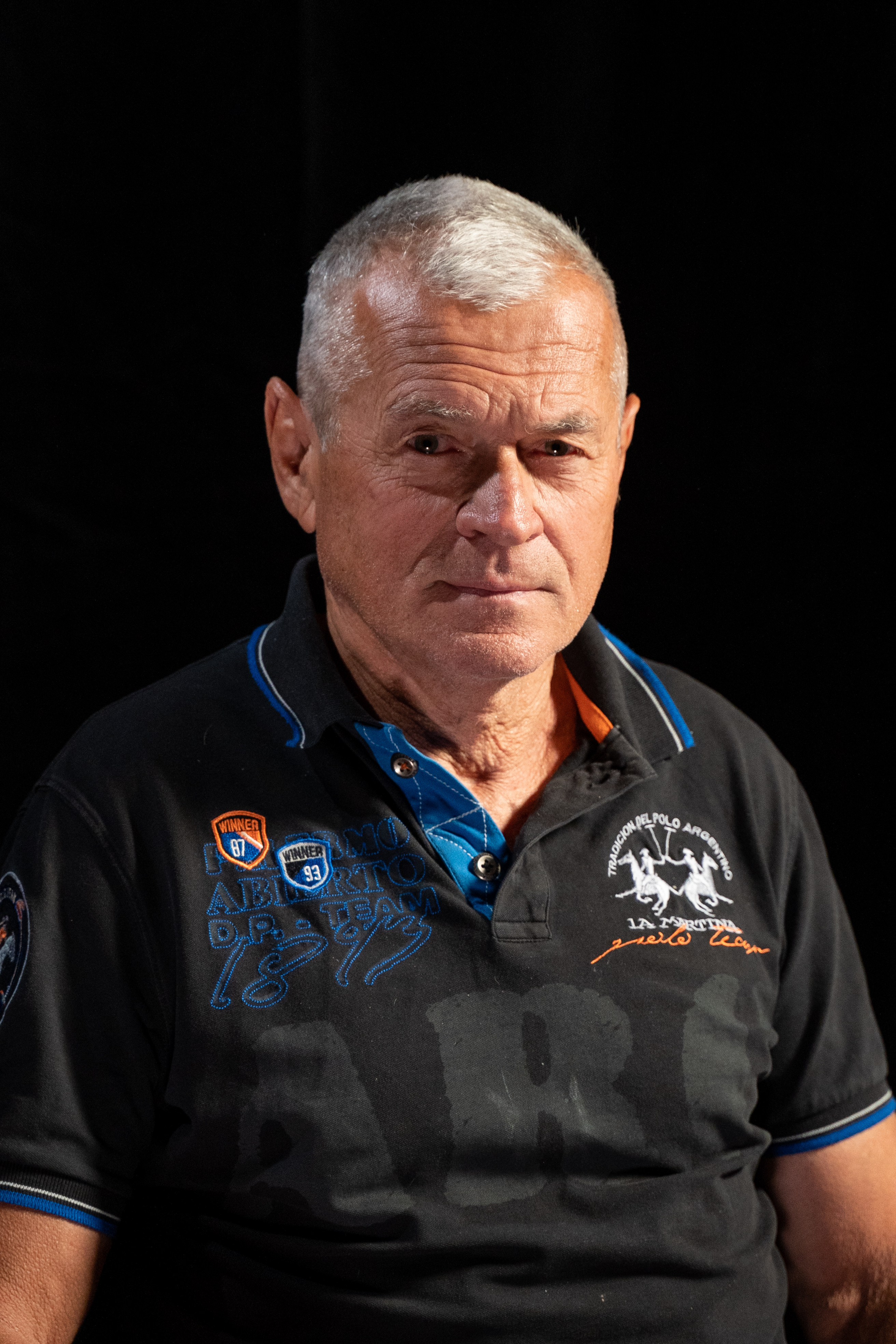
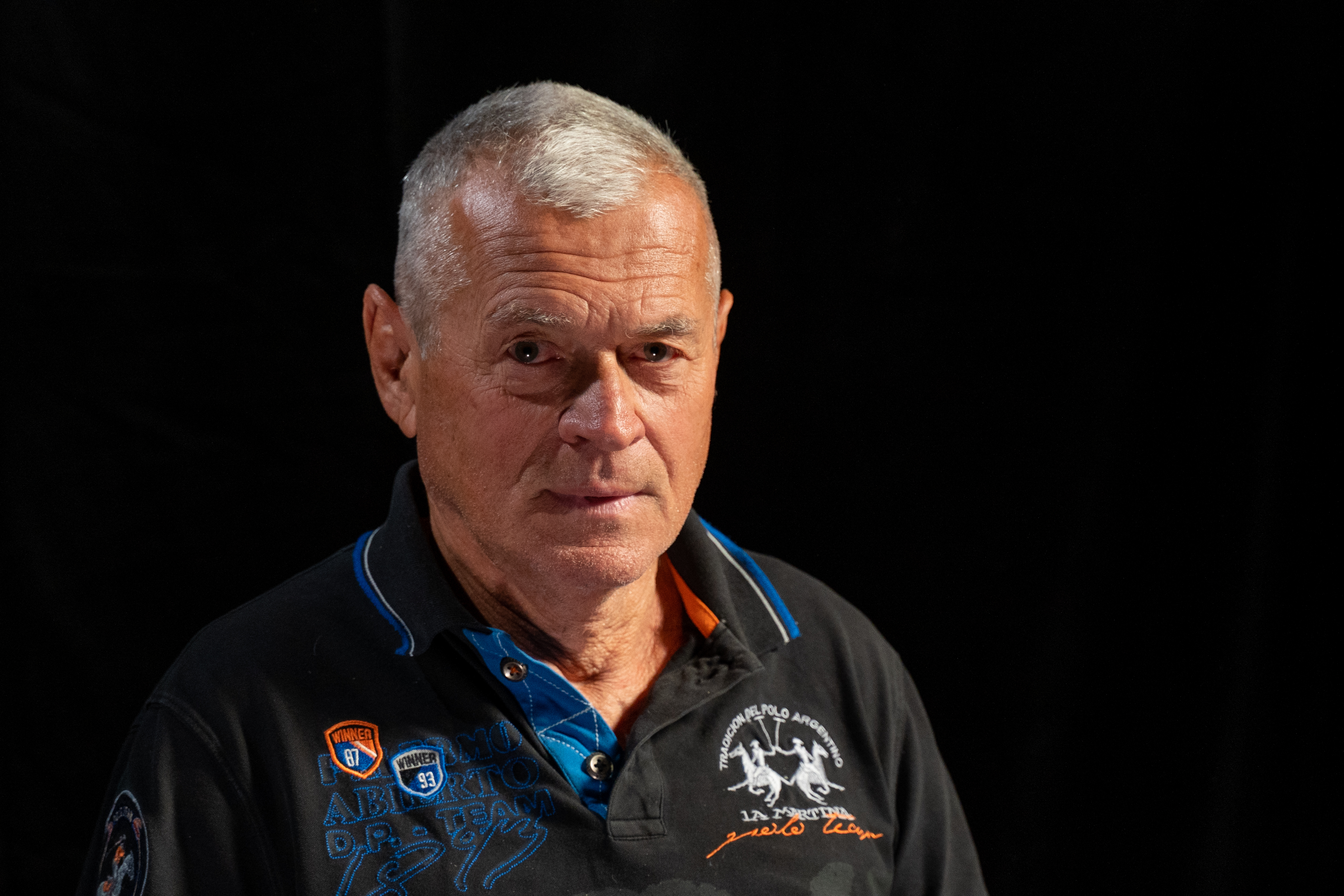
Peter Hochschorner was born on June 11. 1952 in Bratislava. His father came from Prievoz, which was an independent municipality until 1946, today it is a part of the city of Bratislava in the Ružinov . His father‘s parents were resettled in Austria after World War II. Peter Hochschorner‘s father remained the only one on Slovakia. He trained as an upholsterer and later met his mother in Bratislava.
Peter Hoschorner attended elementary school in Petržalka from around 1958. He was a pioneer and at the same time a minister. In 1967, he entered a vocational school, an apprenticeship. In 1970, he received the first performance master class. Peter was later selected for the Czechoslovak slalom team club Dukla Bechyně. In 1972, slalom was introduced at the Munich Olympics.
He initially served his mandatory military service in Dukla, which was the only sports unit. Peter later for the theft was excluded from Dukla and he had to join the work-punishment group at the airport.
After the war, he joined Tesla, where he worked for a year. Then he worked as a physical education instructor and two years later he became an instructor at the Faculty of Natural Sciences in Bratislava. He was employed there until 2000. He competed until he was 27 years old, but was not part of the national team. During the period of the Velvet Revolution, he participated in demonstrations almost every day.
Later, he became the coach of his sons, Pavel and Peter Hochschorner. After a year of training they won the Spindleruv Mlyn World Championship. He participated in four the Olympic Games as a coach in Sydney, Athens, Beijing, where the Hochschorner brothers won gold and won bronze in London.
For the last few years, Peter has been involved in sports and the occasional repair and refurbishing of cars.