"The voice of Porno para Ricardo isn't silenced, or we try to make sure it isn't silenced. I think the regime is sometimes very upset about that. I don't know if we've been lucky, I mean Porno para Ricardo in this case, but we've been lurching here and there, but we've kept going forward. Porno para Ricardo is going to turn 30. They don't forgive that. State Security doesn't forgive them for letting that live for so long. That (PPR) has been alive for too long and has become a kind of reference point. Porno para Ricardo transgressed geography in a certain way, that is, not only in Cuba. It was a time when we began to see that we had to raise our voices, but so that we could be heard a little further afield. And well, that was Gorki Águila's vision, always, always. I remember very well that in Cuba, in 1998 or 1999, it was very complicated to talk about the Internet; no one talked about it. It was something else, a spaceship. And I remember that, from the very beginning, and I don't know where he got it from, because I didn't understand it, I swear... He always talked about the Internet at that time, he said: we are only going to exist through the Internet. The Internet is the thing, I mean, at that time it was almost unknown at the end of the 90s. In the 1990s, the Internet didn't exist, it existed in very few places, and he was already seeing that. So we went there and it seems to have worked. Yes, it has worked. Now we are a kind of benchmark, thanks to all the work that has been done. There is a body of work. A body of work that speaks for itself. It's there. That's the best thing about it. The work is there."
”Subpoenas? Quite a few. I ignored all the summonses, I never went. I had no desire to go there for anything because I don't know what they're like anymore. It's just pure intimidation, pure 'we're watching you, we're looking at you, we know what you're doing, we know you're hanging out with so-and-so, we know you're hanging out with what's-his-name, and I want to tell you for your own good not to hang out with so-and-so anymore, not to hang out with... I mean, I know that speech by heart because I don't have to memorize it, everyone has heard it and everyone talks about it. Hey, what did they say to you? It was this, the same as always. To try to scare you, to piss you off, you see? And I never went. There was one time, it was very funny. Because of this, a cop comes to my house, but it was really funny because the guy knocks on my door. Imagine, with the phobia I have of cops, I see a guy in uniform, a cop at my door, and I open the door. In this case, it's not my mom or anyone else who opens it, I open it, and I do this, I open the door, the guy is standing there with a piece of paper. And the guy makes a gesture like he's going to come in, and I do this, look. No, no, no, no, no, there. At the door. Don't come in here. (And he says) but I wanted to tell you... (And I say) yes, yes, you can tell me whatever you want, but here at the door, and the guy hands me another summons, a piece of paper. I had it on top of the refrigerator, and it stayed there until I threw it away. And my mother, you know how mothers are—she says to me, “Hey, aren't you going to go there for that?” And I say, “I'm not going anywhere, and don't ask me anymore, forget it, it's there.” Until one day I picked it up and threw it away, and then I threw away those papers."
"I got together when I was 14 or 15 years old, I got together with some friends, and that's where I met Gorki Águila and Ciro Díaz. At that time, they were forming a band, we're talking about 1998. I wasn't actively playing in that band, but I was there. We were always together, and in the end, fate led me to play in that band years later. And it was important to meet those people, because when I met them, they had a kind of vision that coincided with mine. They didn't agree with the same things that I didn't agree with. They were a little older than me, but they had a way... It's just that up to that point, I didn't have the culture or the knowledge that it was possible to transgress that part of protesting for that. I mean, what you have in your head is that if you don't like something, you keep quiet, like everyone else does. And I met these people who said no, no, no, don't be quiet, you know? We can protest, it's our right. And I didn't understand. And they made me see that yes, you could protest. And then we started to make that kind of flag. I mean, to protest. Yes, what we have to do here is protest about this, about this, about this, about everything we don't like, we can protest.“
"Freedom of expression, for example, is easy to say, a very nice little phrase, but it can cost you dearly, very dearly, to say what you think in Cuba. I mean, their stance is like: look, I don't care what you think as long as you do what I say, and we'll get along just fine. But there's this famous saying that goes: do as I say, but not as I do. And then you start to understand that they (the regime's supporters) are doing things that aren't right. For example, everyone has a house somewhere, everyone goes on vacation, and fishing... And there you are, wondering what you're going to eat for dinner, you know what I mean? It's complicated. And when you start to see that level of cynicism, because I don't have another word for it, I'd like to find more words, cynicism, shamelessness, abuse, it's an outrage, but in the most cynical and coldest way. In other words: I know what I'm doing to you. Well, please, don't say anything, let's keep it that way and yes, we're fine. Look, nobody says anything, so what do you have to say? Just keep quiet, kid. And the most beautiful thing is that there are people who are 60 years old now who have spent their lives in this, and now they're at a crossroads: my life is over, my youth is over, I never did anything because of this fucking idea of dictatorship, so what do I do now that I'm 60?"
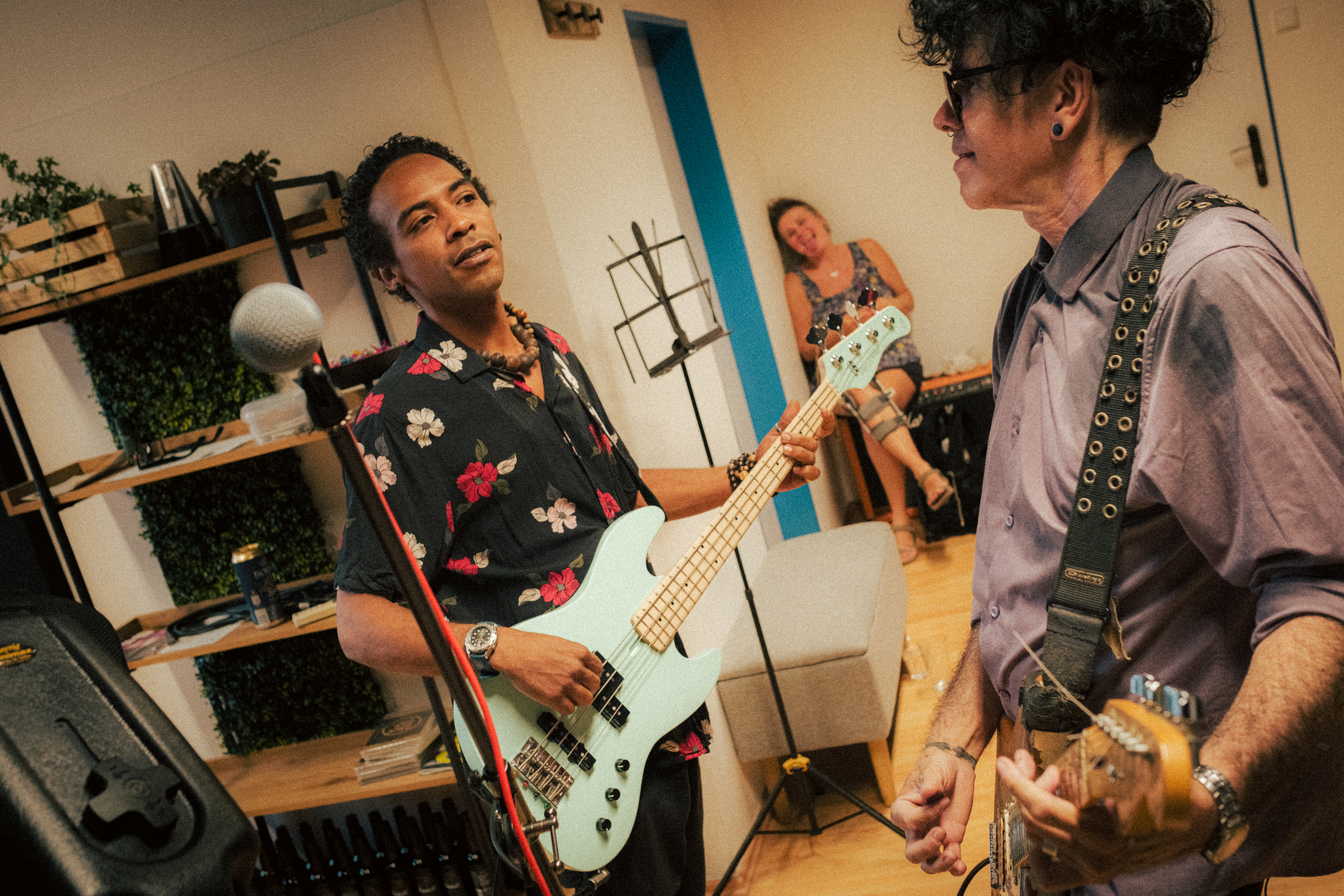
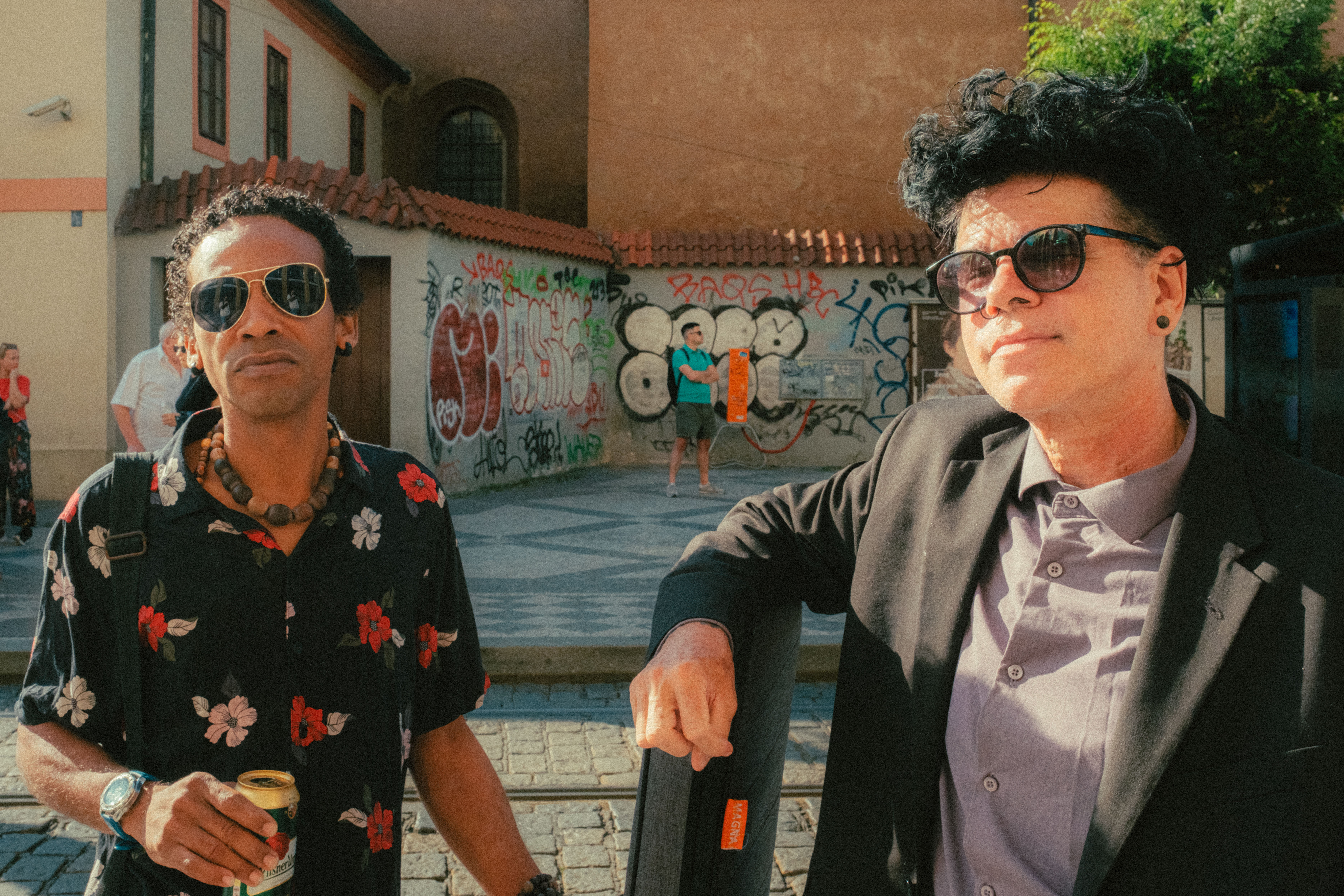
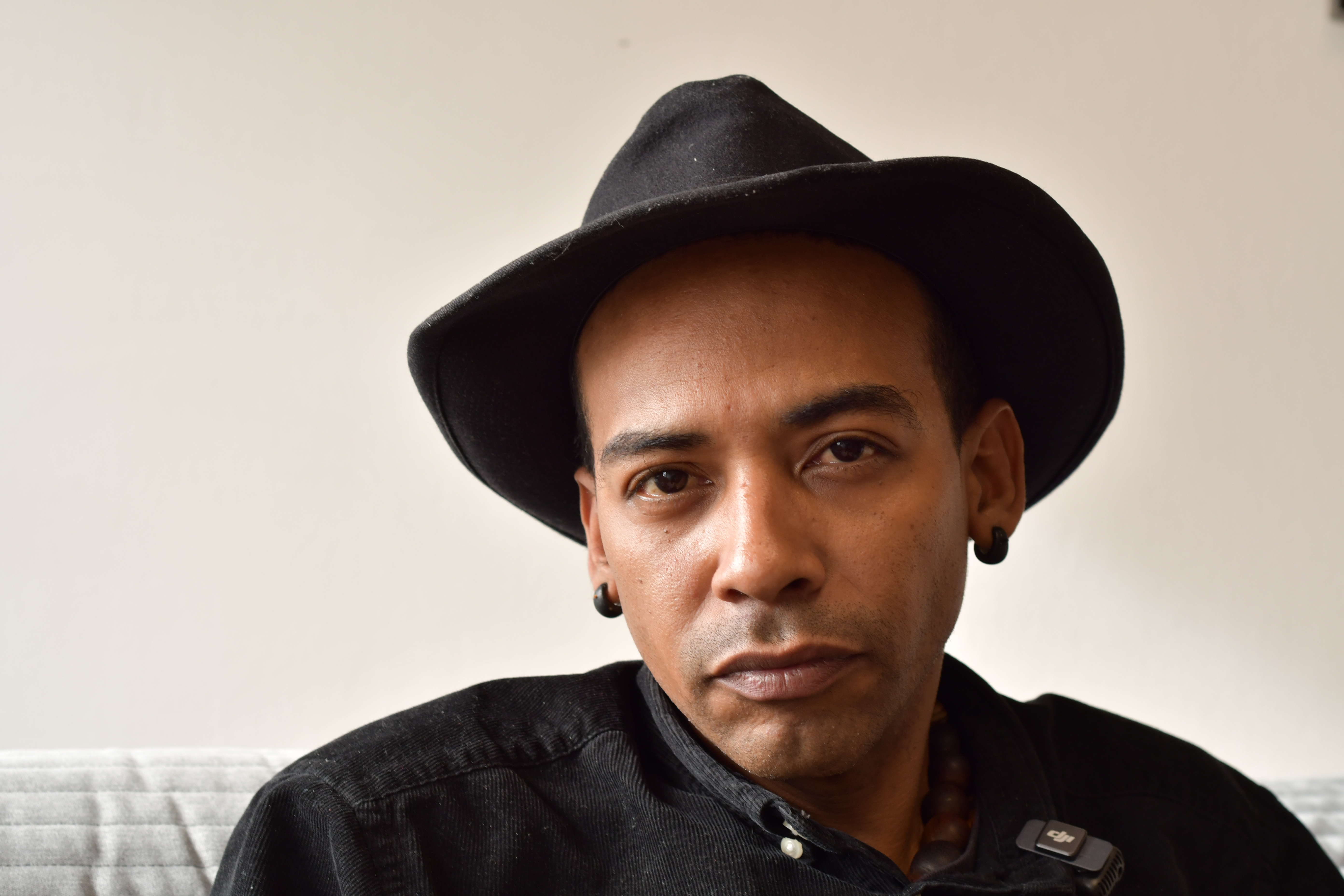
Yimel García Góngora was born in San Antonio de los Baños, Cuba, on November 22, 1982. He is a Cuban musician and member of the rebellious band Porno para Ricardo. He grew up in a matriarchal household and, as a teenager around 1998, he became involved with Gorki Águila and the core group that formed the band. He officially joined the band in November 2017. He left Cuba for the first time in 2018 to travel with the band to Argentina, where they recorded the album *20 aniversario* in record time. He then spent a week in Colombia. In June 2025, he traveled to Prague, invited to the Metronome festival and to participate in the filming of the documentary *Música o muerte*, focused on the history of the group. His career has been marked by clashes with the regime. He has been monitored and summoned by State Security; he recounts being followed, attempts at intimidation at his home, and pressure against his mother. He participated in civic spaces such as the meetings at Antonio Rodiles‘ house—which some attendees reached by sea due to the police cordon—and attended activities of the San Isidro Movement, including the “Bienal 00” (2020). He also experienced the protests of July 11, 2021, firsthand, witnessing the arrests of friends such as Luis Manuel Otero Alcántara and other young people. True to his “low profile,” he maintains that his weapon is music: to denounce, not to remain silent, and to keep the voice of Porno para Ricardo alive, despite censorship. In 2025, during a tour of the Czech Republic, his mother in Cuba received threats from the Cuban regime, advising her that her son should not return to the island. At the time of the interview, Yimel was going through the political asylum process in the Czech Republic.