"Journalists and many other people have asked me how I was admitted to such a prestigious school despite being such an activist. I don't have an explanation to this day really, but I think, also based on the information from the ÚSTR, that the StB must have had a hand in it. I imagine they found me quite promising. Our daughter was just born, and that was a big point for the StB because that made people blackmailable. I guess they likely assumed that, once I have been in school for some time, they would come and harass me, and I'd just sign it and snitch."
"There was a librarian there at the time and she asked me if I wanted to meet Franta Stárek aka Čuňas; he had just been released from prison. I said I had heard about that but wasn't sure. She said he wanted to talk to me, so we met. He was a stoker at St. Thomas at the time and asked if I knew Vokno. I said yes. I knew about Vokno; I'd read it, I'd gotten my hands on a few copies. He said he was looking for an art editor. I thought, 'Now, I guess I'm really going to end up in jail.' We had a chat, shook hands, and he said, 'Hey, but expect this to get you in trouble.' I said, 'I've been in trouble all along.' He said, 'I've been asking about you, so that's why I reached out.' That's how I became the staff editor of the Vokno samizdat along with Ivan Jirous, Egon Bondy, Vlašák, a guy nicknamed Antenna who was this tech, and Věra Jirousová - just fantastic people."
"These 'longhairs' were seven years my senior. I was the youngest of them. They would also draw and do stuff and whatnot. We were in a pub one day, and a guy came in saying he saw an exhibition in someone's flat somewhere in Prague. So I said, 'Hey, that sounds great, let's do an exhibition.' We had a friend who lived with his old grandmother, and there's a hill called Hostibejk there with cellars carved in the sandstone from the nineteenth century. He had a cave this long, and we put electricity in there and placed our pictures in; I don't know how many of us there were, maybe seven. We rented a room in a pub just down the road, and this one fellow played guitar and sang. He didn't even sing Kryl; I know he didn't. It all went fine. Within a week, though they busted us all and took us to Mělník, saying 'This is no fun anymore. This is not the criminal police, this is the State Security.'"
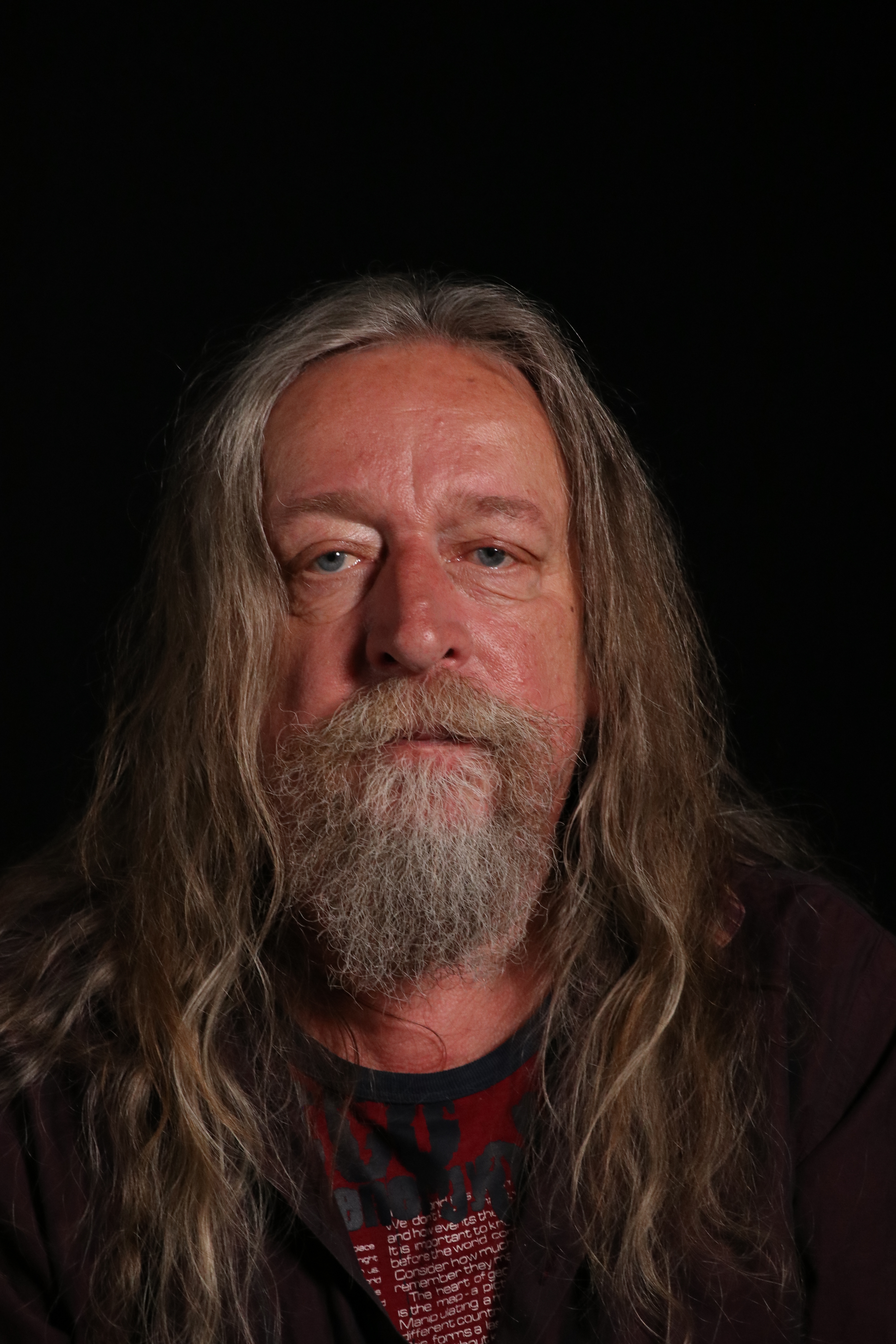
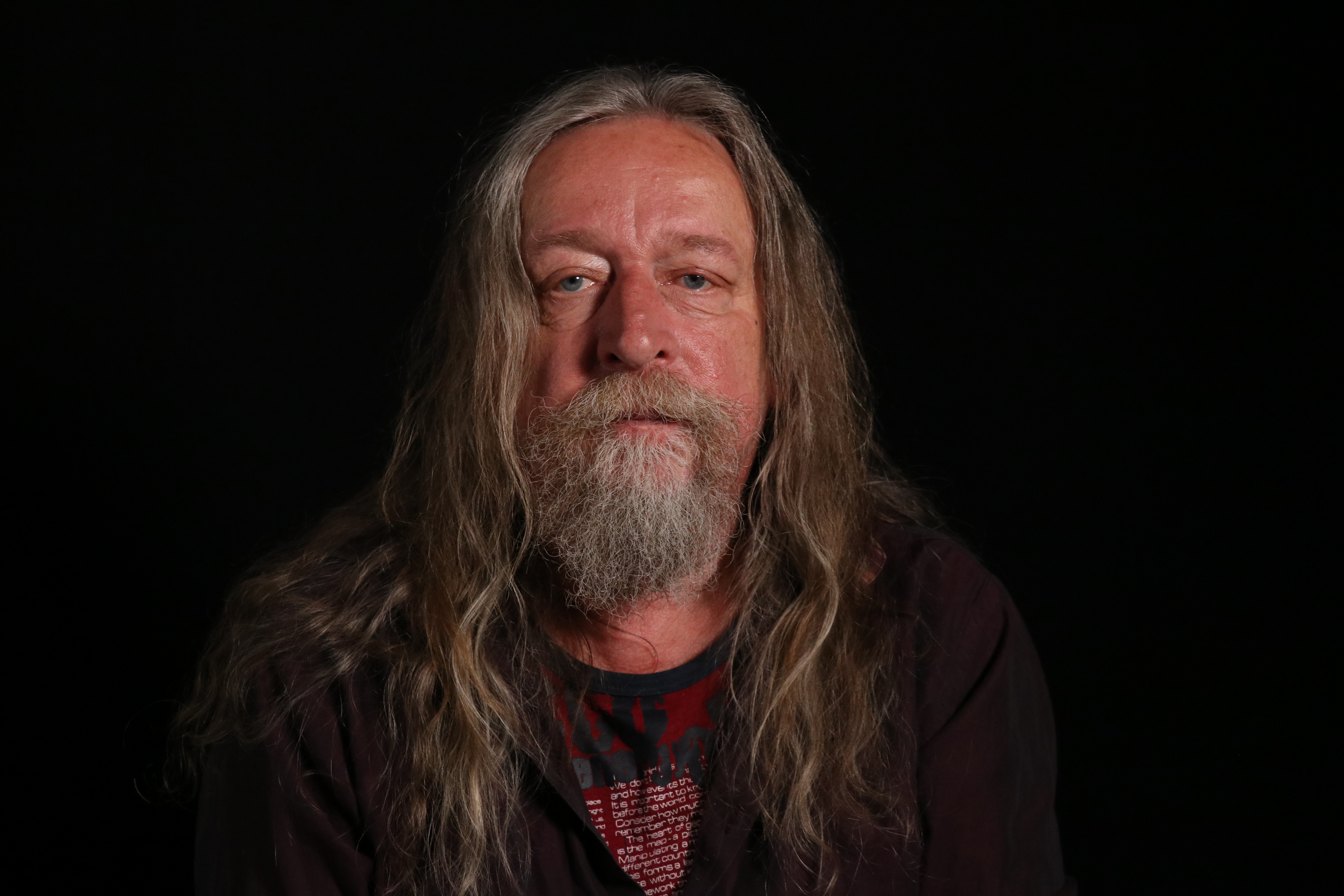
Martin Frind was born in Prague on 15 May 1963 to Marie Frindová and Josef Frind. He spent his childhood in Kralupy nad Vltavou. Following primary school, he worked at a chemical plant in Kralupy for a year to improve his cadre profile in order to be allowed to study. This is when he got in touch with the underground. He studied at the High School of Arts and Crafts in Prague in 1979-1983. As a student, he organized concerts and exhibitions with friends. He soon came under scrutiny of the State Security Service (StB). He did not serve in the military because he managed to obtain a clearance. He lived with his wife in Prague from 1985. He was employed at the Museum of Decorative Arts, met František Stárek and began working as an art editor for the Vokno samizdat magazine. He was unexpectedly admitted to the Academy of Fine Arts in 1986 where he studied figurative and monumental painting with Professor Jiří Ptáček. During the Velvet Revolution, he and AVU classmates headed a strike committee and took an active part in the events. From 1990, he studied experimental drawing and sculpture with Professor Karel Malich, completing his studies successfully in 1991. Afterwards, he worked as a freelancer. He received a certificate of a participant in the resistance against communism. He was still working and living in Veltrusy in 2025.