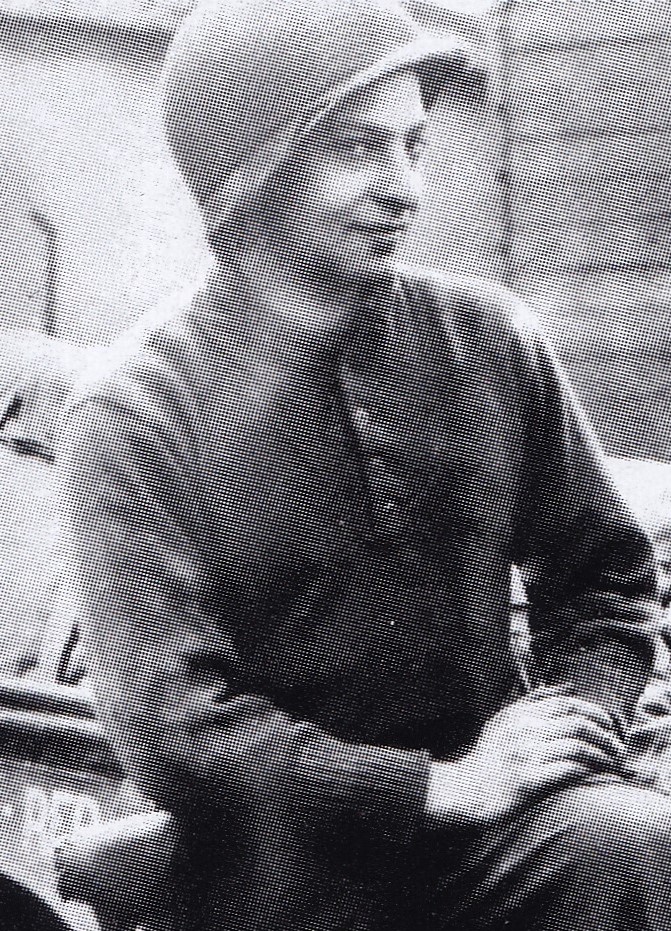
"Fortunately, most of the time, you forget about those unpleasant moments when you are waiting somewhere. Those moments when you are actually sitting somewhere and someone is shooting at you... That is no fun. Those memories are almost humorous. A few examples:
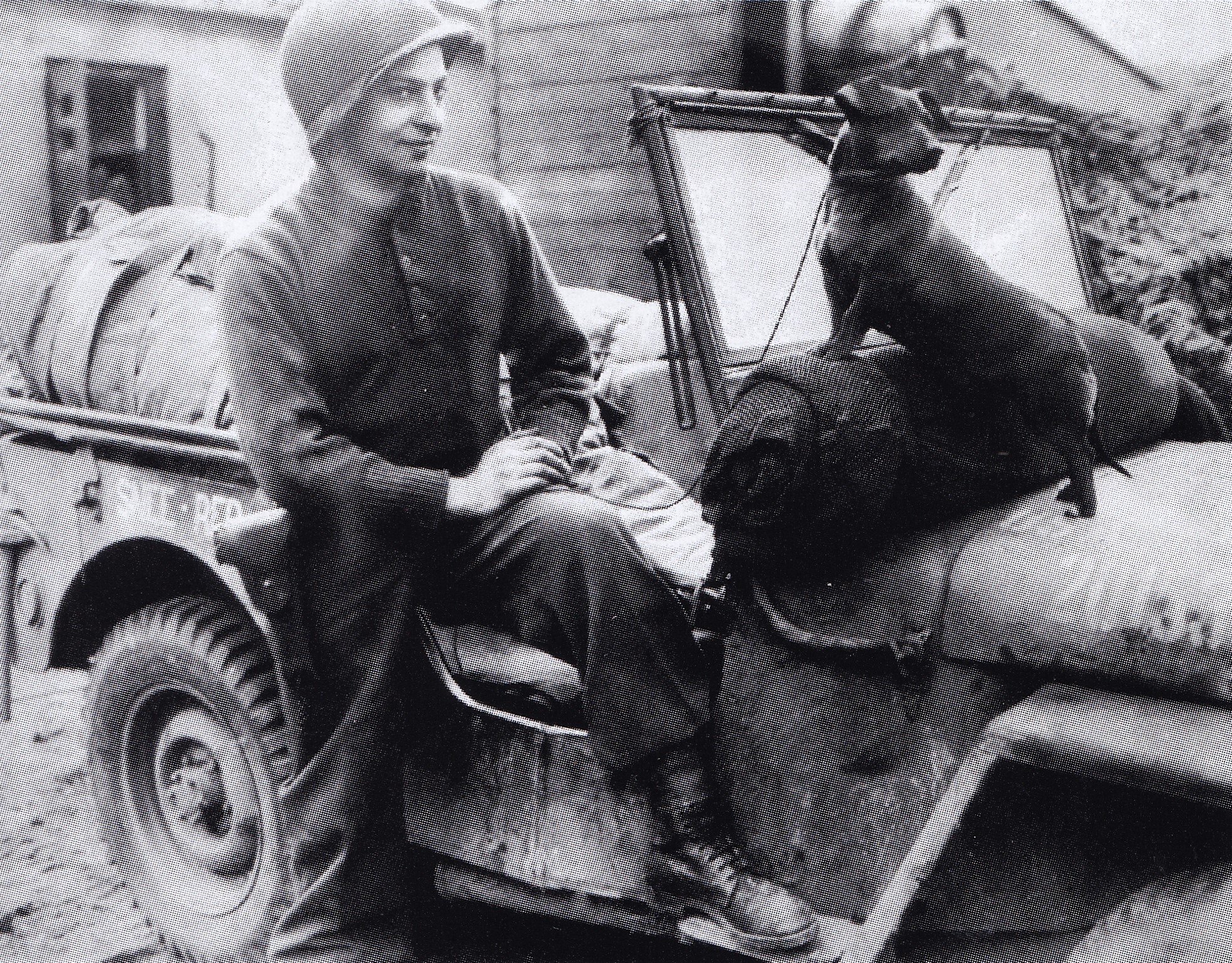
Once we were in a convoy, with tanks in front of us and us behind them in open jeeps. Then very intense bombing began. So we were ordered to take shelter in a courtyard. The courtyard had strong, high walls. We left the vehicles parked at the gate on the road, and we, a group of about fifty people, took refuge in the courtyard, where there were already some German civilians. My lieutenant said, "Norbert, let's get to work." I was supposed to interrogate the civilians and get some information from them about where some soldiers were, what unit they belonged to... So I started, and another soldier came up to me and said, "You must report immediately to the commander of another unit." So I reported, and he said, "Don't you know you're not allowed to have contact with German civilians? Either you stop immediately, or I'll have you arrested." I wanted to tell him that I was doing it as part of my job. But he was rude and didn't want to hear anything. Then I looked over the wall and saw artillery falling, explosions, and vehicles being destroyed. And I said to myself, 'I'm not going to let my jeep be destroyed!' And like an idiot, I ran to the jeep, explosions were going off around me, I jumped in and drove it into the courtyard. Only one tire was damaged. All the other vehicles had been destroyed. But then I thought to myself, I'm a complete idiot. I'm risking my life to save some stupid jeep."
"You don't really realize it. You always have the feeling that someone next to you or in front of you or behind you will die, but you yourself have a certain immunity and somehow you always think that you will come out of it healthy or just wounded. Of course, I saw people around me dying. But you take it as part of your daily job."
"The worst about it all was actually the terrible cold. We sat in open jeeps and every time we stopped, it advanced very slowly, we couldn't even stand up because our knees were completely frozen."
"Then I was in the military police. We were looking for American soldiers who hadn't returned to their units. I went from one town in the Ardennes to another—and we mainly searched brothels. Because that's where we usually found them."
"There is a lot of talk now about the fact that enemy soldiers in Iraq are not being treated properly. What we did to German soldiers in the Ardennes makes Iraq look like nothing. We left them sitting or lying in the snow for hours, and they practically froze to death. We didn't even have time to coddle them. Since we needed tactical information, and if someone didn't want to answer, but there were very few of them, there was usually no resistance to the questions we asked them, we just said, 'Okay, you'll wait out there until you change your mind.' And really, in that cold, it was terrible torture for people. The prisoners weren't properly dressed, they had bad shoes, they weren't soldiers anymore, they were prisoners. So it certainly wasn't very pleasant. Now it's being made into a big deal, but back then no one said anything. Maybe that was a mistake. It wasn't exactly according to the rules of the Geneva Convention, but as far as we were concerned, it was very effective for obtaining information."
"The lieutenant said to me, 'I would like some fresh eggs.' So we said to ourselves, we're in the countryside, we're sure to find fresh eggs somewhere here. We chose a farm, knocked on the door, a lady opened it, and we said to her, in German of course, 'Hand over all your eggs immediately.' And she said, 'Yes, sir.' She led us to the cellar, where there were thousands of eggs. The Germans had a rationing system. Everyone got one egg per week—or something like that. And this was the place where all the eggs were collected before being handed over to the office that distributed them. And so our entire regiment had fresh eggs that day."
"I was selected for the so-called Intelligence School. It was interesting because we were transferred to a base that is now Camp David, near Washington, D.C., in Maryland. There, we basically learned about the organization of the German army, the organization of the Japanese army, how to interrogate prisoners, and how to gather tactical information. There were quite a few people like me there, people who had come from Europe and spoke languages. At that time, I also spoke Japanese."
"The Germans tried to infiltrate our lines wearing American uniforms. This was a danger that no one was ever prepared for. At one point, we received orders to move from one place to another, about twenty kilometers away. I was in a jeep with a lieutenant from Berlin. He was a very smart man, but he spoke English very poorly. And when he did speak English, he had a strong German accent. We knew that there were American patrols on the roads that stopped all vehicles and asked for information, mainly about American sports, to find out if the crew were really Americans. The lieutenant, because he was from Berlin, knew nothing about American sports, so I was afraid that if they stopped us, they would shoot us. That's why I forbade him to say anything if they happened to stop us. Of course, they stopped us. They asked about baseball, and thankfully I knew something about baseball, so I answered their questions and they didn't shoot us."
"And before I boarded the ship, I was granted American citizenship. Immediately. With conditions. One was general – we did not receive papers stating that we were American citizens. They told us that we would not receive them unless we were honorably discharged from the army, i.e., without any problems. In my case, I stood before a certain commission in Washington, which made it very clear to me that my father's name was on German lists and that it could be very dangerous for me if I were captured. Therefore, not that I was forced, but it was recommended that I not serve under the name Auerbach, but under a different name. So I did that, I served under the name Allan. We served as American citizens, so we didn't have to wait five years before we were allowed to apply for American citizenship. Of course, we could have refused American citizenship, but there was no reason to do so."
"We were actually waiting to board so we could leave the harbor. The battle had already begun. As soon as we were out of the harbor, the sea was terribly rough, and the ship had no keel, so it was spinning around wildly. Most of us were incredibly seasick. It was pure torture. So my theory was that the landing was only successful because at least fifty percent of the soldiers on the various ships were so sick from the sea that they didn't care what they were doing, and they went onto the beach and said to themselves, 'I'd rather go and die than stay on the ship for another minute.' That's why it succeeded."
"I was wounded twice. One time was from shrapnel. We were driving along the Danube. We hadn't reached the other side yet, and unfortunately my lieutenant couldn't read the map. Instead of turning right, we turned left. That's how we ended up in an area that was under heavy bombardment from the Germans. I was hit by shrapnel in the back. But I was treated immediately and it wasn't serious, so I was back with my unit in two days. We laughed about it at the time because, according to US Army regulations, it entitled me to a Purple Heart, an award you get when you're wounded. The second time was in Holland – and that was really funny. When we were bombed, I hid under a tank that was parked near the building where we were. When the attack was over, the lieutenant told me to clean up the broken windows in a room where he wanted to work. I started cleaning up and a piece of glass cut my finger, bleeding profusely. So I went to first aid, where they had to write it down and asked me how it happened. I barely said it was during the bombing – and the woman there wrote it down right away and that was it. So I got my second Purple Heart, my second medal. It was funny, but then it turned out to be useful, because when people were discharged after the war, it was based on points, depending on how long they had served. And for each decoration, including injuries, you got five more points. So those two injuries gave me so many points that I was discharged from the army a year earlier than I would have been otherwise."
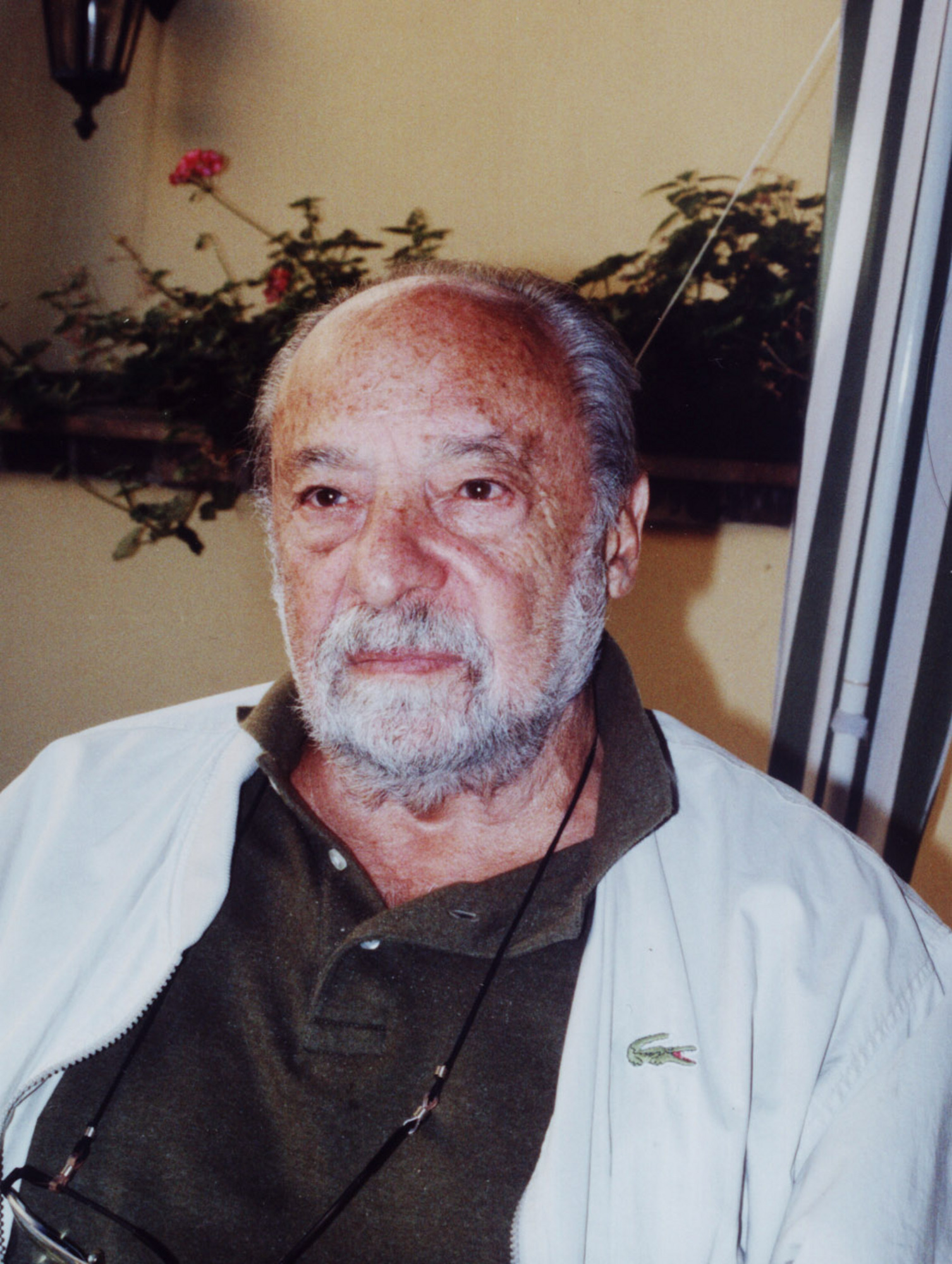
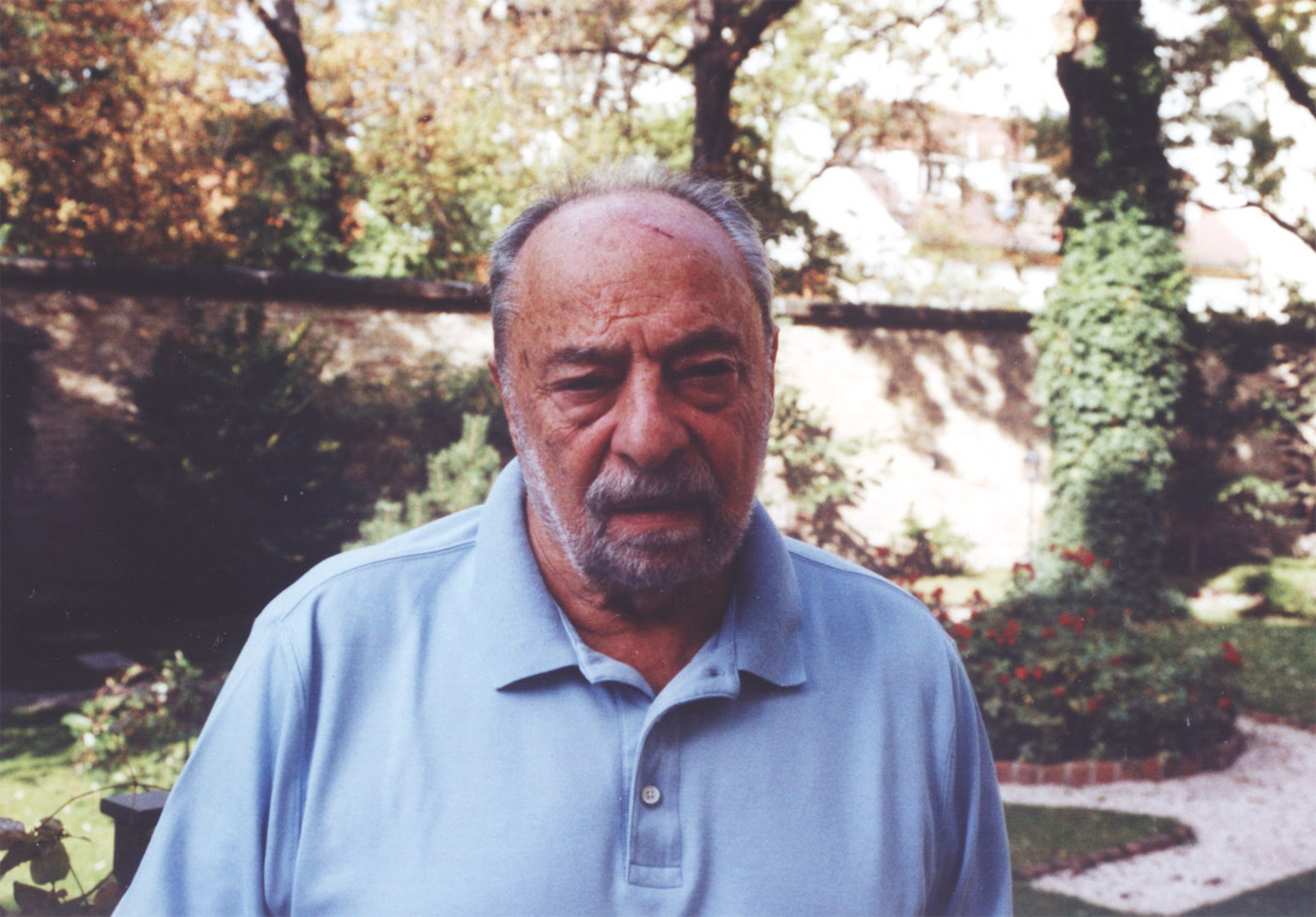
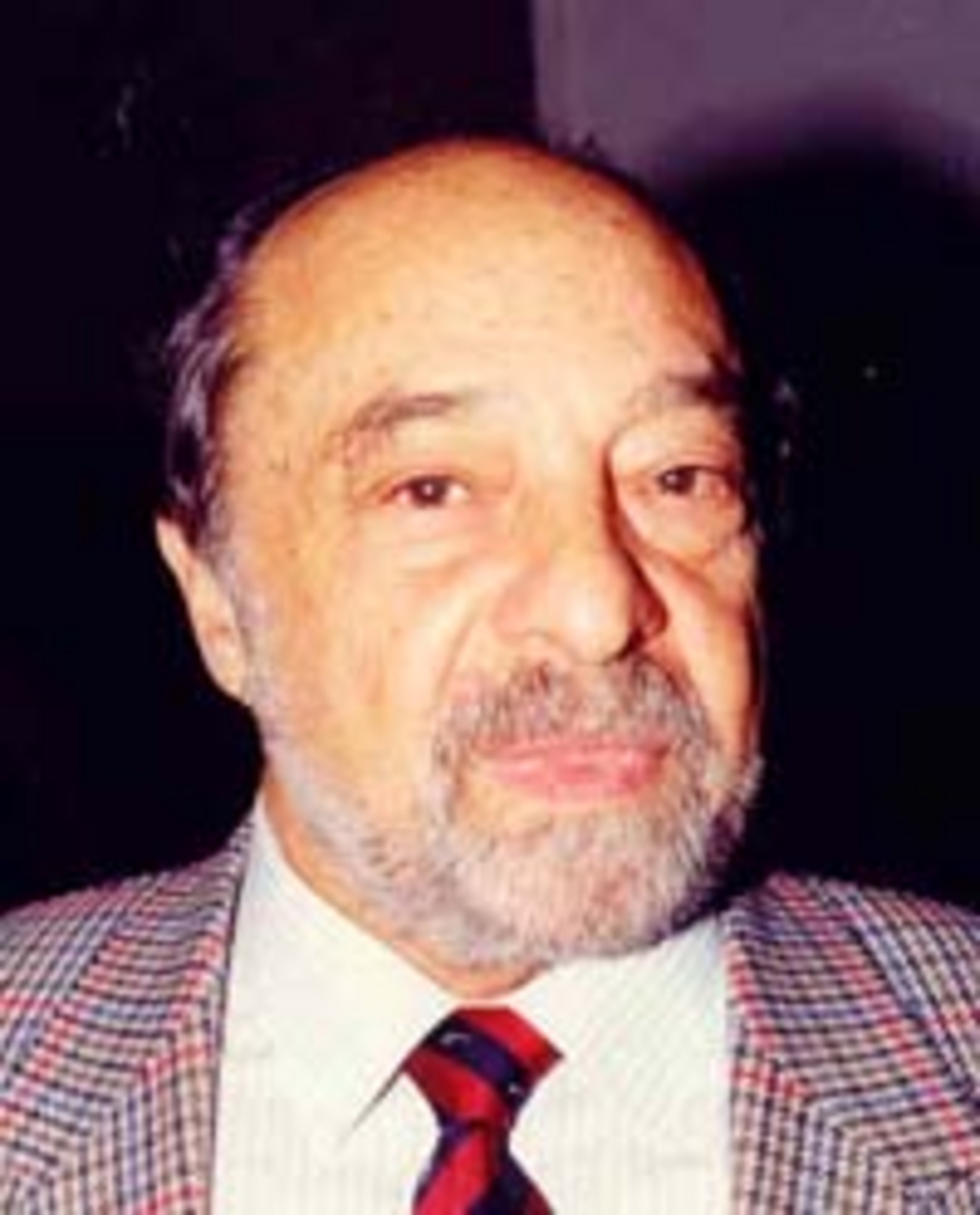
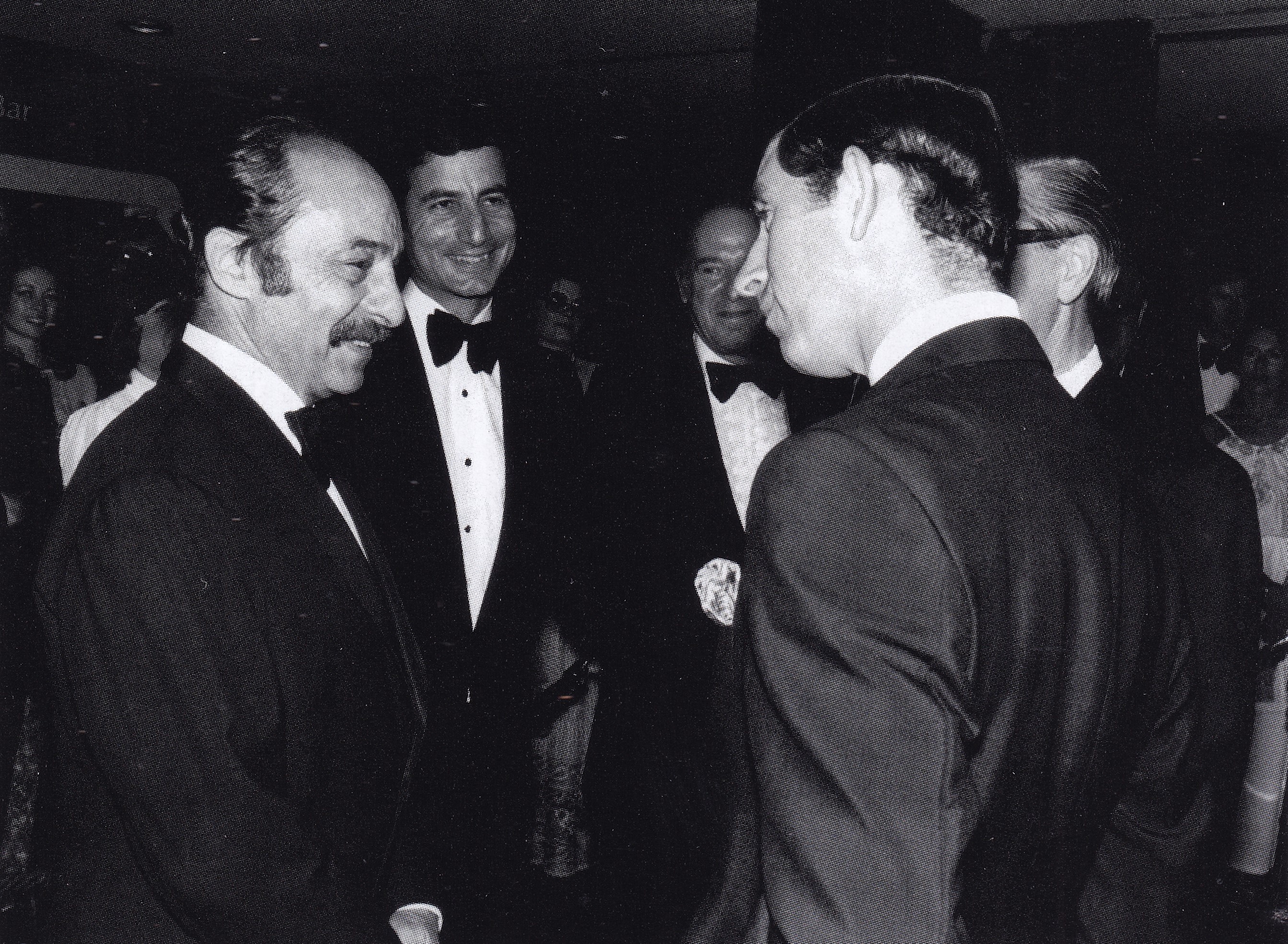
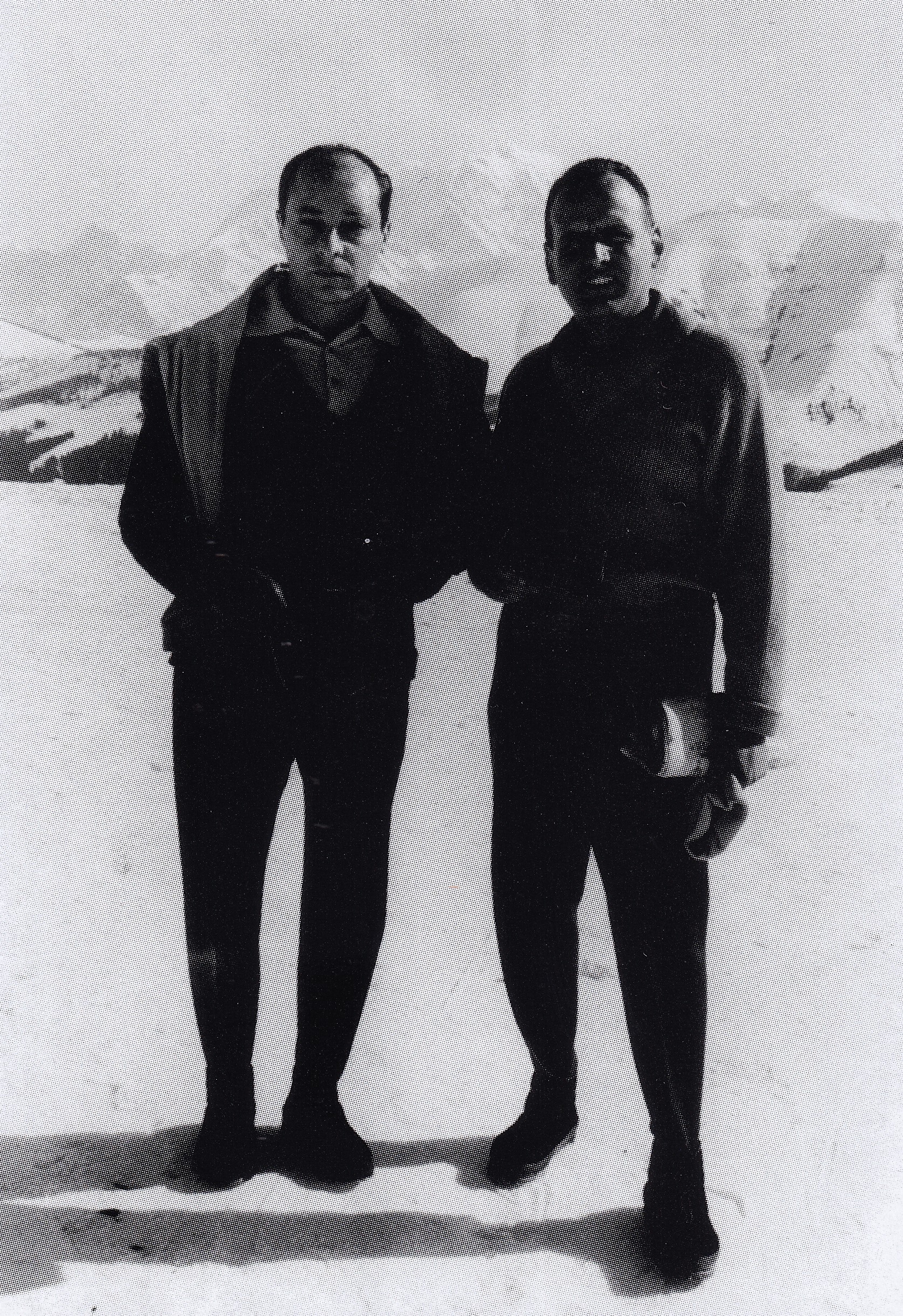
Norbert Auerbach was born on November 4, 1922, in Vienna to Josef Auerbach, a successful film producer during the First Republic. He spent his childhood in Prague, where his father built the prominent film companies Elekta Film and Slavia Film. The family, of Jewish origin, lived a cosmopolitan life, but the rise of Nazism forced them to leave. In 1939, the Auerbachs fled via France and Brazil to the United States, where young Norbert completed his studies. After the attack on Pearl Harbor, he voluntarily enlisted in the US Army. He served in the intelligence unit of the 2nd Armored Division, with which he took part in key operations on the Western Front – the Normandy landings, the Battle of the Bulge, and the Battle of the Bridge at Remagen. He was one of the first American soldiers to enter the liberated concentration camps at Dachau and Buchenwald. After the war, he began working in the film industry. Starting from the lowest positions at Columbia Pictures, he gradually worked his way up to become one of the most influential figures in international cinema. He headed the European branches and collaborated with a number of world film stars. In the 1980s, he served on the advisory team of US President Ronald Reagan. After 1989, he returned to Prague, where he helped rebuild the Czech film industry. Norbert Auerbach died on December 12, 2009.