"The timeframe was November 2024. Before that, we tried to be open, with no other purpose than to raise awareness. But the regime didn't see it that way; they thought we were plotting something dangerous, wanting to associate us with something terrible. From November onwards, we continuously heard news about them targeting many people. At that time, we felt as if they could arrest us at any moment. My husband had to constantly leave home. I said, "I don't know if I'll decide to leave or not", but I told him he had to go, he couldn't stay home like that, we would not be in control of the situation. But my husband loves me and children. So each time he left for a few days, he would sneak back home. I saw him off in a state of profound sadness. I was already very sad, and then a few days after seeing him off, he would come back again. "Why are you coming back?! Go away, stay away for a while, then come back later." This happened four or five times. I said, "I'm so tired. If you keep going like this, I'll have a heart attack chasing after you." Because at that time, I was feeling very sad, and seeing my husband made me happy again. A few days later, I heard that they might arrest him again, that they were inviting this person or that person to the police station... Then I started feeling down, feeling tired again."
"Protesting against police torture or beating citizens, speaking out against Formosa's pollution, or speaking out on social issues and China is not violation of the law. Imprisoning people who do so, is repression. When I shouted like that, Quynh's mother also felt the same way, as if her daughter was facing such a sentence. It was just the two of us, an old woman and a young woman. At that moment, it felt like the whole world consisted only of me and Quynh's mother, just the two of us shouting. Because of the dense security arounding us. Only Quynh's mother and I were walking and shouting. At that moment, I started livestreaming. Although perhaps my fighting instinct was used to it, and despite the rising anger, I remembered I needed to do media work because this was a violation of citizens' rights. I was still able to livestream. An old woman and a young woman walking and shouting. Actually, an old woman and a young girl like that, the image was very lonely. If they let the two of us walk and shout, how many people would we attract? But after they let us go for a while, they probably realized things weren't going well, so they rushed in and attacked me. Five or six people, both men and women. They grabbed my head and beat me mercilessly. I remember turning off the livestream because I had experienced having my device confiscated before; I knew it would happen, I'd been through it many times. At that moment, it was just me and five or six people surrounding me. They beat me repeatedly. They hit me on the head, below, and above. They beat me so badly I couldn't see anything. Then Quynh's uncle rushed in to protect me, saying, "Beat me instead, don't hit her!" They beat the elderly man without mercy, too, and I was scared, so I rushed in to protect him. We vulnerable people had to protect each other. We should be protecting each other from wrongdoing and cruel people. But here, we had to protect each other from those who have the duty to protect us."
"I interacted with many similar families. The more I interacted, the more I felt I had to do something. At that time, I joined a blogger network, teaching myself to write. Initially, people helped me through correcting my work, then I continued learning on my own. Gradually, I improved my writing skills, able to write what I wanted to say, to condemn the injustices I saw. I could share the grievances of others. At that time, I, along with Mother Mushroom (Mẹ Nấm) and my husband, organized a human rights coffee meeting in Nha Trang, inviting several families whose relatives had been beaten to death by the police. The purpose was to share what to do next, to share our experiences with other families who might face similar situations, as this happens frequently. Before we could even organize it, we were all arrested and taken away in police vans. I didn't have much experience in activism, so I remember the times I had to confront them directly. During that time, I had only given birth four months earlier. I was terrified; a security officer slapped me right in the police station. My husband tried to help, but it was too late. At that time, I had only given birth four months prior. I wasn't afraid of anything, but when I looked at my child, I... I felt unsettled. I was torn between fighting for what I wanted and my maternal instincts. Because I got married, and my husband also participated in similar activities, so I stopped appearing at events after that."
"My family told me not to go to protests anymore. Because of my father's condition, I didn't want to worry them. So, after that, I didn't participate in subsequent protests. Because they were right in front of my door, and I couldn't go even if I wanted to. I couldn't escape; I was young, having just graduated from a polytechnic college. My father had just passed away, and I had no direction in life. Then, suddenly, I became famous, and I felt pressured. People wanted me to be a role model, bestowing titles upon me that I was very embarrassed about. I thought I didn't deserve them. But people said that even though I didn't want it, I had become that way, and I had to be responsible for my image. They wanted me, a teenager who spent all day hanging out at cafes, to become mature, understanding, and thoughtful. At that time, that was incredibly stressful for me. I didn't want it. I wanted to live as myself. I didn't want to become anything. I did what I thought was right. I didn't do it because I wanted to become someone or something. At that time, besides the security guards preventing me from leaving, the pressure from the community was immense. When I unintentionally became something, the fact that I wasn't mentally prepared caused me instability."
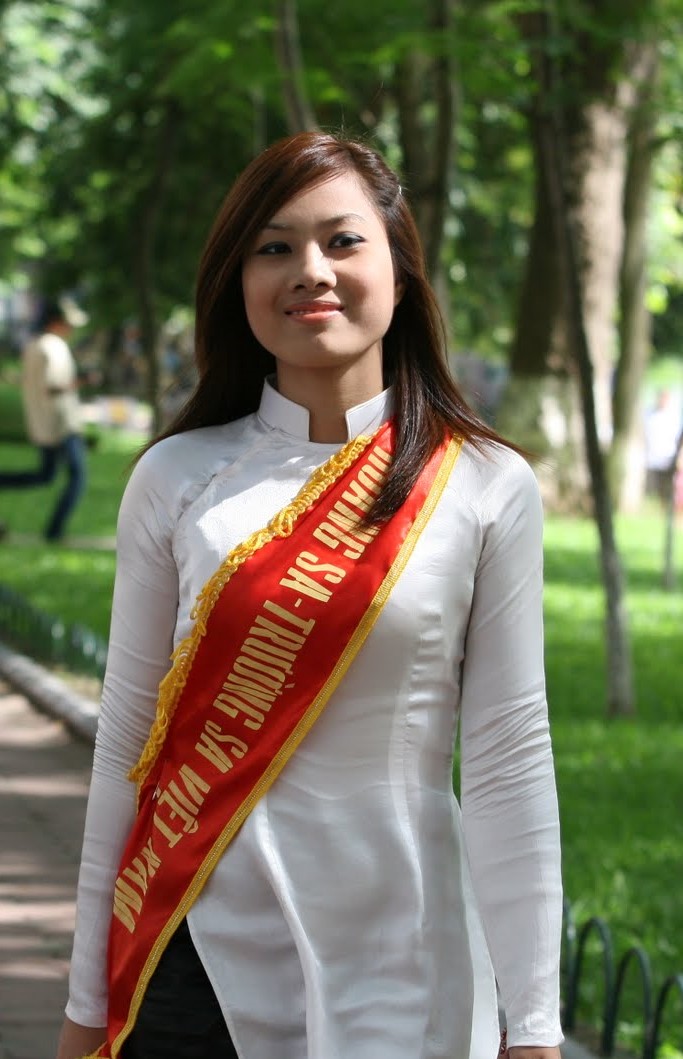
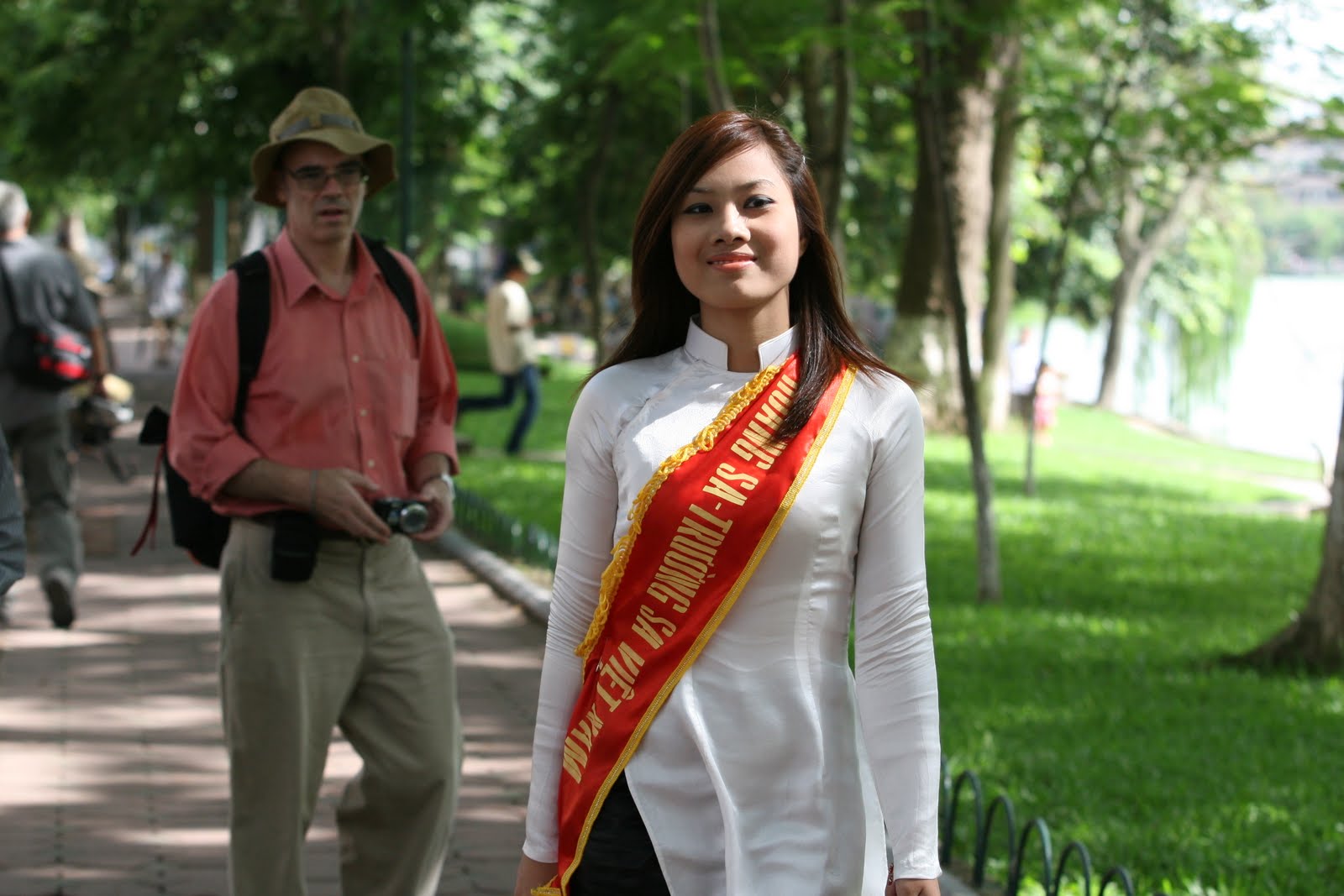
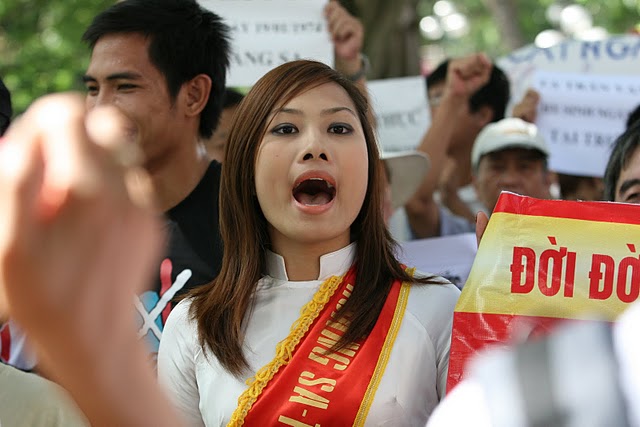
"When something happened to me, many people stood with me to seek justice for my father. So I felt a sense of responsibility to go out into the streets and join in. I decided to go out with everyone. On the first day of the protest, I stood very far away; I didn't go, I just watched from the other side of the lake. I saw people, a very small group, walking around the lake. I thought, "Oh, it's okay." So I felt less scared, less afraid, and then I joined in. When you're scared, you push yourself a little to lessen the fear. I joined the second protest. Gradually, I connected with many people there. On Facebook, there's a group called "Vietnam, My Homeland." Members are from the South to the North. People in that group connect with each other, sharing stories about protests, current problems, and families whose loved ones were beaten to death. They share what they've seen in the news and also share it in the group. During that time, people were also in that group inviting me to protest. I participated in subsequent protests, quietly joining the crowd. Then there was the protest where I wore an áo dài (traditional Vietnamese dress). I heard that the protest would be suppressed and cracked down upon. Looking back, I don't know why I felt so agitated at that time. Every time I participated in a protest, when I blended into the crowds chanting slogans, I felt a very strong heartbeat. I felt like I was living in a very… beautiful atmosphere."
"My family had to do so much to get the law enforced. Other families' problems just faded away, and nothing was resolved. When my family was treated this way, several other families who had also suffered injustice, whose closed ones had been beaten to death by the police, came to me, shared their stories, and offered advice. Ultimately, as I suspected, the law was not being properly enforced. Four years in prison for a murder conviction. And none of the police officers involved, or those complicit, were held accountable. After such a verdict, I had a huge question: What kind of country am I living in? Why is this happening? Why is human life so cheap? Why are there other families with even more horrific injustices than mine, whose cases remain unresolved? The wrongful deaths of their loved ones are treated as if they were over? I felt… suddenly, I felt a profound sense of injustice."
"In 2011, my father was beaten to death by Hanoi police. This event changed my life drastically. From a naive, innocent little girl, once called "Tiến Tồ," I had to learn to grow and mature. My father's death at that time was a huge event. From the moment it happened, my family fought for our rights and justice. I remember that on the day my father was arrested and beaten, someone informed us that he was being detained at the Thịnh Liệt police station. The reason was that he had assaulted a police officer. When I received the news, my family and I immediately went to the station to see him. He was in a lot of pain and wanted to be taken to the hospital, but they wouldn't let us. Every time I remember it, I don't want to talk about it, but because of the flow of the story… At that time, they wouldn't let my father be taken to the hospital, they wouldn't even let me feed him. What I found heartless was that I wanted to bring phở to my father, but they wouldn't let me. I asked to take my father to the emergency room, but they wouldn't let me either. That same day, I met the police officer who was told my father had assaulted someone, and he was completely fine. But I overheard them talking about our house being on the main street, and when I spoke to that police officer, he seemed to be trying to extort money, a tactic police officers often use against citizens these days. My father, however, said something completely different from what they said."
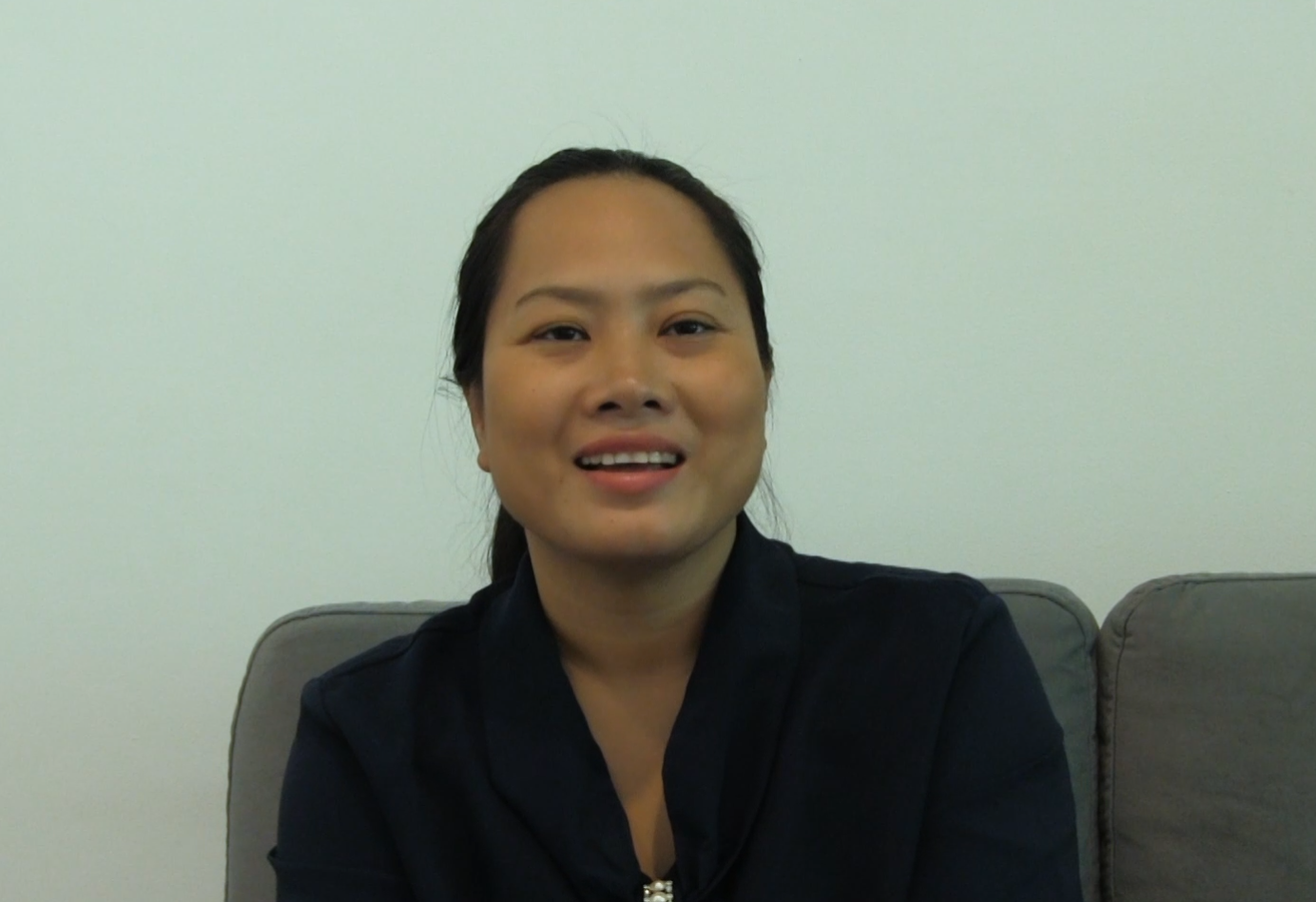
Trịnh Kim Tiến, also known as Kim Kim or the “Miss Protest,” was born in 1990 in Hanoi and experienced a childhood and youth typical of the post-1990 generation, growing up in a working-class family with little awareness of social issues. In 2011, when her father was beaten to death by Hanoi police, this tragedy forced Kim Tiến, then only 20 years old, to grow up prematurely and embark on a journey to seek justice for her family. Through that struggle, she gradually came to recognize the systemic injustice of the legal system and the similar unresolved grievances endured by many other families. From that point on, Trịnh Kim Tiến began to study social issues, joined protests against China’s encroachment in the South China Sea, and connected with the social activism community through social media. In the summer of 2011, images of her wearing an áo dài at protests unexpectedly drew public attention and led to the label “Miss Protest,” bringing both public support and intense pressure from public opinion and state security forces. That same year, Kim Tiến began blogging to speak out for victims of police violence and, together with other activists, organized human-rights cafés, despite repeated harassment and the use of force by security authorities. After marrying and becoming a mother, she gradually stepped back from frontline activities but continued to speak out against social injustices, particularly those affecting children’s rights. As threats against her husband, her partner in social activism, increased, and in order to protect the future of their children, the family decided in 2024 to leave Vietnam to continue advocating for justice and human rights, especially for future generations of children like her own.