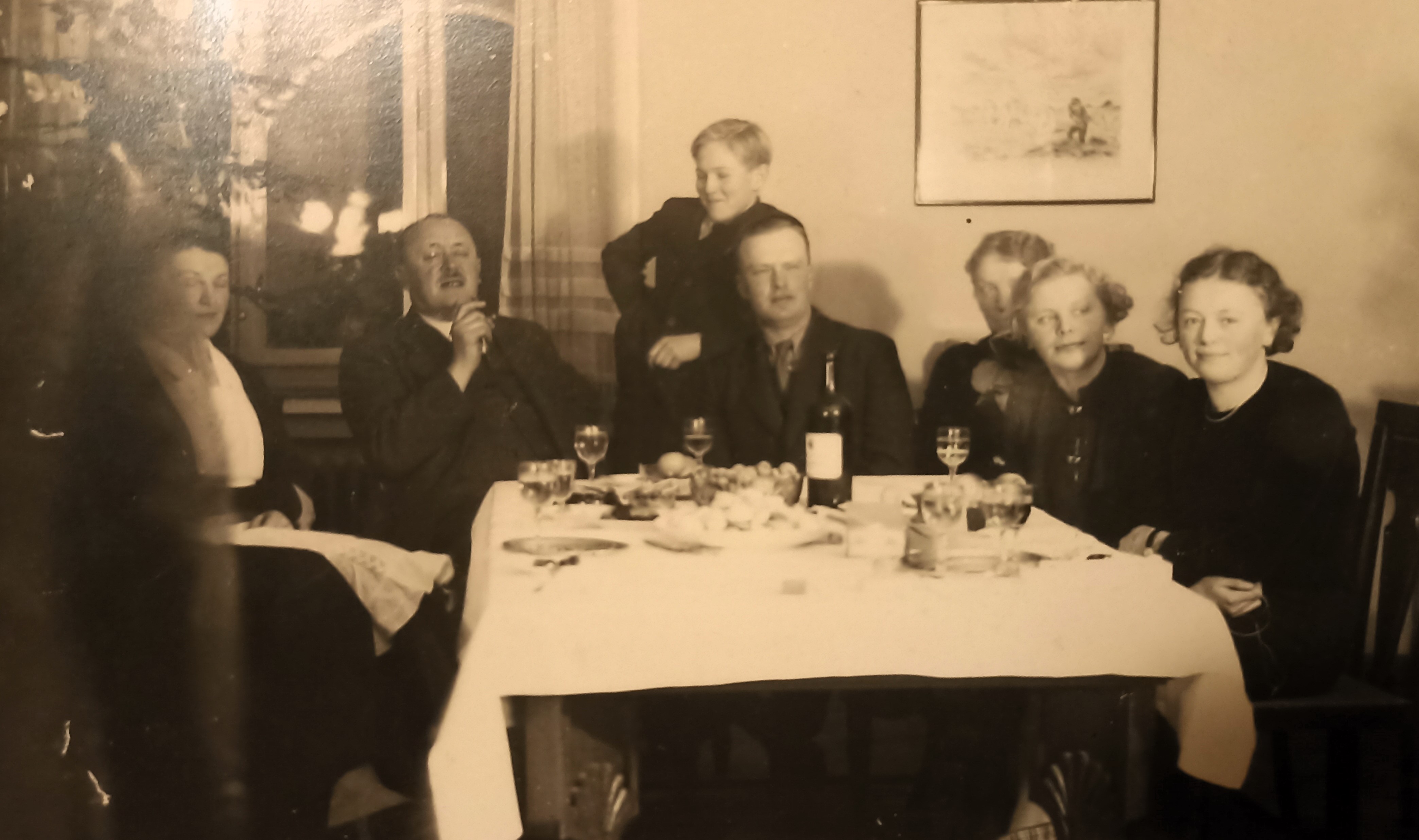
Family gathering during Christmas. Witness's father Stanislav Zedníček at the head, with mother Emilie seated second right, and grandmother Anna behind her
Family gathering during Christmas. Witness's father Stanislav Zedníček at the head, with mother Emilie seated second right, and grandmother Anna behind her
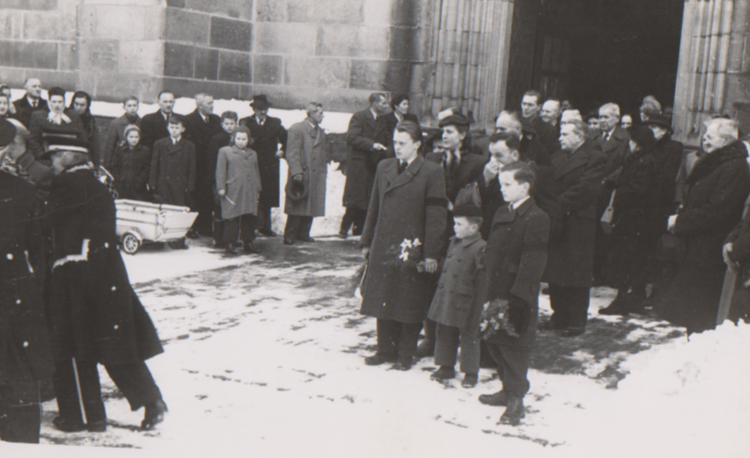
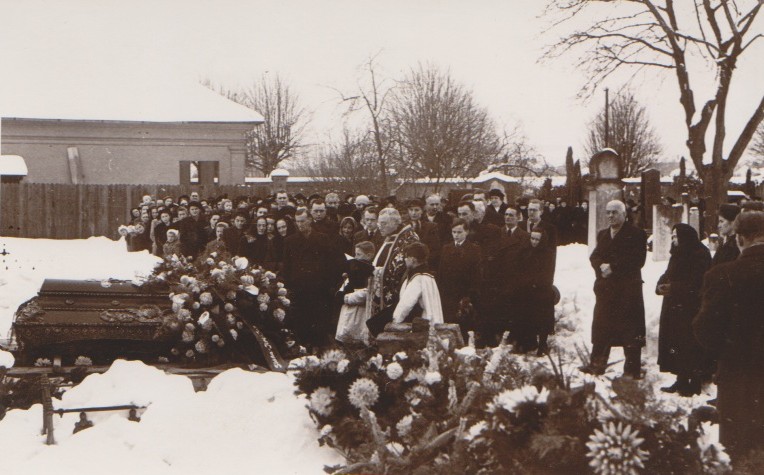
Mother Emilie's funeral in St Lawrence's Church in Vysoké Mýto, February 1951. The sons are at the centre, with Jiří Zedníček standing closest to the photographer
Mother Emilie's funeral in St Lawrence's Church in Vysoké Mýto, February 1951. The sons are at the centre, with Jiří Zedníček standing closest to the photographer
Pohřeb maminky Emilie v únoru 1951 v kostele svatého Vavřince ve Vysokém Mýtě. V centru fotografie synové, nejblíže fotografovi stojí pamětník Jiří Zedníček
Pohřeb maminky Emilie v únoru 1951 v kostele svatého Vavřince ve Vysokém Mýtě. V centru fotografie synové, nejblíže fotografovi stojí pamětník Jiří Zedníček
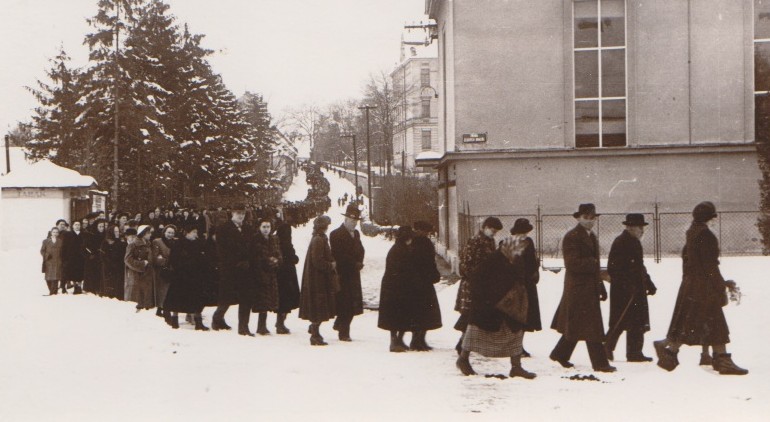
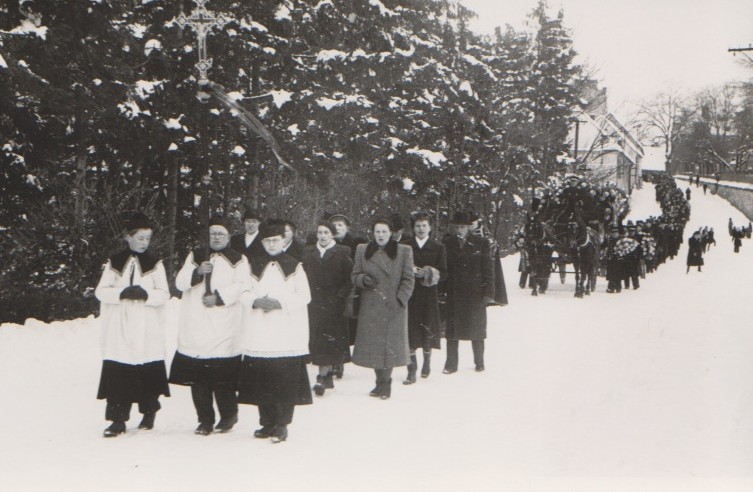
The funeral procession from St. Lawrence's Church past the Evangelical Church to the cemetery. The photo shows how long it was. When the coffin passed through the cemetery gate, the final attendees were still lining up by the church, making the procession about one kilometre long. Local grammar school teacher Karel Fink noted: "Her funeral was a magnificent manifestation of the respect and love that the broadest strata of Vysoké Mýto people felt towards the deceased."
The funeral procession from St. Lawrence's Church past the Evangelical Church to the cemetery. The photo shows how long it was. When the coffin passed through the cemetery gate, the final attendees were still lining up by the church, making the procession about one kilometre long. Local grammar school teacher Karel Fink noted: "Her funeral was a magnificent manifestation of the respect and love that the broadest strata of Vysoké Mýto people felt towards the deceased."
Pohřební průvod vedoucí od kostela svatého Vavřince, kolem evangelického kostela směrem na hřbitov. Z fotografie je patrná délka průvodu. Když rakev prošla branou hřbitova, poslední lidé se řadili ještě u kostela. Průvod tedy měl kolem jednoho kilometru. Profesor zdejšího gymnázia Karel Fink si poznamenal: "Její pohřeb byl velkolepou manifestací úcty a lásky, kterou měla zesnulá v nejširších vrstvách vysokomýtského obyvatelstva."
Pohřební průvod vedoucí od kostela svatého Vavřince, kolem evangelického kostela směrem na hřbitov. Z fotografie je patrná délka průvodu. Když rakev prošla branou hřbitova, poslední lidé se řadili ještě u kostela. Průvod tedy měl kolem jednoho kilometru. Profesor zdejšího gymnázia Karel Fink si poznamenal: "Její pohřeb byl velkolepou manifestací úcty a lásky, kterou měla zesnulá v nejširších vrstvách vysokomýtského obyvatelstva."
The front of the funeral procession going to the cemetery, with the coffin driven by two horses in the background. Emilie Zedníčková's husband, held in a communist prison at the time, was not released for her funeral in February 1952.
The front of the funeral procession going to the cemetery, with the coffin driven by two horses in the background. Emilie Zedníčková's husband, held in a communist prison at the time, was not released for her funeral in February 1952.
Čelo pohřebního průvodu směřující na hřbitov. V pozadí rakev tažená dvojspřežím. Manžel Emilie Zedníčkové, toho času v komunistickém kriminále, nebyl v únoru 1949 na pohřeb propuštěn
Čelo pohřebního průvodu směřující na hřbitov. V pozadí rakev tažená dvojspřežím. Manžel Emilie Zedníčkové, toho času v komunistickém kriminále, nebyl v únoru 1949 na pohřeb propuštěn
Enterment in the family tomb in Vysoké Mýto. The nuns who spent her last moments with Emilie Zedníčková at her bedside wrote a poem immediately after her death:
"A brave woman, who can find?
Far above jewels she is worth!
She opens her hand to the poor,
Shows her palms to the poor,
Her garment is her influence and her honour,
With a smile she looks towards the future!"
Enterment in the family tomb in Vysoké Mýto. The nuns who spent her last moments with Emilie Zedníčková at her bedside wrote a poem immediately after her death:
"A brave woman, who can find?
Far above jewels she is worth!
She opens her hand to the poor,
Shows her palms to the poor,
Her garment is her influence and her honour,
With a smile she looks towards the future!"
Ukládání do rodinné hrobky ve Vysokém Mýtě. Řádové sestry, které s Emilií Zedníčkovou strávily u lůžka poslední chvíle, zapsaly bezprostředně po její smrti báseň:
"Ženu statečnou, kdo nalezne?
Daleko nad skvosty cenu má!
Ruku svou otvírá nuznému,
dlaně své vztahuje k chuďasu...
Vliv a čest její roucho jest,
s úsměvem v budoucno patří!"
Ukládání do rodinné hrobky ve Vysokém Mýtě. Řádové sestry, které s Emilií Zedníčkovou strávily u lůžka poslední chvíle, zapsaly bezprostředně po její smrti báseň:
"Ženu statečnou, kdo nalezne?
Daleko nad skvosty cenu má!
Ruku svou otvírá nuznému,
dlaně své vztahuje k chuďasu...
Vliv a čest její roucho jest,
s úsměvem v budoucno patří!"