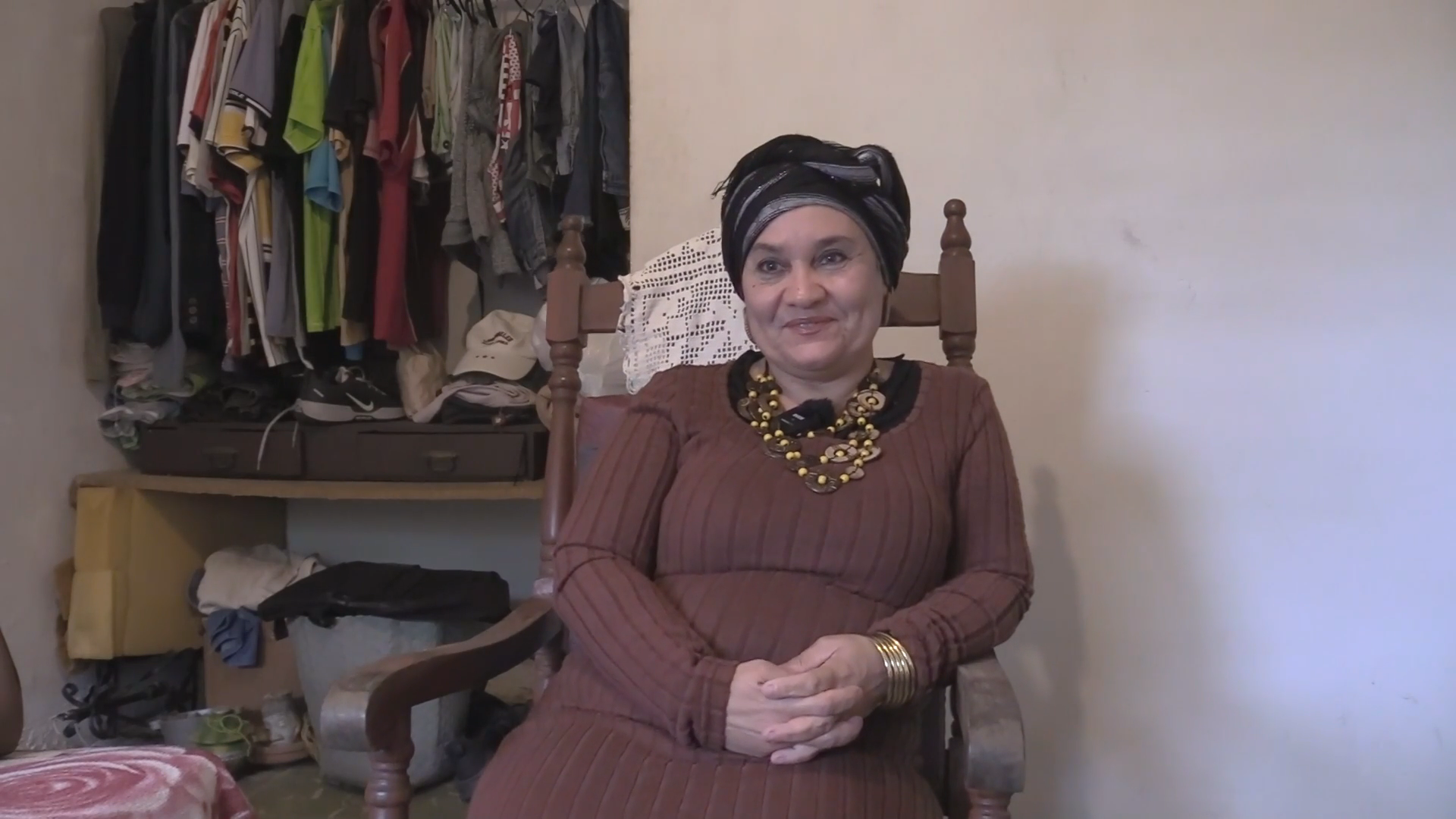
Cuba is literally dead, both in objective terms and in subjective terms, and that is no small thing
Stáhnout obrázek
Jenny Victoria Pantoja Torres was born on January 2, 1968, in Santa Clara, although from virtually birth she grew up in Havana, the city with which she fully identifies and which she considers her true place of belonging. Her second name, Victoria, alludes to the symbolism of January 2, the date associated with the triumph of the Cuban Revolution, a fact that marked not only her name but also the ideological environment in which she was formed. She comes from a family deeply linked to the revolutionary process. Her mother, originally from Oriente, was initially a Pentecostal missionary and, after 1959, abandoned her faith to fully integrate into the new system, first in the Communist Party and later in the Fuerzas armadas revolucionarias de Cuba. Her father was a well-known journalist at Radio Progreso, professionally critical yet loyal to the revolutionary project. Family upbringing was based on values of austerity, honesty, and public service, without the pursuit of personal privileges. Educated within the structures of power, Jenny was a disciplined student, assumed school leadership responsibilities, and actively participated in official youth organizations. The death of her mother in 1982, when Jenny was fourteen, constituted a decisive rupture in her life and initiated a profound personal transformation, initially more existential than political. After beginning studies in Medicine and later in Law, which she abandoned due to economic difficulties and ethical reasons, she ultimately trained in History and theatre. In the late 1980s she experienced a process of intellectual and spiritual awakening, influenced by critical literature and by an autonomous reflection on revolutionary systems and the exercise of power. In 1989, the trial known as Causa número uno marked her conscious break with the regime. From 2014 to 2023 she developed her professional work mainly in the field of anthropology, combining academic research, fieldwork in various regions of the country, and analysis of the social, cultural, and religious dynamics of contemporary Cuban society. This work allowed her to confront realities of poverty, social fragmentation, and institutional control that contrasted with the official narrative. According to her own assessment, Cuba is currently undergoing a profound collapse, not only economic and institutional, but also subjective and moral. She considers the country to be presently unlivable for broad sectors of the population and believes that without a structural political reform capable of restoring civic and productive agency to society, no real process of recovery is possible.