Wanjiru Koinange

* 1986

  • “I’m going back to Kenya tomorrow. Earlier today I listened to a presentation about democracy and how libraries can be centers of democracy—by a Swedish library. They began by showing the state of democracy in the world and the fact that it’s declining—especially in the last ten years. Some of the leaders in democracy are the Czech Republic. Kenya isn’t far behind, which gave me questions—but I also know it’s true. When it comes to elections, we take them seriously. We register, we do the work, and we vote—then the elections get rigged. I’m taking away the sense that the journey is long, but it can be joyful. In the season when people here couldn’t express themselves verbally because of censorship, they found other ways. This city is loud. Czechs aren’t necessarily loud—Nigerians are loud—yet the city is expressive: in music, in eye contact, in people holding hands on the street. It’s like you’re fighting for democracy and equality, but doing so in ways that center joy, balance, life, music, art, and libraries. That’s important. And was your first president a writer? Your first president was a writer—that also shows the importance you placed on expression, even when it wasn’t celebrated.”

  • “While in South Africa, The Havoc of Choice, my first book, found me. It was five years after Kenya had a painful election, and we hadn’t dealt with it. South Africans asked, “How are you OK as Kenyans? We watched you kill each other on the news five years ago. You can’t be OK. We know pain, and we know what reconciliation and healing look like—and you haven’t done it.” I went back to the library to remind myself what happened in 2007. I spent three years writing that book in the library. When I was ready to go home, I looked around and thought, “We have lots of libraries, but they’re not as nice as the ones I’ve seen in South Africa. They’re not clean; they don’t have electricity, toilets, or collections.” I refused to live with that.”

  • “It feels like it’s not me. I’m like, who—me? My friends get irritated when I do this. Yes, I could be that, but I want to be one of many. There’s no singular voice, and I’m happy to be one of many. I also don’t want to do it alone—it’s lonely to do it alone. That’s part of why the activism works. I don’t want to be the only writer in Kenya shaping voices. My voice is imperfect—strong and clear, but not perfect. There are many things I don’t know and many things I get wrong. While my voice might be great, it’s even more beautiful if it’s a choir, not just a solo.”

  • “There are few places in the world that truly have the blueprint to redefine how we engage with politics, people, culture, our past, and our future like Kenya. Kenyans are unafraid to challenge things. We are energetic. There’s more to us than wildlife, safaris, and beaches. We are a country of athletes and storytellers, of agitators for climate change—we gave you Wangari Maathai. We’re also very proud, and because of that pride we don’t always show people who we are. We have a big PR machine—if you visit, you might not hear the things I’ve told you. We’ll show you beautiful Maasai beads and the Mara. But if you dig deeper, you’ll find a people who care deeply about their country and are desperate for it to match the one in their dreams. If you’re listening and want to engage with Kenya, look at its young people, its artists, and its libraries—because that’s where the magic is. It’s also on Kenyan TikTok and Instagram, where people are finding community and turning online activism into real life. We have many languages; that means we can express ourselves in many ways. We’re said to be welcoming, but I think we can be kinder to ourselves than to strangers—because of that PR machine. I’ve lived and traveled widely, and Nairobi is still where I want my suitcase to come home to. There’s a spirit in that country that keeps you sharp and curious, always experimenting with who you can be.”

  • “Kenya in the ’90s was peaceful but bubbling. We were finding a political voice. Looking back, a lot of the political instincts people my age have were born then. We sensed that something important was happening. We knew we had come from a dark period of colonization—our parents lived through it. It was too painful for them to speak about, but they referenced it. We knew the moment we were in—the late ’80s and early ’90s—was precious, to be taken care of, not taken for granted. Later, when we saw the failings of government, we understood why those moments were precious: things were new and we had hope. Even if we were under a dictator [Daniel Arap Moi ], we didn’t know better, but we were beginning to sense there could be better. That energy led into the early 2000s, when I think we had a massive political awakening. It’s also why so many Kenyans live like activists. Not activism as a moment, but as a way of life—demanding the things we deserve. That, I think, is a product of growing up in the ’90s in Nairobi, in Kenya.”

  • “What’s common about how I was raised is that in many Kenyan families, women run things. Many Kenyan families are very silently matriarchal. My mom was the center of the home—making sure we had everything we needed and that we were running like a proper, functional, loving, wholesome unit. My father was the emotional center of our home, and maybe that’s what was different. He was very connected to his soul and to humanity. He would do things that were unsanctioned. For example, when I was in primary school, he didn’t understand why he had to spend most of the day away from his kids. He would drive to school and pull us out. Because he was a very big man with a big name, teachers were afraid to tell him he couldn’t take his kids out in the middle of the day. He’d say, “They’re my kids. You can’t tell me I can’t access them.” That’s the kind of man he was. So I think a lot of Kenyan families had strong mothers, but maybe the fathers weren’t as present and emotionally connected as mine was.”

  • “I struggle with that. If you check my bio today, it will say I’m a writer and a restorer of libraries. Some bios say I’m an entrepreneur; some say cultural creative. I don’t ever call myself an activist because I’ve never seen what I do as activism. I’m leaning into the term now because I think I avoided it out of fear of being someone people look to. I still consider myself young and uncertain about who I am, though I’m learning where to look for answers. I don’t take on easy tasks. I’ve picked some of the hardest things to tackle in Kenya—despite my hesitation, my disdain for the limelight, and being a homebody who’d be happiest sitting at home writing books. I’ve picked these massive projects because it’s important for everything you do to mean something and change something. And I don’t see it as either/or. I can be a writer and do activist work. My work with libraries exists because I don’t want to leave my country every time I want to write. I want to roll out of bed into a library that allows me to write my stories for Kenyans and for people who care about Kenyans and humanity. If I want to write, I need spaces—so let’s build them. I’m impatient. I won’t wait for others or for governments to care about libraries. I won’t wait for people to care about how they vote. Life is now; elections are now. We need to create the world so we can enjoy it too. I hope I can add “activist” with confidence to how I describe myself. But I don’t really care about titles; I care about the work and getting it done. Call me whatever you need to get me the things I need to do the work I need to do. I champion social change and the environment. I want to shake people into caring a bit more—trick them into caring a bit more. If I have to work on this planet, let me work and do things that change the future for everyone—and also the present, because I’m doing it for now too.”

  • Celé nahrávky
  • 1

    Praha, 11.09.2025

    (audio)
    délka: 39:52
    nahrávka pořízena v rámci projektu Stories of the 20th Century TV
Celé nahrávky jsou k dispozici pouze pro přihlášené uživatele.

If I have to work on this planet, let me do work that changes the future for everyone - and the present too.
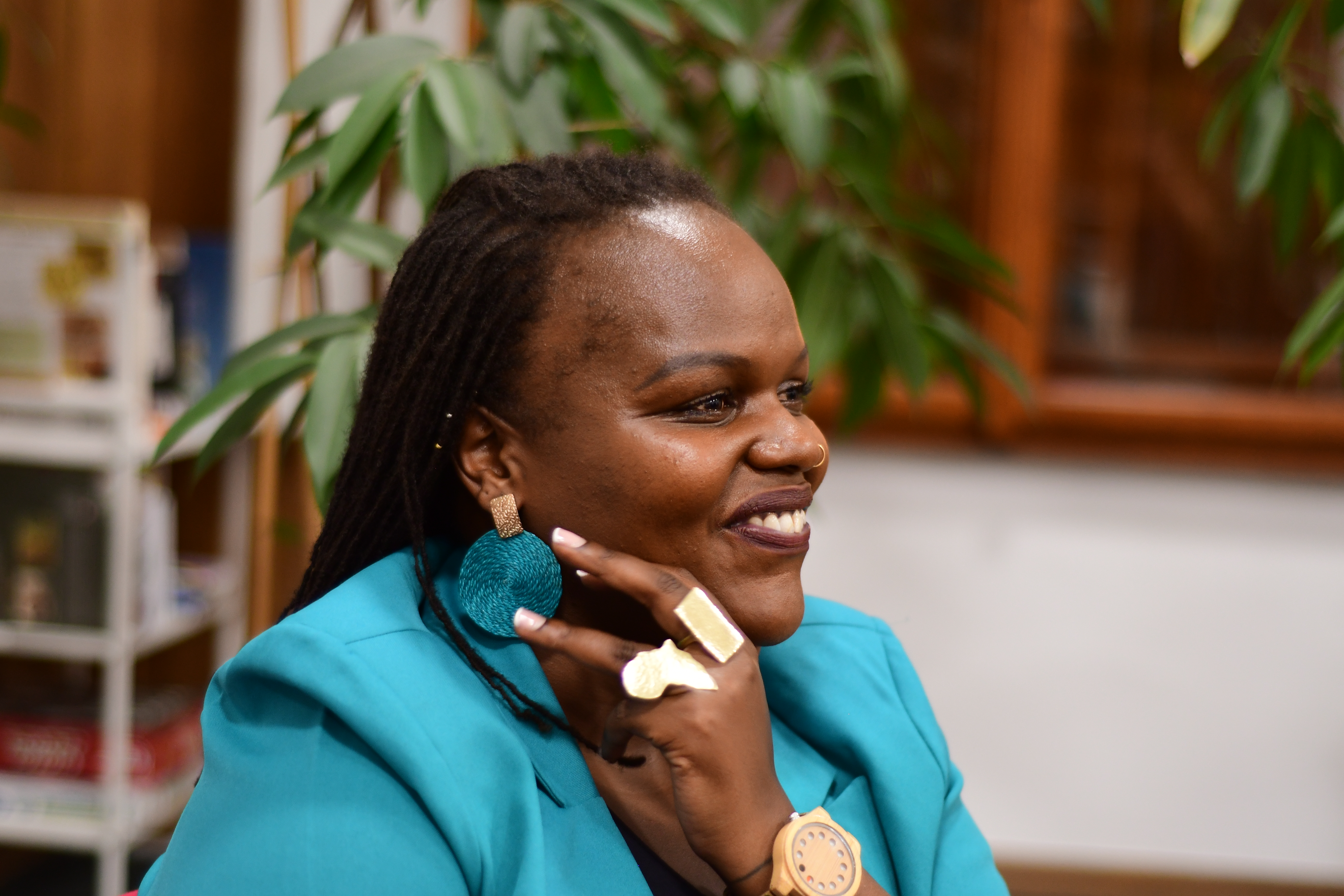
Wanjiru Koinange, 2025
zdroj: Post Bellum

Wanjiru Koinange (born in 1986, Nairobi) is a Kenyan writer, cultural activist, and co-founder of the non-profit Book Bunk, as well as she is also the creator of The Climate Change Library, a growing digital archive spotlighting the often siloed climate action happening across Kenya. Wanjiru earned a Bachelor’s degree in Journalism and Literature from United States International University Later, she completed a Master’s in Creative Writing at the University of Cape Town. Her debut novel, The Havoc of Choice (2019), explores Kenya’s 2007–2008 post-election violence and has remained a bestseller. As co-director of Book Bunk, founded in 2017 with Angela Wachuka, she leads efforts to restore and reprogram Nairobi’s historic public libraries, including the McMillan Memorial Library and its branches in Eastlands and Kaloleni. The organization focuses on architectural conservation, digital archiving, community programming, and expanding access to literature in local languages. Koinange’s work connects literature, civic life, and public memory, positioning libraries as civic spaces for knowledge and democracy. She lives in Nairobi and continues to write fiction alongside her cultural and educational projects. Wanjiru’s work is rooted in the belief that art can be a powerful catalyst for social change. She is a proud lover of forests and plants trees to offset the environmental cost of printing her book because stories should grow something, too.