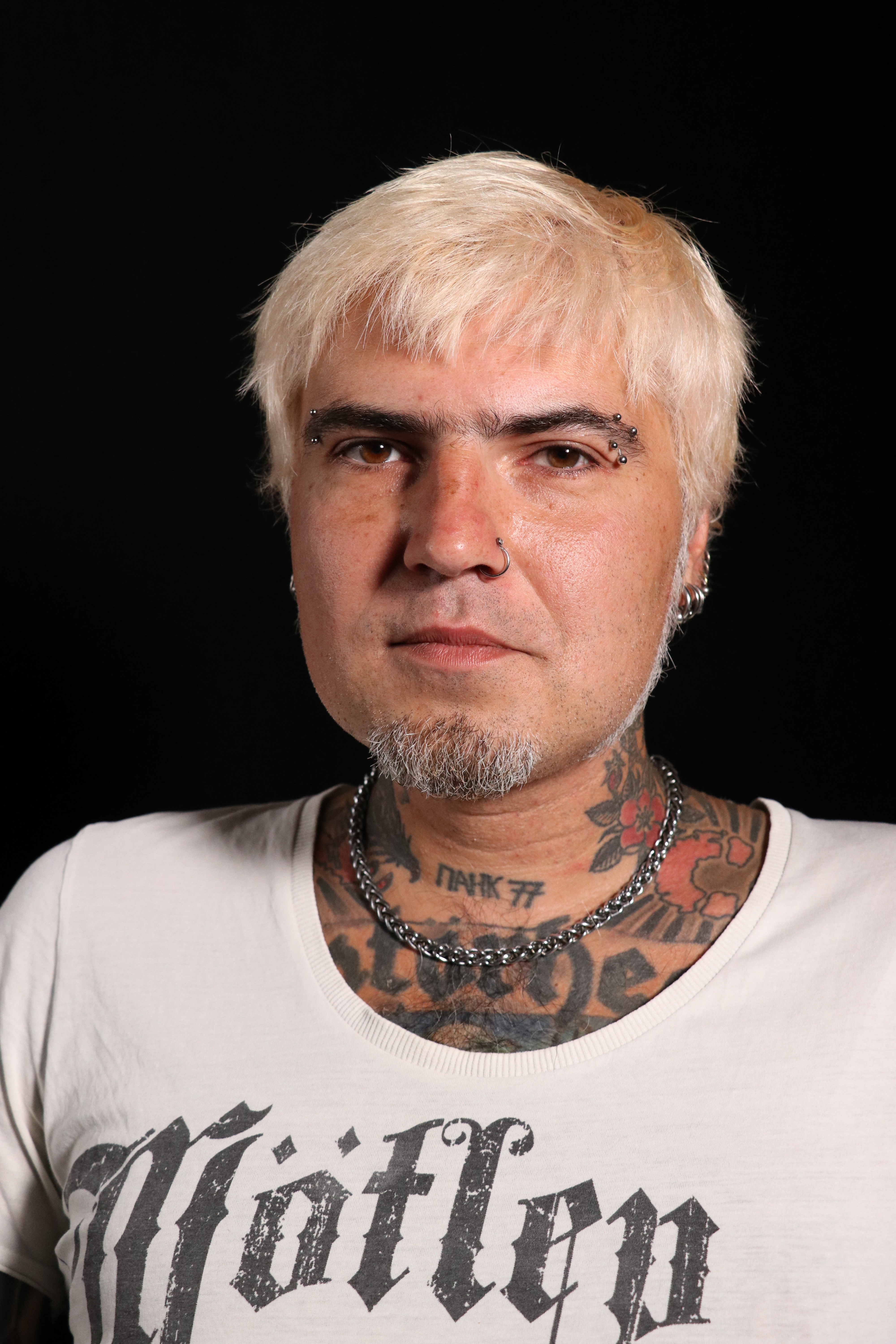
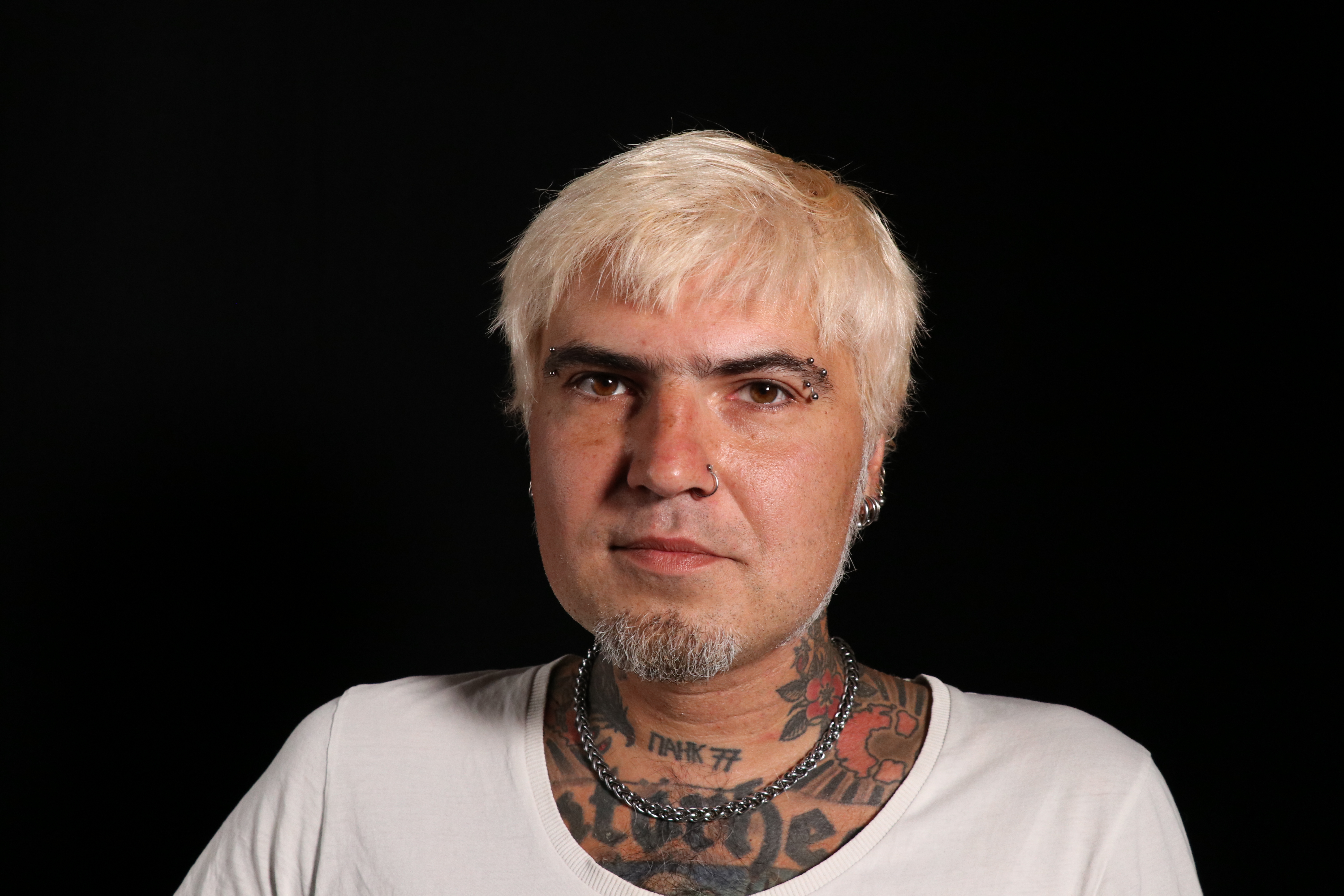
"I went out and saw that the city was completely different: that armored vehicles were arriving, that people were standing in huge lines at banks and ATMs. There is no money in the ATMs, no food in the shops. There were crazy queues everywhere. And to say that people are depressed is to say nothing. Here is a man in utter grief, you can see there is no face on him - that was the whole town. You walk like in some cotton wool among these people, you look around and you think it's just a bad dream. The phone is ringing like hell: people write mainly from Russia - with friends from Kiev or Kryvyi Rih it's pretty clear, I have to write to them myself, we have to write to each other -but people write from Russia, how ashamed they are, how crazy it is, what's going on there, colleagues..."
"Well, it really surprised me that when I lived in Ukraine, we all idealised life in Europe. We all thought that Europe was something where everything was perfect, where everything was clean, the computers of the future. But when I looked and saw those printers from the 1980s that were eating paper rather than printing, some terrible computers, worse than the ones I had in my computer science class in 1992 - it gave me pause. Ukraine has gone a long way forward in terms of the Internet, we have an amazing Internet, our website looks just amazing. Here, you go to the state website or the ČSOB bank website and you think: 'Why don't you find a Ukrainian programmer who will make the visual side of the website cool, make it nice, like in Ukraine?' So you have to realise that Ukraine is better in many ways."
"The TV had this rhetoric: 'Here is a legitimate president - the great Yanukovych. And here some people came to the square. Look at their faces - they are bandits, you can see that right away, do-nothings. Why are you not at work? What are you doing in the square?' So that's the news. And the brave guys from Berkut [the special riot police unit of the Ukrainian Ministry of Interior] are poor: one got hit, he has a bruise, and the Berkut guy, he has a family, children. Suddenly at one moment (it was just amazing) there is a break in power. You can see that Yanukovych has lost, you can see everything. That was on Thursday, then comes Friday: 'Ours overthrew that government, those Berkut fascists are still fighting, but ours...' And so it happened. And this is the same person who was sitting there yesterday saying that. That's not hyperbole, that's not Friday, then two days and Monday, that was Thursday - Friday. And the main thing is how he says it: as confidently as he said it yesterday. I don't blame him at all, he's a nice person and it was great television. But that's the way it's done - you go where the wind blows, you go there, you try to survive. Oh, my God! I mean, he could just mark this moment: 'Look, guys, I'll make it short: yesterday we were wrong, yesterday we had to say it -Yanukovych took us hostage, Berkut's people held us hostage with batons. But no."
Maxim Kabir (Ukrainian: Maksym Kabir, born 16 January 1984 in Kryvyi Rih, Ukrainian SSR) is a Ukrainian horror writer, screenwriter, television presenter and anarchist activist. He emigrated to the Czech Republic after the start of the Russian invasion of Ukraine. He graduated from the history faculty of the Krivorozhsky Pedagogical Institute. His master‘s thesis focused on the phenomenon of fascism.
He worked as a teacher and as an archivist in newspapers. Since 2007, he worked at Kryvyi Rog TV, where he worked his way up from sound engineer to TV presenter. He is the author and presenter of programmes on art and culture („Artobjekt“, etc.). He made his debut as a writer at the end of 2000. His works (prose, poetry) often deal with themes of mysticism, 20th century history and the nature of evil. His creative method has been described as creating „pleasurable scares“ to distract from the real horrors. He is the author of the novel „The Box“ (written under the impression of his work as a postman in Prague) and the forthcoming book „Hierarchs“, set in the Protectorate of Bohemia and Moravia. He also writes scripts for computer games and works as an editor. From the early 2000s he participated in anti-government protests and held anarchist views. His public positions are characterised by a deep scepticism towards state power and a distrust of any form of political idolatry. Disillusionment with Ukrainian politics led him to „internal emigration“ after 2014. After the Russian invasion of Ukraine began in February 2022, he stayed in Kryvyi Rih, where he witnessed the city‘s transformation under wartime conditions. In August 2022, he legally emigrated to Prague, where he works in the social sphere and continues his creative work.