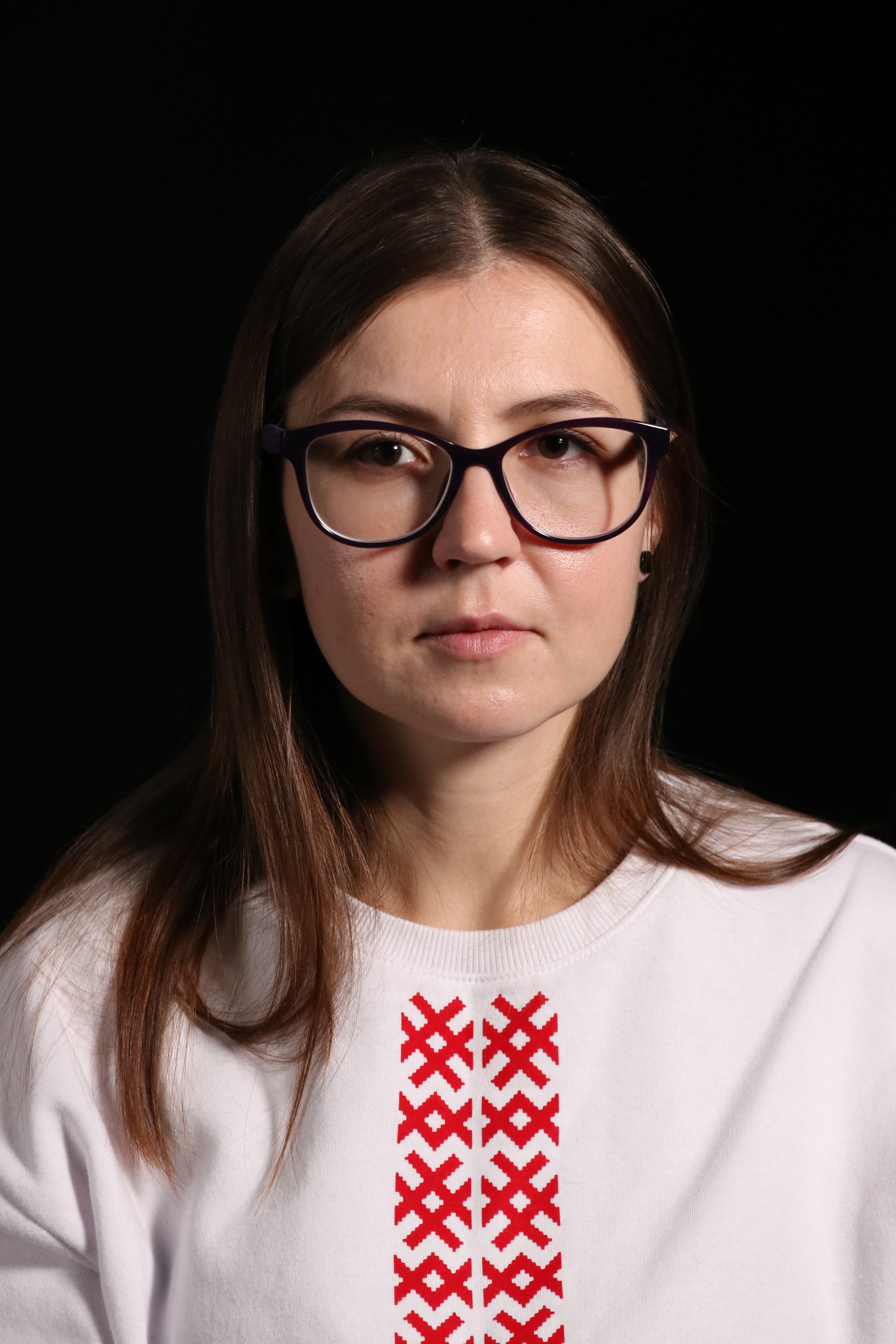
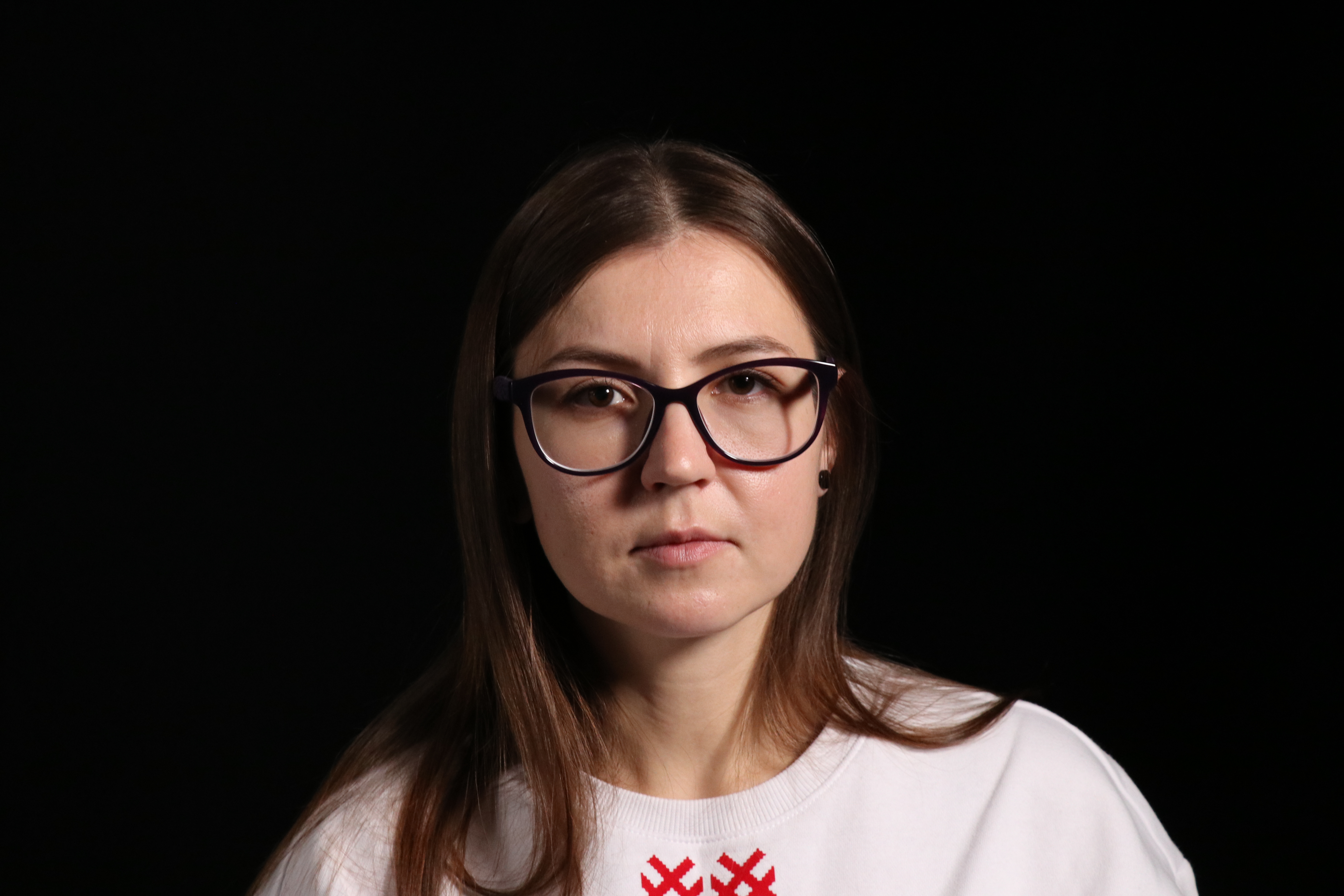
"Pre-trial detention is one thing, but when you come to serve your sentence in a colony, it's something else entirely. In a remand prison you don't understand it yet. He is not limited in his actions: it is limited by space, but you choose whether to paint or write. In a penal colony, they decide everything for you. You are nobody there and your name means nothing. And if you are political, that's the end of it. Forget your individuality. The goal of the penal system, at least in Belarus, is to make you an animal and keep you on the same level. You see it in the women who have been in prison for years. All you think about is how to wash and how to eat."
"And of course the conditions were disgusting and especially the attitude of the people. When a pretty young girl picks you up at night, puts you in handcuffs, takes you out of your cell and forces you to undress - that's called 'naked shmoozing'. Nobody normally does that at night. She did it. I was on my period, I had a tampon. She made me take it out, even though it was the only sanitary product I had. She made me take the tampon out and then she made me squat. And she threw my panties across the hall to the male guards. And I had to run naked for my panties. And there are plenty of stories like that. It's the human factor. The worst thing is that she might do it, and yet she seems like a nice girl."
"And when I was brought to a forest area, there were already many minibuses with dark glass. And that's where the most terrible things happened in my life. Because when I was a little girl, my mother could hit me on my bottom with a towel and I was never touched again in my life. And I didn't understand it at all. If my husband ever laid a hand on me, it would be the last thing he'd ever do. And here people were hitting me with tasers with complete impunity, beating me on my legs with batons, putting me in positions I couldn't stand, and choking me until I lost consciousness. And a man with perfectly adequate vision strangles - he doesn't insult, he doesn't shout, he just coldly puts on black gloves and strangles. Until unconscious. One of them handcuffs my hands, I'm in a semi-conscious state, the other just strangles me and I fall to my knees. That's one, that's two. And I wonder which one will be my last."
Alesia Bunevich (Belarusian: Alesia Bunevich, born September 8, 1989 in Minsk, BSSR) is a Belarusian civil activist, political prisoner (2022-2024), and participant in the 2020-2021 protests. She was born into a Belarusian family. She graduated from a Belarusian-language school in Molodechno. She has two university degrees - the Faculty of History of the Belarusian State University (Minsk) and the European University of Humanities (Vilnius). She started her activist activity long ago - in 2010 she co-founded the women‘s movement „Varta“. During the 2010 presidential elections she worked in the team of candidate Andrei Sannikov. In 2015, she coordinated the collection of signatures for presidential candidate Tatyana Korotkevich. She actively participated in the mass protests in Belarus in 2020-2021. After the suppression of the protests, she went to Lithuania, where she married activist Aleh Metelic. On subsequent visits to Belarus, she helped Belarusians who were leaving the country because of persecution by the authorities to cross the border illegally. Alesia Bunyeva was arrested on April 4, 2022. She was initially charged under paragraph 2 of Article 289 of the Criminal Code of the Republic of Belarus (commission of a terrorist act by a group of persons after a prior conspiracy) in the so-called Railway Partisans case (maximum penalty was up to 12 years in prison). The court eventually qualified her actions under paragraph 3 of Article 371 of the Criminal Code of the Republic of Belarus (intentional illegal crossing of the state border of the Republic of Belarus committed by an organised group). She was sentenced to three and a half years‘ imprisonment in a penal colony. On appeal, her sentence was then reduced by one year. In May 2024, after serving two years and one month, the witness was released and evacuated to Lithuania, where her husband and son live. The Belarusian Centre for Human Rights recognised her as a political prisoner and included her in the relevant lists.